Search
information to be updated
The three-phase three-wire/three-phase four-wire universal voltage protection relay is a multifunctional electrical protection device suitable for different types of three-phase power systems and can provide comprehensive voltage protection. Its design takes into account the application of three-phase three-wire and three-phase four-wire systems and is widely used in industrial, commercial, and household power systems.
This relay mainly provides the following protection functions:
Overvoltage protection: Real-time monitoring of power supply voltage. When the voltage exceeds the preset upper limit, the circuit is automatically disconnected to prevent damage to the equipment caused by excessive voltage.
Undervoltage protection: Monitor whether the voltage is lower than the set lower limit. If it is lower than this value, the relay will automatically cut off the circuit to protect the equipment from undervoltage.
Phase sequence protection: In a three-phase system, ensure the correctness of the power supply phase sequence. If a phase sequence error is detected, the relay will immediately disconnect the circuit to prevent abnormal operation of equipment such as motors due to phase sequence errors.
Phase voltage unbalance protection: Monitor the balance state of the three-phase voltage. When there is a significant imbalance, the relay will cut off the circuit to prevent damage to the equipment.
Three-phase three-wire/three-phase four-wire universal voltage protection relays are usually equipped with a delay function to reduce false operations caused by instantaneous voltage fluctuations. Its flexibility and reliability enable it to play an important role in the power system, effectively improving the safety and operational stability of equipment.
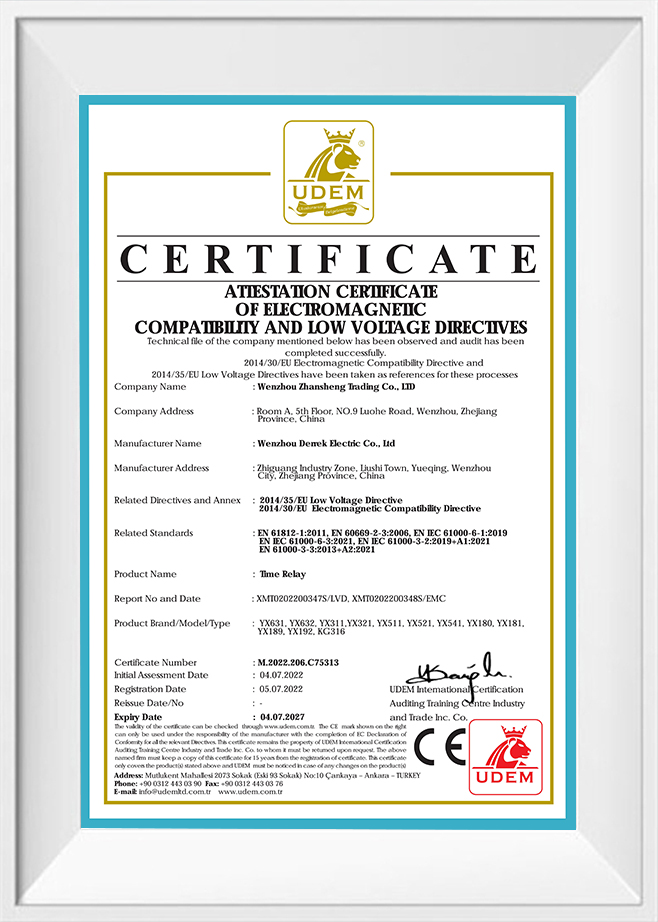
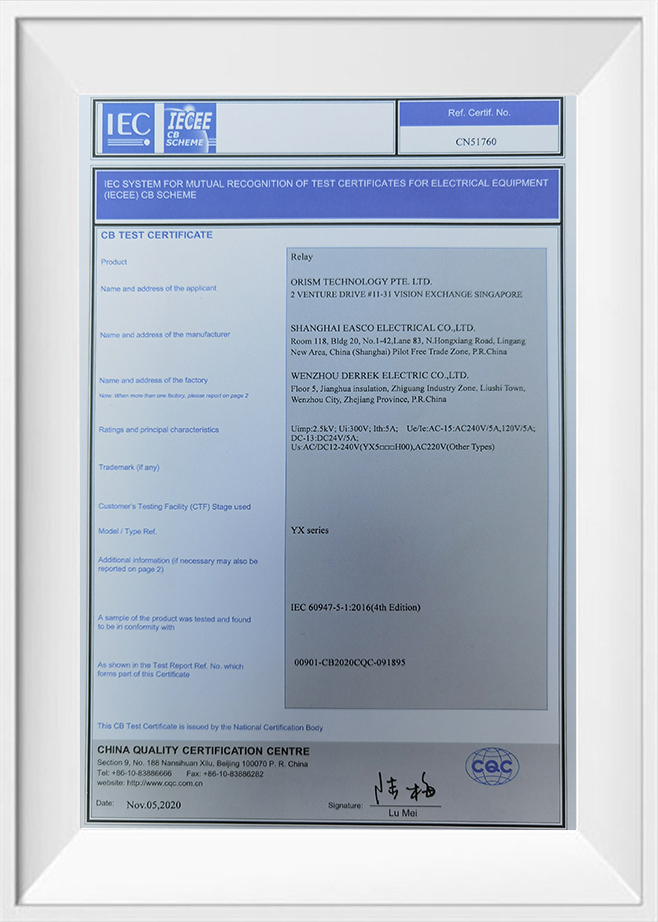
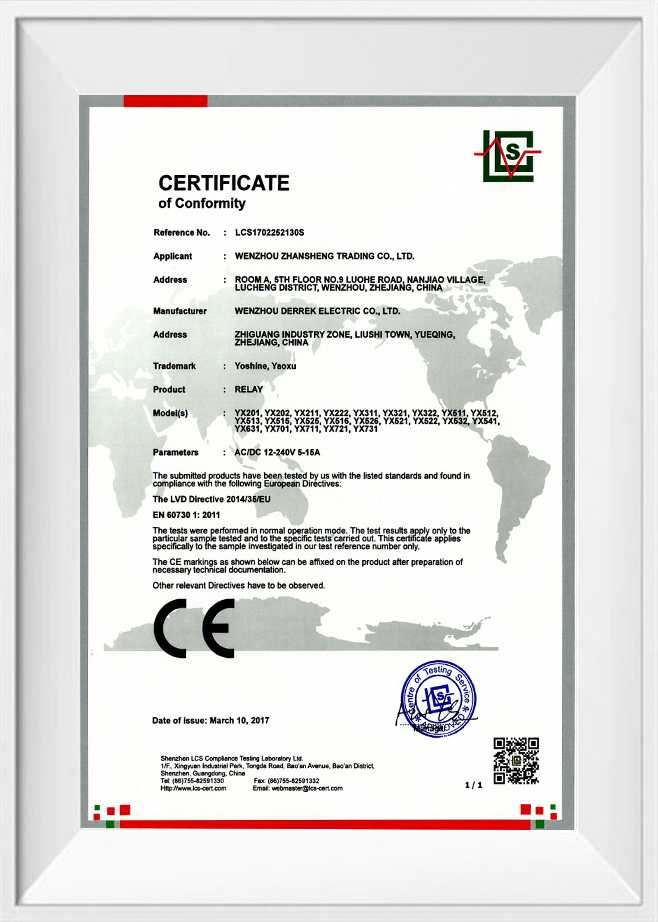
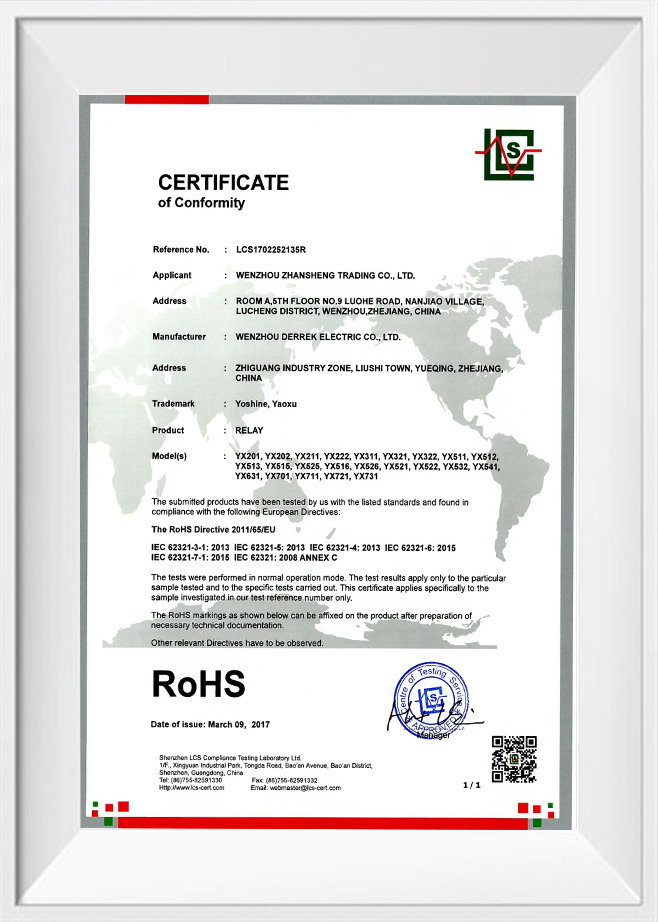
Wenzhou Derrek Electric Co., Ltd. is a China Three-Phase Three-Wire/Three-Phase Four-Wire Universal Voltage Protection Relay Manufacturer and sales Three-Phase Three-Wire/Three-Phase Four-Wire Universal Voltage Protection Relay.
YOSHINE's products can be divided into two categories:
1. Products that manage electronic control processes (Step Relay, Time Relay, Switching Power Supply, Floatless Level Switch, etc.).
2. Products that protect equipment (e.g. motors) from voltage and current failures (Voltage Protection Relay, Current Monitoring Relay). OEM service is offered according to the client's requirements.
Application of YOSHINE's products is mainly in reset control (small hospitals, nursing homes, community houses), Lighting Control, Pump Control, Generator Control, etc. Considering the important role of our products, we keep developing new products and improving quality standards. YOSHINE not only involves all aspects of the industrial field but also intelligent control of offices and residences. We strive to provide clients with more efficient and intelligent products.
YOSHINE has gained a reputation for short lead time, flexible design, and excellent technical support.
YOSHINE has made its contribution to the development of our society and the global intelligence industry with the mission of "Made for Connection".


The company currently has more than 50 employees, including 7 professional technicians and 2 engineers.
We have our own manufacturing plant which covers an area of 12000 square meters.
Our monthly production capacity is over 100,000 pcs, which can meet the needs of different clients.





A phase sequence monitor is used in electrical systems that rely on three-phase power. Its main task is simple in idea b...
A water system often looks simple from the outside. A tank holds water, a pump moves it, and pipes connect everything to...
Switching Power Supply Factory are one of those components people rarely notice, yet they sit inside a huge number of de...
In many industrial settings, machines rely on a steady and correctly arranged flow of electrical power. While voltage an...
In many industrial and water management systems, liquid level control is something that quietly keeps everything stable....
The Three-Phase Three-Wire Universal Voltage Protection Relay is primarily used in systems that operate with a three-phase, three-wire configuration. In this setup, there is no neutral wire, and the system relies on three-phase power to distribute electricity efficiently. This type of relay is designed to monitor the phase-to-phase voltage levels and protect against a variety of voltage issues such as overvoltage, undervoltage, and phase imbalances.
Key Features and Functionality
This relay continuously compares the voltage across the three phases to predefined thresholds. If the voltage exceeds or falls below the set values, or if there is an imbalance between the phases, the relay disconnects the load to prevent damage to equipment. The Three-Phase Three-Wire Universal Voltage Protection Relay is particularly useful in applications where maintaining balanced voltage between phases is critical, such as in large motors, industrial machines, and HVAC systems.
The primary advantage of this relay is its simplicity and efficiency in systems where a neutral wire is not required. It offers reliable protection against voltage fluctuations that could overheating, underperformance, or even failure of critical equipment.
Applications
This relay is typically used in industrial environments where three-phase electrical systems are common, and there is no neutral conductor. Typical applications include heavy machinery, pumps, compressors, and other equipment that requires consistent and balanced voltage for performance.
The Three-Phase Four-Wire Universal Voltage Protection Relay, as the name suggests, operates in systems with a four-wire configuration, meaning it includes a neutral wire in addition to the three-phase conductors. This type of relay is designed to provide more advanced protection because it monitors not just the phase-to-phase voltages but also the phase-to-neutral voltage. By monitoring both the three-phase voltages and the neutral line, this relay offers enhanced protection, especially in systems that require precise control over both voltage balance and phase sequence.
Key Features and Functionality
In addition to protecting against overvoltage, undervoltage, and phase imbalance, the Three-Phase Four-Wire Universal Voltage Protection Relay also provides additional monitoring of the neutral voltage. This added level of monitoring ensures the relay can detect issues like neutral failure or irregularities in voltage distribution across all four wires. This makes it especially useful in systems that depend on the integrity of the neutral conductor, such as power distribution networks, advanced industrial automation systems, and buildings with sensitive electronic equipment.
The inclusion of neutral voltage monitoring provides a higher level of protection, as problems with the neutral conductor can cause unpredictable behavior in equipment or even pose safety hazards. The relay disconnects the load when the voltage deviates from preset limits, ensuring that equipment remains safe and operational.
Applications
This type of relay is ideal for more complex or sensitive systems, such as those found in commercial buildings, power distribution stations, and areas with a significant demand for stable and regulated voltage. It’s also used in electrical systems where the neutral conductor plays an essential role in maintaining voltage balance and preventing equipment from malfunctioning.
Configuration: The main difference between the Three-Phase Three-Wire and Three-Phase Four-Wire Universal Voltage Protection Relays lies in their system configurations. The Three-Phase Three-Wire relay works in systems without a neutral wire, while the Four-Wire relay operates in systems that include a neutral conductor.
Voltage Monitoring: The Three-Phase Three-Wire relay focuses on monitoring the phase-to-phase voltages for overvoltage, undervoltage, and imbalance. The Three-Phase Four-Wire relay, on the other hand, provides a more comprehensive solution by also monitoring phase-to-neutral voltages, offering additional protection against neutral faults and other irregularities.
Applications: The Three-Phase Three-Wire relay is suitable for simpler industrial applications where neutral is not required. The Four-Wire version, with its additional monitoring, is designed for more complex systems that require precise control over both phase and neutral voltages.
Popular Products
contact us
Have Questions?
Get in Touch!
Our aim is to provide the market and the customers with high quality products and customized solutions.
Zhiguang Industry Zone, Liushi Town, Yueqing, Wenzhou, Zhejiang, China.
+86-13819765860



 English
 русский
 Español