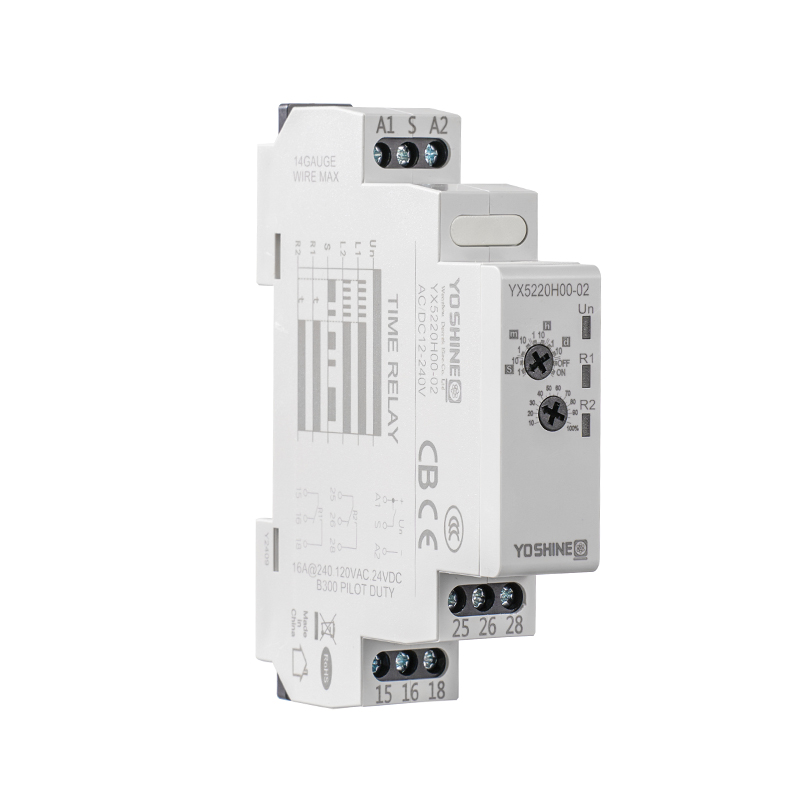
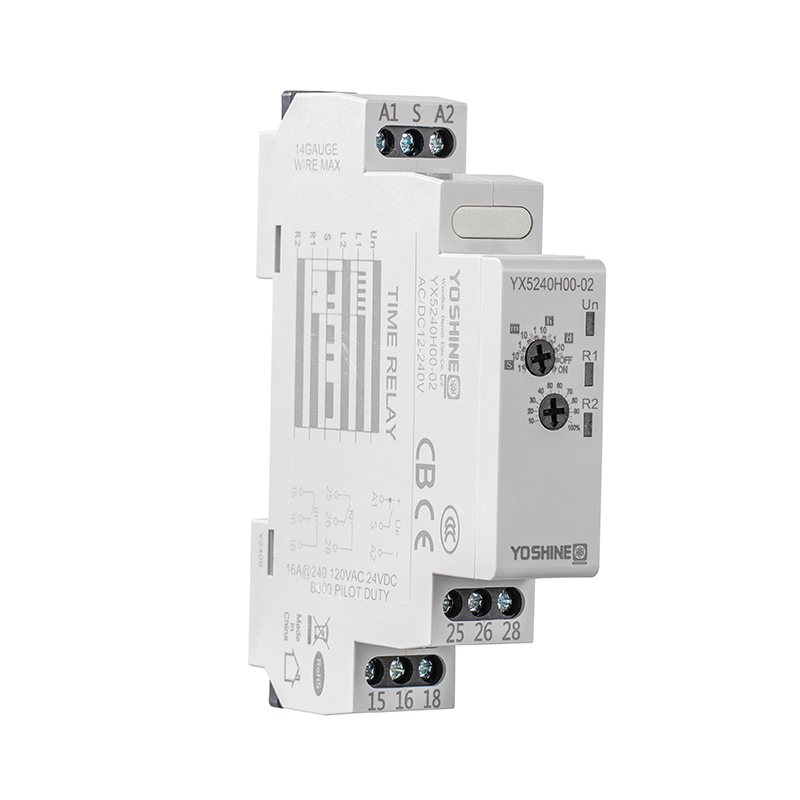
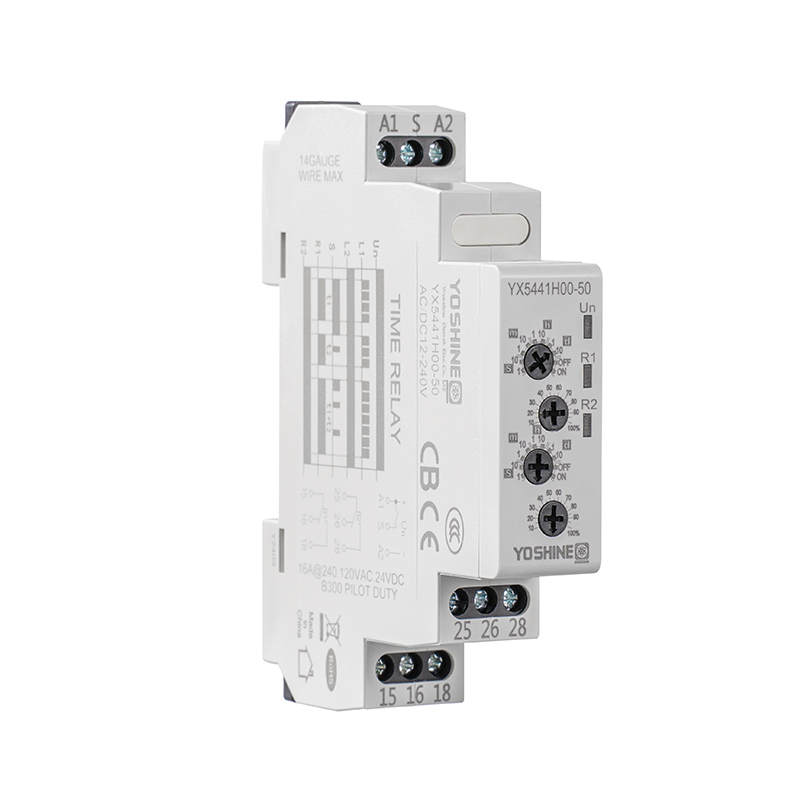
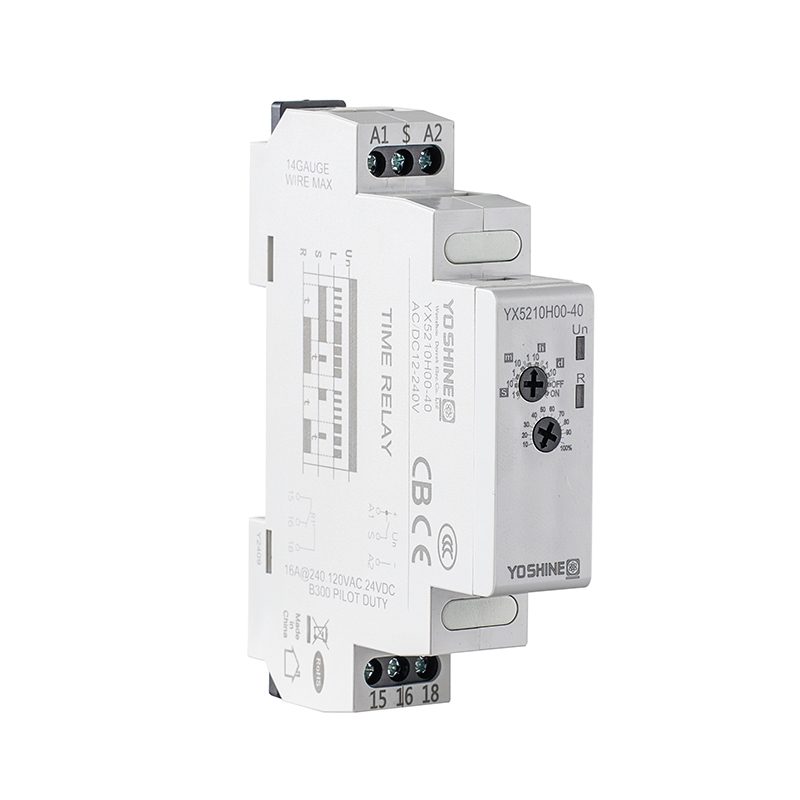
A control cabinet on a packaging line may switch the same relay thousands of times a day, while a relay in a pump panel may operate a few times per shift. The two cases ask different things of the component. A Pulse Output Relay passes control signals to other equipment, a Pulse Relay Switch handles short switching actions inside a control routine, and a Pulse Counter Relay ties pulse signals to counting or monitoring. Choosing among them starts with how the device will actually be used, not with a single performance claim.
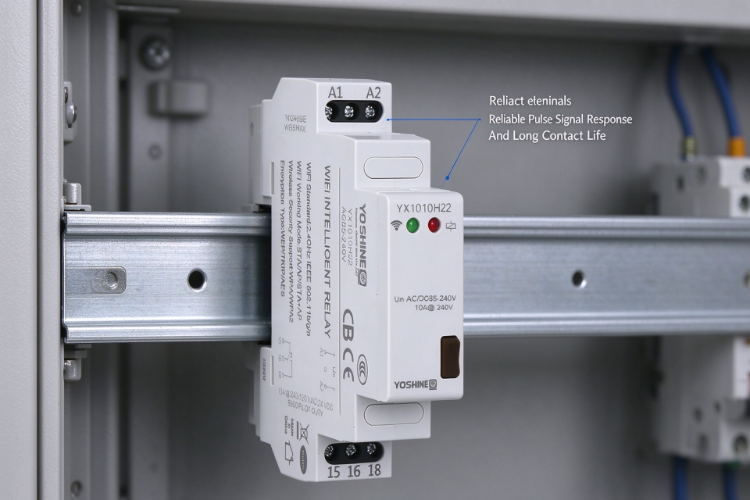
Control systems work as a chain. A sensor detects a change, a controller reads it, and an output device acts. If one link behaves differently from what the controller expects, the whole sequence becomes less predictable.
Response speed decides whether the relay acts at the right point in that chain. A late switching action can shift the timing of a conveyor gate, a sorting arm, or an alarm output. Contact life covers a different concern. Contacts open and close with every cycle, and repeated switching gradually affects their surfaces and mechanical parts. On a machine that cycles all day, durability becomes part of the maintenance plan.
| Consideration | Why it matters |
|---|---|
| Response speed | Keeps the relay in step with the control sequence |
| Contact life | Supports repeated switching over time |
| Switching consistency | Keeps operation predictable |
| Electrical compatibility | Matches the relay to the connected circuit |
| Operating environment | Shapes working conditions and wear |
A fast relay that wears out early creates repeated maintenance calls. A durable relay that cannot meet the timing of the process is unsuitable as well. The application sets the balance.
Response speed describes how quickly a relay changes state after receiving its signal. Picture a sensor that detects a box passing on a belt. The controller receives the signal and sends a command, and the relay closes so a diverter can move. If the relay acts later than the sequence expects, the box may already be past the diverter.
A Pulse Output Relay suits arrangements where output signals pass through a switching component, and it should behave consistently with the control logic and the connected load.
Speed should not be judged alone, though. The signal path includes sensors, wiring, the controller, the relay, and the receiving equipment. A delay seen at the output may start somewhere else, such as a slow input filter or a long cable run.
When reviewing timing needs, engineers can ask:
Every operation changes the contact state, and electrical and mechanical stress builds over many cycles. How fast that happens depends on the relay design and on the conditions around it. The connected load plays a large part. A small signal load and a motor or solenoid load stress contacts in very different ways, so switching frequency alone cannot predict service life.
A relay controlling a ventilation fan a few times a day sees a gentle duty. A relay handling short pulses throughout a production cycle sees a heavy one. A Pulse Relay Switch used in routine control should be chosen with both the switching rate and the load type in mind.
| Factor | Possible effect |
|---|---|
| Switching frequency | Sets how often contacts operate |
| Connected load | Changes electrical stress at each switch |
| Contact material | Affects how surfaces handle use |
| Operating conditions | Influences wear and reliability |
| Installation quality | Affects connection stability |
| Maintenance habits | Help spot changes early |
Product sheets often mention contact durability, so buyers should check the test conditions behind the figure. Life depends on the application and does not carry over unchanged to every installation.
The two properties are linked through how a relay is built, but one does not decide the other. Response behavior comes from the internal design and operating mechanism. Contact durability depends on load, switching conditions, materials, and construction. A quick relay does not necessarily wear faster, and a durable relay is not necessarily slow.
The difficulty appears when a system needs both prompt reaction and frequent switching. The product then has to suit the timing requirement and the workload together.
Useful questions include:
Unstable inputs also deserve a look. If a noisy sensor makes the relay chatter, a different relay will not remove the cause. Reviewing the signal source and the logic often reveals more than swapping parts.
A Pulse Counter Relay links incoming pulses to counting or a control action. An industrial system may receive pulses from a device that records movement, product passage, or another repeated event, and the control side must recognize each valid pulse.
Response behavior matters here because the component must keep up with the pulse pattern. If signals are missed or double-counted, the count becomes unreliable. Contact durability still matters when the relay performs repeated switching as part of the same job.
| Situation | Main consideration |
|---|---|
| Event counting | Recognition of incoming pulses |
| Equipment monitoring | Consistent signal handling |
| Repeated control actions | Switching durability |
| Process tracking | Coordination with the control system |
| Signal-based operation | Compatibility with connected equipment |
A name alone does not confirm function. Buyers should read the stated purpose, input requirements, output behavior, and compatibility. Counting a pulse and switching a circuit are separate tasks, and the required one should be clear before purchase.
Electrical compatibility comes first, since the relay must work with the control signal and the connected circuit. The type of load matters next, because a simple signal circuit places lighter demands than a heavy load. Clear circuit information helps the supplier recommend the right part.
The environment also counts. Cabinets near machinery may face vibration, dust, moisture, or temperature changes, and the relay should suit those conditions.
Other points include:
A relay can meet the switching need and still cause trouble if it is hard to wire or reach. A full review prevents over-focus on one feature.
A process built on coordinated signal changes puts weight on response behavior. A machine that switches continuously puts weight on contact durability. Many applications need both, so selection should start from operating requirements, not from a preference for one feature.
| Selection area | Question to ask |
|---|---|
| Control function | What action should the relay perform? |
| Signal behavior | How should it respond to inputs? |
| Switching pattern | How often will it operate? |
| Load conditions | What circuit will the contacts control? |
| Installation | How will it connect to the system? |
| Environment | Where will it be installed? |
| Maintenance | How will its condition be checked? |
A Pulse Output Relay fits arrangements that need output switching. A Pulse Relay Switch fits defined control routines with short switching actions. A Pulse Counter Relay fits counting or monitoring tasks. Similar names do not guarantee identical function, so request documentation covering application, electrical compatibility, contact arrangement, and operating conditions.
Even a well-chosen relay changes with use. Maintenance teams can check wiring connections, look for visible damage, and confirm that the relay still behaves as expected in the sequence. Follow the manufacturer’s instructions, and leave electrical work to qualified staff using proper safety procedures.
When behavior turns inconsistent, replacing the part straight away may miss the cause. Loose terminals, unstable inputs, unsuitable loads, or faults elsewhere in the circuit can produce the same symptoms. A practical routine looks like this:
This order separates relay faults from system faults and supports clearer decisions on inspection, repair, and replacement.

Popular Products
Have Questions?
Get in Touch!
Our aim is to provide the market and the customers with high quality products like Pulse Relays and customized solutions.
Zhiguang Industry Zone, Liushi Town, Yueqing, Wenzhou, Zhejiang, China.
+86-13819765860


 English
 русский
 Español