
 English
 русский
 Español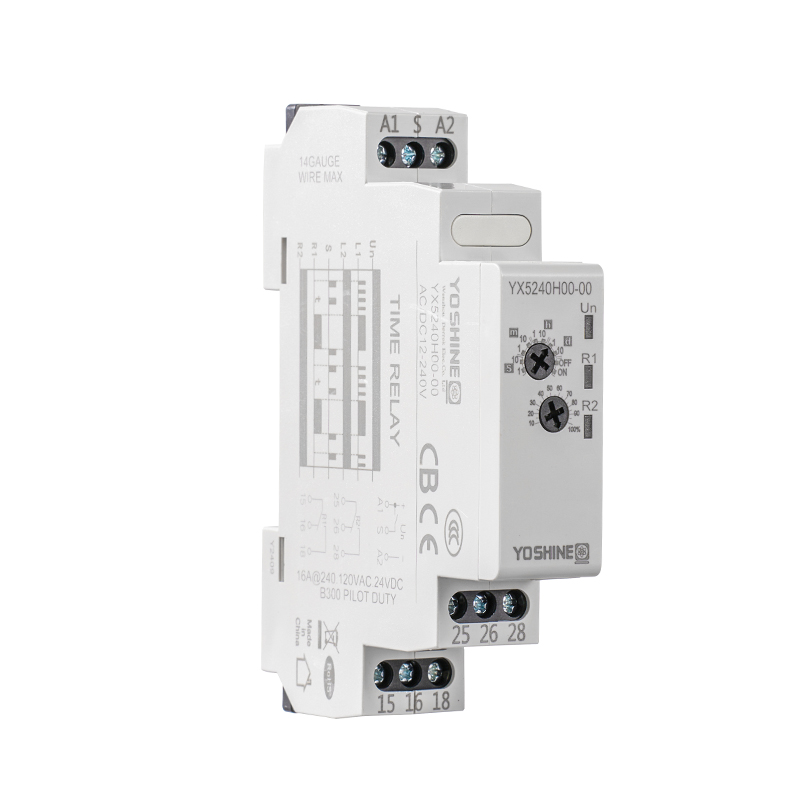
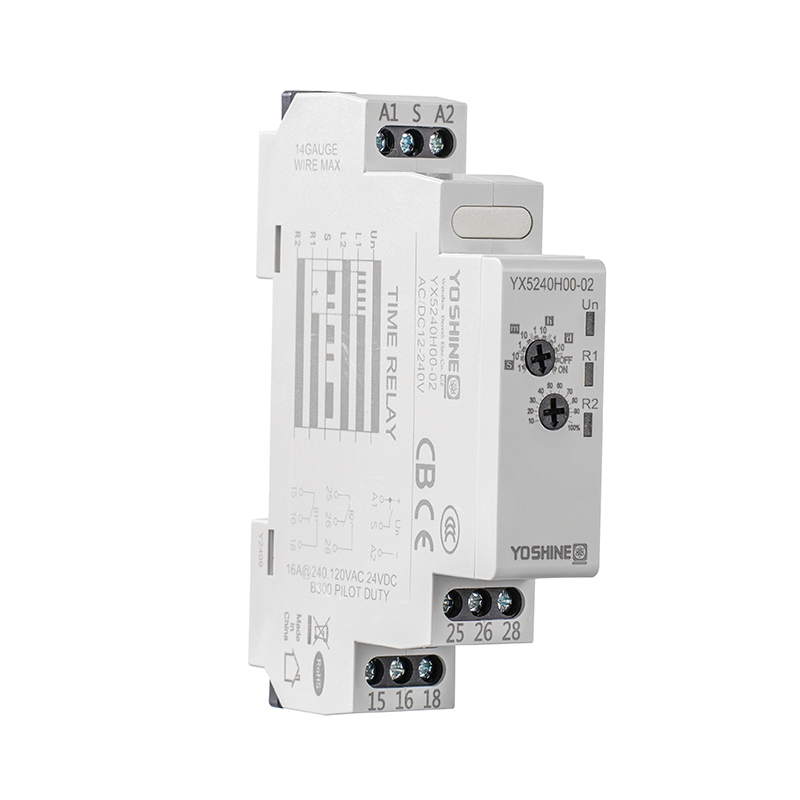
YOSHINE On Delay Time Relay
The YX5240H00-00 On Delay Time Relay combines immediate and delayed switching functions within a single unit, offering enhanced control flexibility for automation systems. Designed with a DPDT configuration featuring one instantaneous output and one delayed output, this relay supports applications where both immediate response and timed activation are required simultaneously.
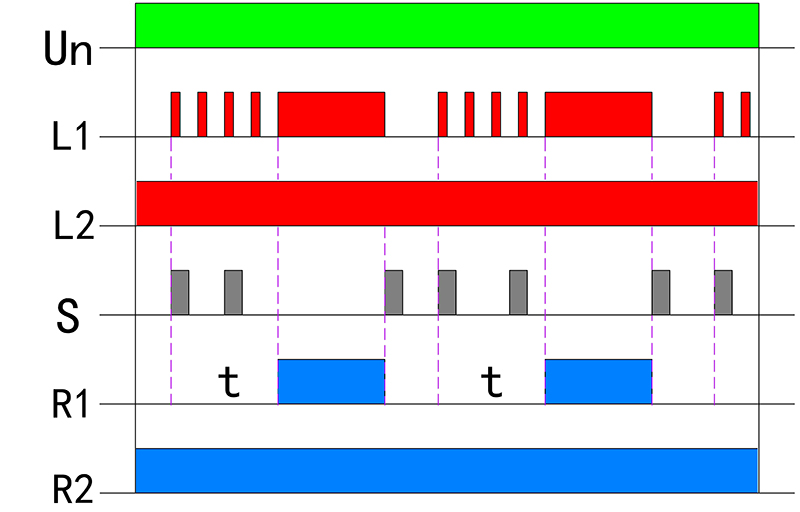
Upon power application, the instantaneous contact changes state without delay, enabling immediate control of selected circuits. At the same time, the internal timing mechanism begins counting. Once the preset delay period is reached, the second contact switches, activating the delayed circuit. This dual-function design reduces the need for additional relays and simplifies overall control architecture.
Such functionality is especially useful in motor control systems, sequential machinery operations, and multi-stage equipment startup procedures. For instance, the instantaneous contact can energize a control indicator or pre-start system, while the delayed contact activates the main load after a defined interval. This structured sequencing helps minimize electrical stress and allows systems to stabilize before full operation begins.
The YX5240H00-00 supports stable timing performance and consistent switching accuracy. Its internal structure is developed to maintain dependable operation in industrial control cabinets and equipment panels. The combination of instant and delayed outputs makes it particularly suitable for compact designs where space optimization and wiring efficiency are priorities.
Panel builders and system designers can benefit from the integrated functionality of this model, as it reduces component count and supports cleaner circuit layouts. The relay can be applied in HVAC systems, pump controls, lighting management systems, and automated production lines that require coordinated switching behavior.
By integrating two timing behaviors within one device, the YX5240H00-00 enhances operational coordination and simplifies installation. It offers a practical approach to staged control processes, making it a suitable choice for applications that demand both immediate reaction and timed engagement within the same control sequence.