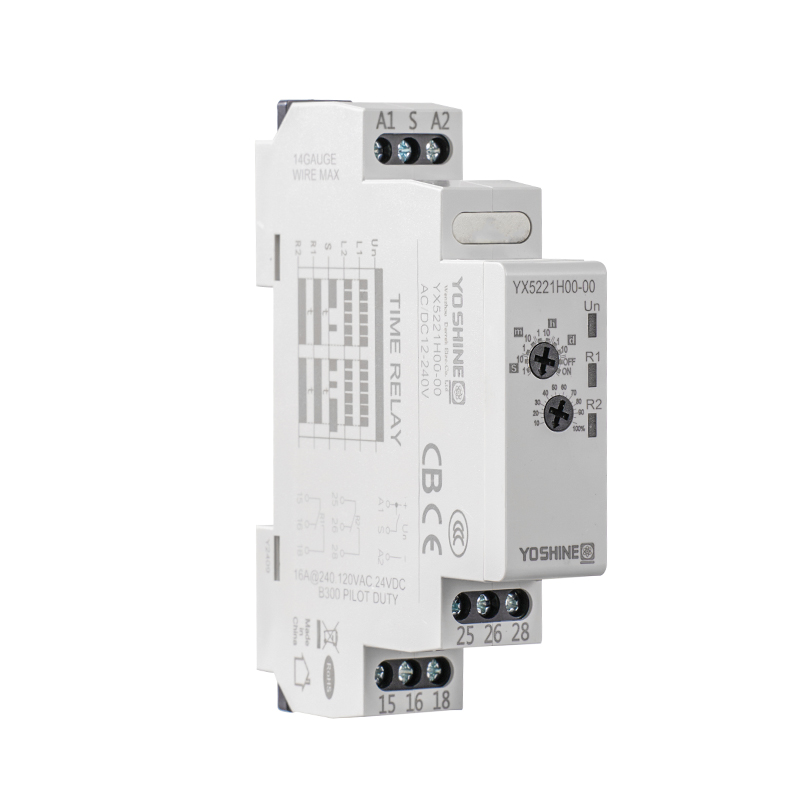
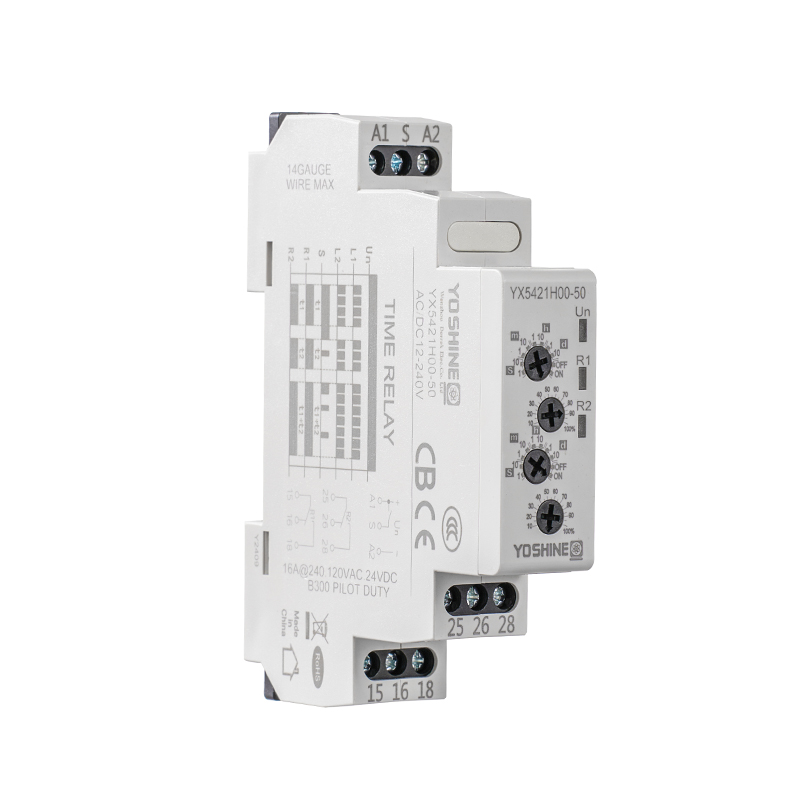
In industrial control systems, timing is rarely a background detail. It quietly decides how machines start, pause, switch, and reset. A small delay or mismatch can change how an entire process behaves. This is where multifunction time relays come into play.
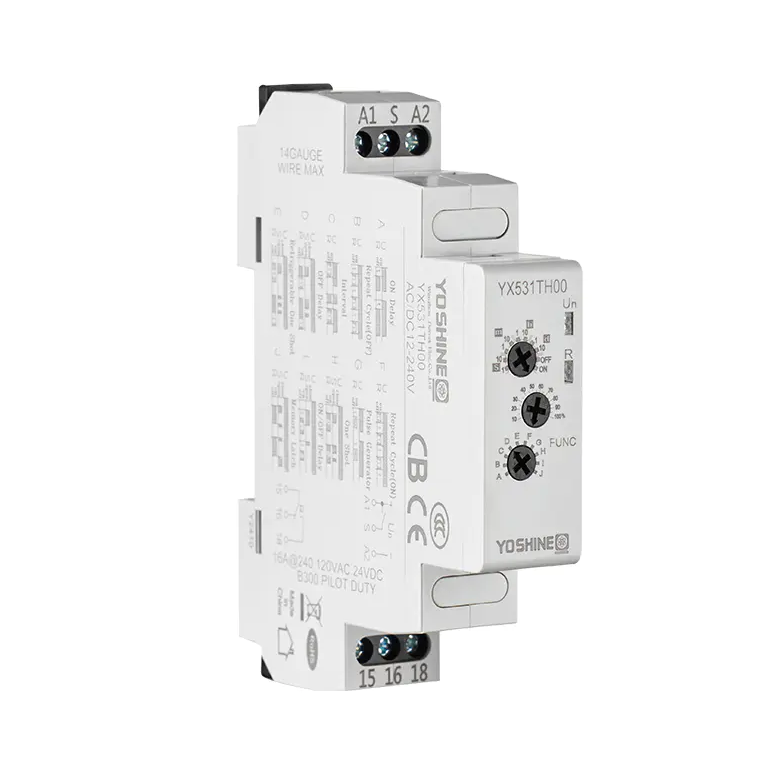
Behind every relay unit, there is a manufacturer shaping how that timing behavior is designed and maintained. Choosing a manufacturer is not only about buying a component. It is about understanding how that component will behave in real working conditions over time.
The question becomes practical: what actually matters when selecting a multifunction time relay manufacturer ?
A time relay works in a repetitive cycle. It receives a signal, holds a delay, and then triggers a response. This cycle may repeat thousands of times in daily operation.
If internal consistency is weak, timing shifts may appear. These shifts are not always obvious at first. They may show up as small delays or uneven switching behavior.
Manufacturers play a central role in controlling this stability. Material selection, assembly methods, and internal design decisions all influence how predictable the relay behaves once installed.
In industrial environments, even small variations can affect coordination between machines. That is why manufacturing quality is often the first area engineers pay attention to.
Reliability is often discussed, but in practice it means something simple: the device continues to perform its timing function without unexpected change.
A multifunction time relay may be used in systems that run for long periods without interruption. It may control lighting sequences, motor delays, or staged operations in automated equipment.
In these situations, reliability is not about occasional performance. It is about repeated behavior under steady conditions.
A manufacturer that focuses on reliability usually pays attention to consistency in production. That includes how components are sourced and how final assembly is controlled.
The result is not visible from the outside. It is reflected in how stable the timing feels during long use.
Multifunction time relays are used in a wide range of systems. Some applications require short delays. Others involve longer cycles or repeated switching patterns.
Because of this variety, flexibility becomes an important factor.
Manufacturers that design with flexibility in mind often provide units that can adapt to different timing needs without changing hardware. Instead, behavior is adjusted through configuration or control settings.
This approach reduces the need for multiple devices across different systems. One unit can serve several roles depending on how it is set up.
Flexibility also helps in system upgrades. When equipment changes, timing devices that can adapt reduce redesign effort.
Design consistency refers to how predictable each unit is compared to the next. In industrial use, this matters more than it might appear.
If two relays behave differently under the same conditions, system coordination becomes harder. Timing sequences may drift slightly, especially in connected systems.
Manufacturers that prioritize consistency often follow structured production methods. Internal layouts, component placement, and assembly steps are kept uniform.
This does not only support performance. It also simplifies maintenance. When devices behave in a similar way, troubleshooting becomes more straightforward.
Consistency builds confidence in system behavior, especially when multiple relays operate together.
Timing accuracy is critical for relays. It controls signal hold, release and every state switch during operation.
Manufacturers mainly optimize internal performance, instead of just relying on external controls. This covers how the relay reacts to input signals and keeps set delay times steady.
Perfect precision is not realistic. What matters is reliable performance under regular working conditions.
Changes in temperature or load can affect timing. Good designs take these factors into account, so the relay keeps working stably in different environments.
The core aim is to deliver steady timing, even after countless cycles of use.
Many tiny parts inside a relay keep interacting while it runs. Contact points, brackets and insulation pieces all affect its overall performance.
The choice of materials directly impacts how these parts hold up with long-term use.
Certain materials stay stable after frequent switching. Others will slowly wear or shift, and this breaks performance consistency.
To guarantee long-term reliability, manufacturers test materials through repeated use, not just check their initial performance.
This effectively slows down gradual performance decline. In actual use, this slow drift matters far more than how the part works when brand new.
Production practices influence how predictable the final product becomes.
Even when design is strong, inconsistent production can introduce variation. That variation may not be visible immediately but can appear during long-term use.
Manufacturers with structured production methods often rely on controlled assembly environments. Each stage of production follows defined steps, reducing variation between units.
Inspection is also part of this process. Instead of focusing only on final output, checks may occur at multiple stages.
The result is a more uniform product range, which supports system-level stability when multiple relays are used together.
Industrial environments are rarely stable. Temperature changes, electrical variation, and continuous operation all influence device behavior.
A multifunction time relay must continue operating under these changing conditions.
Manufacturers that consider environmental adaptability often design devices that maintain stable timing behavior even when external conditions shift.
This does not mean the device is unaffected. It means changes are minimized or controlled.
Adaptability becomes especially important in systems where relays are installed in different locations but expected to behave in the same way.
Multifunction time relays appear in many control environments. Their role is often quiet but essential.
They are commonly used in:
In each case, timing behavior influences how smoothly the system operates.
Manufacturers that understand these applications often design with real use patterns in mind rather than only theoretical conditions.
System integration means how smoothly a relay works with the rest of your equipment.
A well-made relay is easy to install and won't need complicated tweaks. It also runs steadily when paired with different control systems.
To make integration simpler, manufacturers use standard connection ports and ensure consistent performance across all units.
This cuts down installation time and makes setup much easier.
When multiple timing devices are used together in large setups, good compatibility keeps all parts working in sync.
| Evaluation Area | Stable Manufacturing Focus | Inconsistent Manufacturing |
|---|---|---|
| Timing behavior | Predictable over cycles | Varies between units |
| Installation | Straightforward setup | Frequent adjustment needed |
| Long-term use | Stable performance trend | Gradual inconsistency |
| System coordination | Smooth operation | Timing mismatch risk |
| Maintenance effort | Lower adjustment needs | Repeated calibration |
This comparison highlights how manufacturing decisions affect real-world performance more than specifications alone.
On paper, many multifunction time relays may appear similar. They may describe similar functions and timing ranges.
However, real-world behavior is shaped by production quality, internal design choices, and consistency over time.
This is why selection often extends beyond specification sheets.
Engineers and system designers tend to observe how devices behave in actual operation. Stability, predictability, and integration ease often matter more than isolated performance points.
Manufacturers who understand this shift tend to focus on long-term behavior rather than only initial output.

Popular Products
Have Questions?
Get in Touch!
Our aim is to provide the market and the customers with high quality products like Pulse Relays and customized solutions.
Zhiguang Industry Zone, Liushi Town, Yueqing, Wenzhou, Zhejiang, China.
+86-13819765860


 English
 русский
 Español