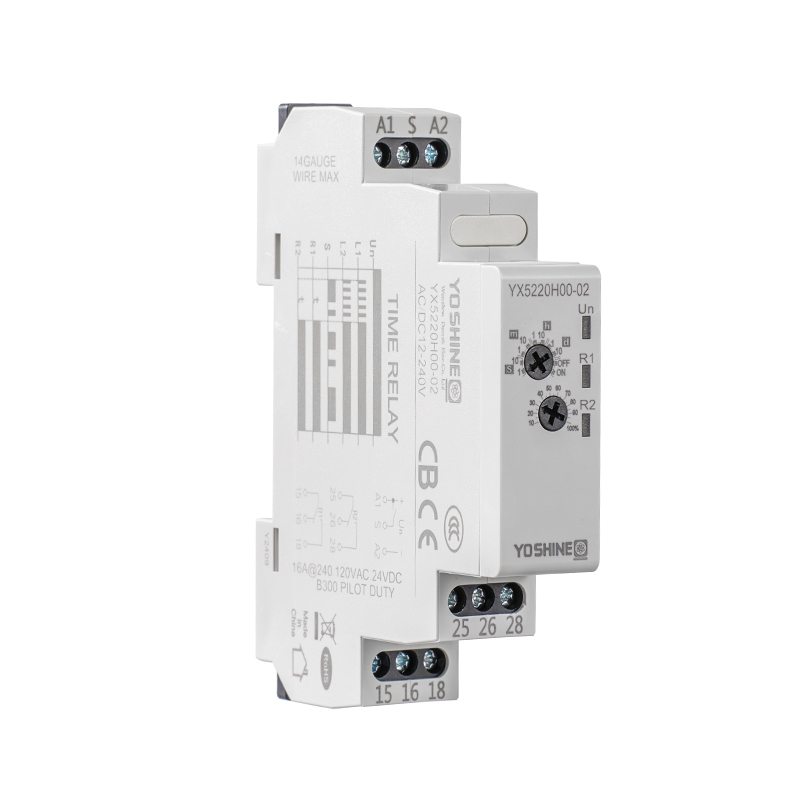
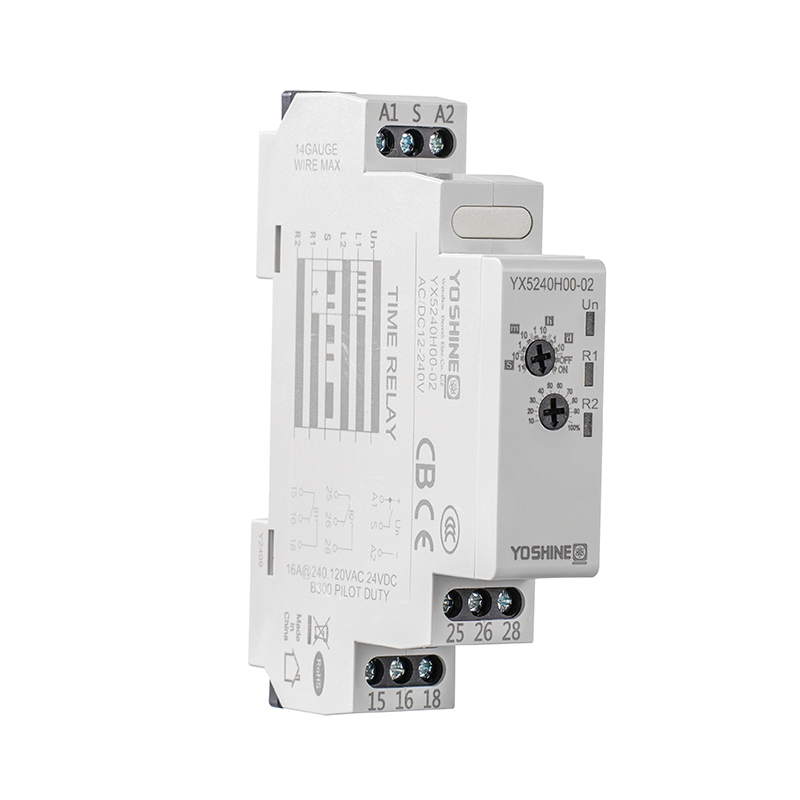
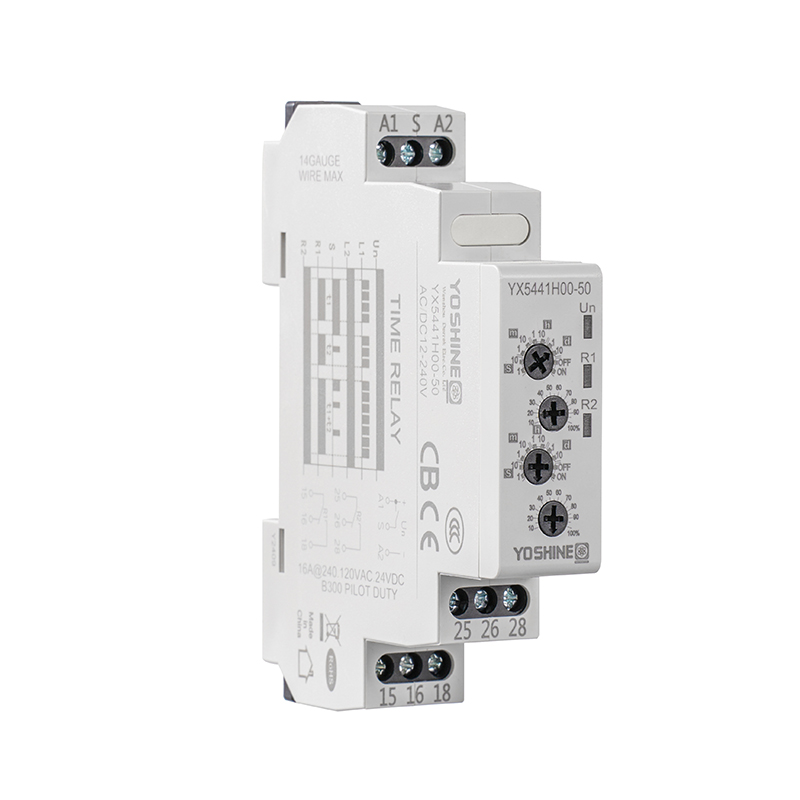
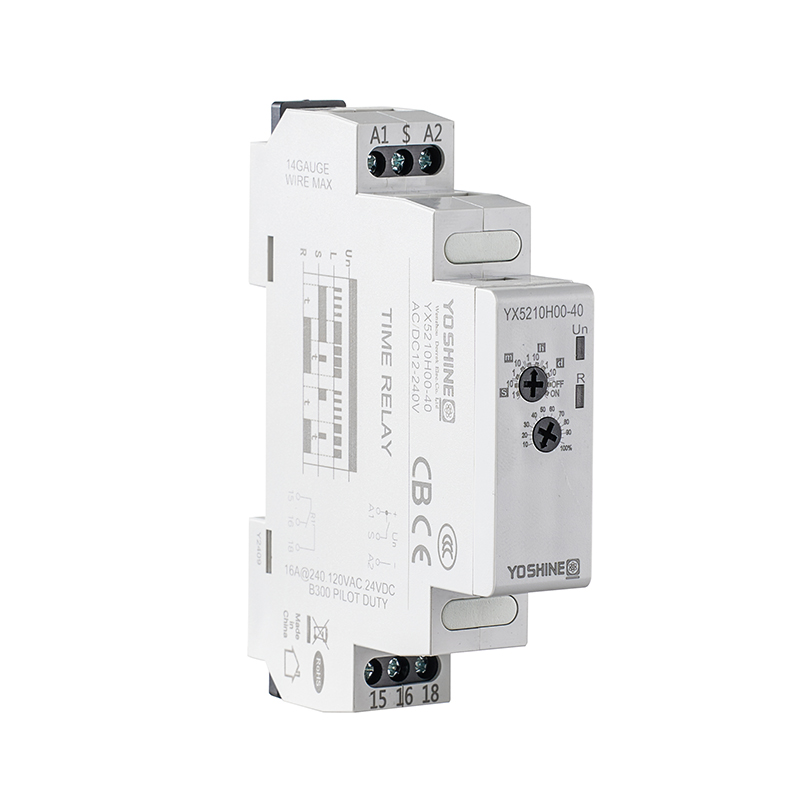
Industrial automation systems rely on signals that repeat in a controlled rhythm. These signals help machines understand timing, movement, and sequence. In this environment, the pulse counter relay has become a practical and widely used control element. It supports signal counting tasks in a structured way and helps maintain order in continuous operations.
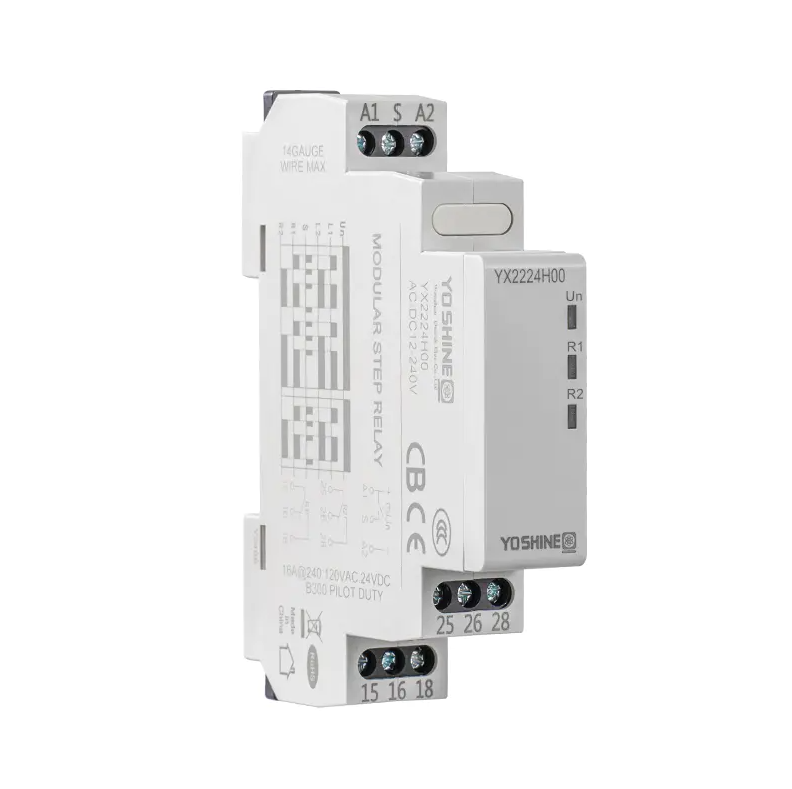
Across many industrial setups in China, pulse counter relay devices are commonly included in control layouts where repeated actions must be tracked without interruption. The interest is not tied to one application field. It appears across production lines, transport systems, and general control environments where repetition is part of daily operation.
Automation systems depend on signals that repeat in cycles. These cycles often represent movement, steps, or operational stages. A pulse relay helps track these repeating signals in a consistent manner.
In many systems, human observation is not practical. Signals happen too quickly or too frequently. A pulse relay provides a structured way to register these changes.
It works as a counting layer inside a control process. Instead of reacting to every single signal manually, the system uses the relay to organize and track repetition.
This reduces confusion in signal interpretation and supports smoother system behavior.
Automation setups built around signals need hardware that reliably picks up incoming inputs. When pulses fire over and over, the system needs a way to tally them to track real machine activity.
Pulse relays sit between incoming signal sources and the main control unit. They gather every pulse signal and convert those repeated triggers into clear, usable count values.
On real production equipment, this lets controllers track how many cycles a machine has run. The counted pulses can stand for movement loops, process steps or recurring mechanical movements.
This relay doesn't alter the original signal itself. Its only job is sorting and tallying pulses. This key difference matters a lot when designing automated control circuits.
Pulse relay usage appears in many industrial environments. Each environment applies it in a slightly different way, depending on workflow structure.
| Application Area | Usage Style | Functional Purpose |
|---|---|---|
| Production systems | Cycle tracking | Monitoring repeated operations |
| Transport systems | Movement counting | Tracking flow activity |
| Packaging systems | Step counting | Organizing process stages |
| Mechanical systems | Motion tracking | Recording repeated actions |
| Control panels | Signal management | Structuring input response |
These applications show that the relay is not limited to one function. It adapts to different operational needs where repetition is part of system logic.
The role remains consistent: tracking signals in a structured and readable way.
Automation systems are built around sequences. Each sequence depends on signals that define when something starts, continues, or stops.
Without signal counting, repeated actions can become unclear. Machines may lose track of how many cycles have occurred.
A pulse relay helps reduce this uncertainty. It introduces structure into repetitive processes.
It also supports system stability. When signals are organized, system responses become easier to manage.
This does not change the complexity of the system. It simply helps organize it.
Repetitive operations are common in industrial environments. Machines often perform the same action many times in a continuous loop.
A pulse relay helps track these repetitions without requiring constant monitoring.
It collects each pulse and records it as part of a sequence. Over time, this creates a clear pattern of activity.
This pattern can then be used to support further system actions. It may guide transitions between steps or help maintain process order.
The relay acts quietly in the background, supporting structure without interfering with the main operation.
System stability depends on predictable behavior. When signals are unclear, systems may respond inconsistently.
A pulse relay helps reduce this issue by organizing signal flow. Instead of treating every input as isolated, it groups them into meaningful counts.
This grouping reduces randomness in system interpretation.
It also helps prevent unnecessary interruptions in operation. When signals are structured, control systems can respond more smoothly.
Stability in automation is not about speed alone. It is about clarity in signal behavior.
Modern control systems often use layered structures. Each layer has a specific role in managing signals and responses.
A pulse relay is usually placed in a position where it can observe repeated inputs and pass organized information upward.
It does not replace other control elements. Instead, it supports them by simplifying signal patterns.
In layered systems, clarity between levels is important. The relay helps maintain that clarity.
It allows upper layers to focus on decision-making instead of raw signal repetition.
Industrial environments often deal with fast and repeated signals. Without structured counting, several challenges may appear.
One common issue is signal overload. Too many repeated inputs can make interpretation difficult.
Another issue is loss of sequence clarity. When repetition is not tracked properly, system steps may become unclear.
A pulse relay helps reduce these challenges by organizing signals into countable units.
This creates a more manageable structure for control systems.
Pulse Relays Factory is used across different types of equipment, each with its own behavior pattern.
Some machines produce fast repeating signals. Others operate in slower cycles. The relay helps both by adapting to the rhythm of input.
It is also used in systems where multiple devices operate together. In such cases, signal coordination becomes important.
The relay supports this coordination by maintaining a consistent method of counting.
It does not depend on the type of equipment. It depends on the presence of repeated signals.
Industrial hardware earns its practical value by staying simple. Equipment built to handle one specific job without extra complicated features stays popular across many work sites.
Pulse relays follow this design mindset. Their whole purpose is straightforward: tally up incoming pulse signals.
This simple core function lets technicians slot them into all kinds of different control layouts with little hassle.
Operators also won't spend much time tuning or modifying the unit once installed.
Most automation engineers pick these basic, reliable parts because they keep the whole system easy to monitor and maintain over years of operation.
Current industrial design prioritizes systems that are simple to monitor and troubleshoot, rather than packing on unnecessary complexity. Designers aim for clean, logical circuit structures wherever possible.
Pulse relays match this trend by sorting messy recurring pulse signals into easy-to-read count data.
They bridge the gap between raw machine motion signals and readable data the control system can process.
Factory operations keep evolving, so hardware that cleans up signal processing stays highly relevant.
Thanks to their consistent job of tracking repeated machine pulses, pulse counter relays still hold an essential spot in modern automated layouts.

Popular Products
Have Questions?
Get in Touch!
Our aim is to provide the market and the customers with high quality products like Pulse Relays and customized solutions.
Zhiguang Industry Zone, Liushi Town, Yueqing, Wenzhou, Zhejiang, China.
+86-13819765860


 English
 русский
 Español