Factories rarely offer calm conditions. Air carries dust. Surfaces hold moisture. Equipment runs for long hours and creates constant vibration. Temperature can shift within a single day. In such places, every device is tested by the environment around it. Industrial wireless relay are no exception. Their role may seem simple, yet their performance affects how smoothly systems respond.
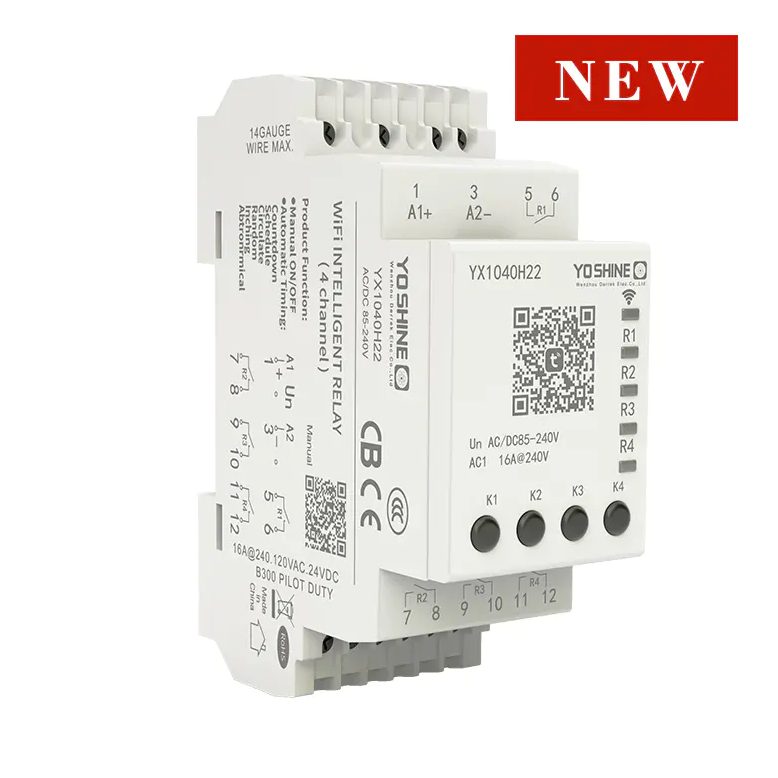
Wireless control has become more visible in recent years. It allows flexible layouts and reduces the need for long cable runs. Still, many users hesitate when thinking about harsh conditions. They wonder if signals can remain steady, and whether the devices can handle ongoing stress.
No single issue makes industrial settings harsh for relays. A combination of mechanical strain and environmental hazards hurts reliability, each bringing unique troubles.
Open production workshops are full of dust. It covers surfaces and seeps into tiny gaps inside the device. After long-term accumulation, dust damages internal components and distorts signal transmission. Humidity is another big problem—moisture builds up from damp air, equipment cleaning or water splashes.
Workplaces often face drastic temperature shifts. Some areas stay hot all shift long, while temperatures drop sharply once production stops. Materials expand and contract repeatedly with temperature changes, gradually wearing down the relay structure.
Constant vibration is unavoidable in most factories. Operating machines send vibrations through floors and brackets. Relays installed nearby have to endure continuous shaking without loose contacts or unstable performance.
Electrical interference is not easy to detect yet equally critical. Other equipment emits overlapping signals, creating messy signal surroundings that disrupt normal relay work.
These negative factors rarely appear separately. Relays deployed in harsh spots need to resist all these issues at the same time, instead of just coping with one alone.
Design plays a central role in how wireless relays perform. Manufacturers consider the environment before shaping the product.
The outer housing is often built to limit exposure. It acts as a barrier against dust and moisture. A well-sealed enclosure helps keep internal parts stable. Even small design changes in the housing can reduce long-term wear.
Inside the relay, components are arranged to reduce sensitivity to movement. This helps the device remain stable during vibration. Materials are selected with temperature changes in mind. They are expected to keep their shape and function under repeated shifts.
Signal handling is another key area. Wireless relays are not passive receivers. They actively manage how signals are sent and received. When the environment changes, the relay adjusts its communication behavior. This allows it to maintain a stable link without interruption.
These design features do not act alone. They work together to support performance under pressure.
Installation is often underestimated. Many reliability issues do not come from the relay itself, but from how it is placed.
Location matters. A relay installed near heavy machinery may face stronger vibration than necessary. Moving it a short distance can reduce stress. Placement also affects signal quality. Objects such as metal structures can weaken communication paths.
Mounting method is equally important. A secure installation reduces movement. It helps protect the internal structure over time. Loose mounting can lead to gradual wear.
Environmental exposure should be considered during setup. Placing the relay in a slightly sheltered area can reduce contact with dust or moisture. Simple protective covers can also help extend service life.
Power supply stability is another factor. A steady source supports consistent operation. Fluctuations may cause interruptions that are not related to the relay design.
Installation is not just a starting step. It shapes how the relay behaves throughout its use.
Signal stability is a common concern. Industrial environments often contain many sources of communication. This creates a complex signal landscape.
Wireless relays are designed to work within this complexity. They do not depend on a fixed communication pattern. Instead, they adjust how signals are handled when interference appears. This helps maintain a stable connection.
Distance plays a role as well. Signals weaken as they travel. Keeping devices within a reasonable range helps maintain clarity. Clear paths between relays also improve communication.
Obstacles can affect signal flow. Large structures may reflect or block signals. In many cases, small adjustments in position can improve performance. Even a slight change in angle can make a difference.
Signal stability is not about avoiding interference completely. It is about managing it in a way that allows consistent operation.
Wired relay solutions have been standard for years. Their main advantage lies in hardwired direct links. Signals run through physical wires, so outside electrical noise rarely messes with transmission.
Wireless relays cut out all cabling entirely, which shifts how we judge their durability. Since there's no wiring, you don't have to worry about fraying or breakage from frequent bending and shifting machinery. This works really well on constantly moving equipment.
Even so, wireless units live or die by signal strength, bringing a whole new set of reliability worries. Instead of safeguarding cables, you now have to keep an unobstructed communication path at all times.
Picking wired or wireless isn't a clear one-size-fits-all call; each fits different working scenarios. Wireless offers handy flexibility for certain sites, while wired connections deliver rock-solid signal stability for others. Lots of factories even mix both styles in one system.
At the end of the day, long-term reliability doesn't boil down to whether a system uses wires. It all comes down to how well the setup fits your actual working environment.
Long-term performance is shaped by several practical factors. These are often simple, yet they have a strong effect.
| Factor | Impact on Performance |
|---|---|
| Placement | Affects exposure to environmental stress and signal clarity |
| Mounting stability | Reduces vibration-related wear |
| Environmental protection | Limits contact with dust and moisture |
| Signal path | Influences communication consistency |
| Routine checks | Helps detect early signs of wear |
Placement is one of the easiest factors to adjust. Even a small change can improve both protection and signal strength. Mounting stability supports the internal structure by reducing constant movement.
Environmental protection can be enhanced with simple additions. Covers or enclosures help reduce direct exposure. Signal path clarity ensures that communication remains steady.
Routine checks do not need to be complex. Observing the condition of the relay and its surroundings can prevent larger issues from developing.
Maintenance for wireless relays is often straightforward. The absence of cables reduces the need for checking physical connections. Still, regular attention is important.
Visual inspection is a practical starting point. It allows users to spot dust buildup or signs of damage. Cleaning the outer surface can help maintain proper function.
Signal performance can also be observed during operation. If communication becomes irregular, it may indicate interference or positioning issues. Adjustments can often solve these problems without replacing the device.
Protective features should be reviewed over time. Seals and covers may wear down. Ensuring they remain intact helps maintain reliability.
Maintenance does not require complex steps. It relies on simple, consistent actions that support long-term use.
Reliability is often judged through daily experience. Users pay attention to how the relay behaves over time.
Consistent performance builds confidence. A relay that operates smoothly under pressure is seen as dependable. Occasional adjustments are expected, but frequent disruptions can reduce trust.
Ease of use also plays a role. Systems that are simple to install and maintain are often viewed as more reliable. This perception is linked to both performance and convenience.
Different environments create different expectations. What works well in one setting may need adjustment in another. Understanding local conditions helps users make better decisions.
Reliability is not defined by a single feature. It grows from steady performance, practical design, and the ability to handle everyday challenges.

Popular Products
Have Questions?
Get in Touch!
Our aim is to provide the market and the customers with high quality products like Pulse Relays and customized solutions.
Zhiguang Industry Zone, Liushi Town, Yueqing, Wenzhou, Zhejiang, China.
+86-13819765860


 English
 русский
 Español