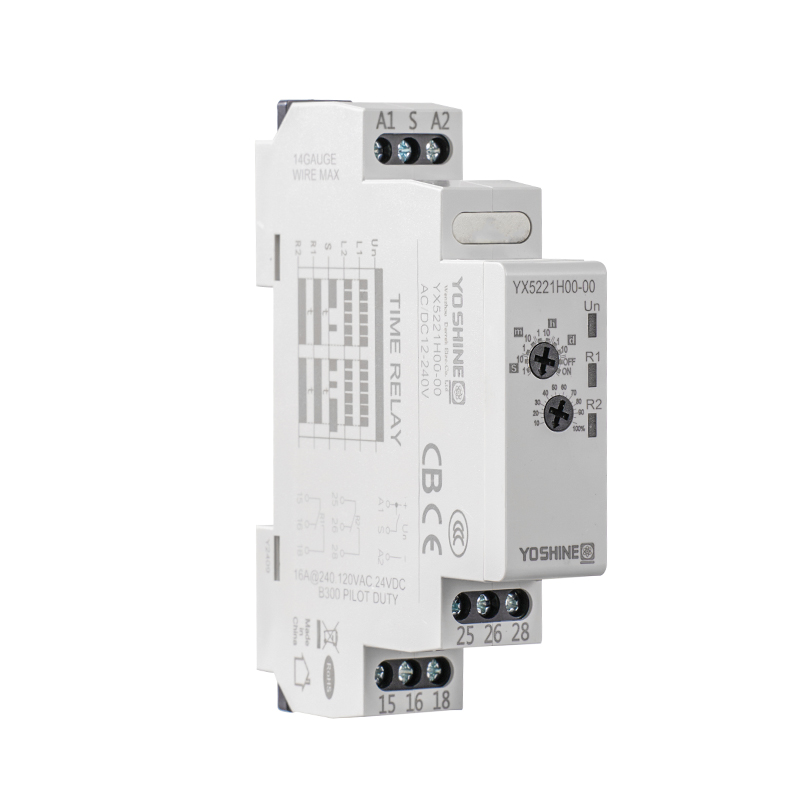
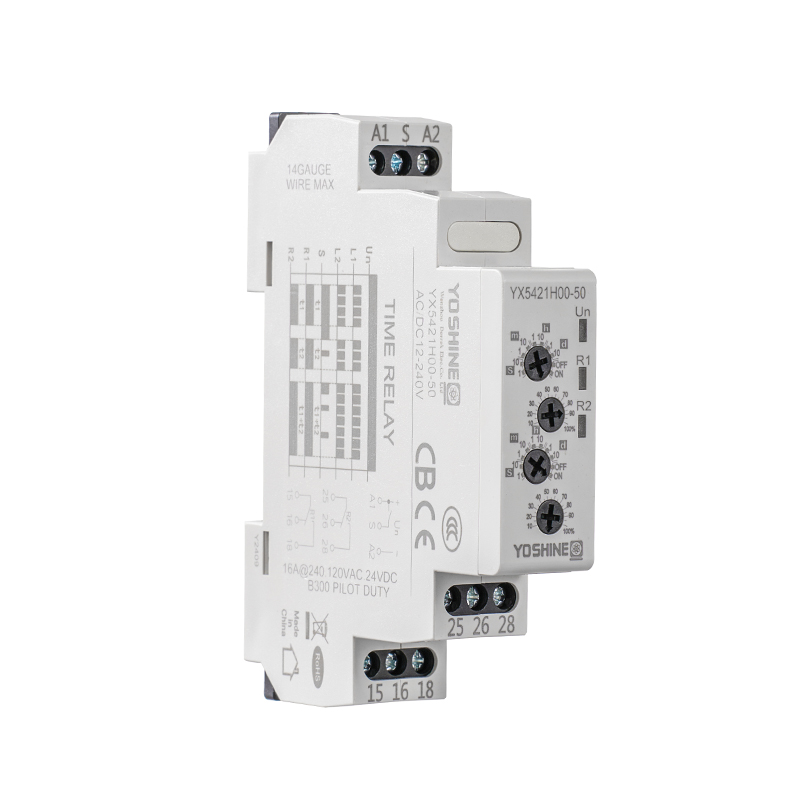
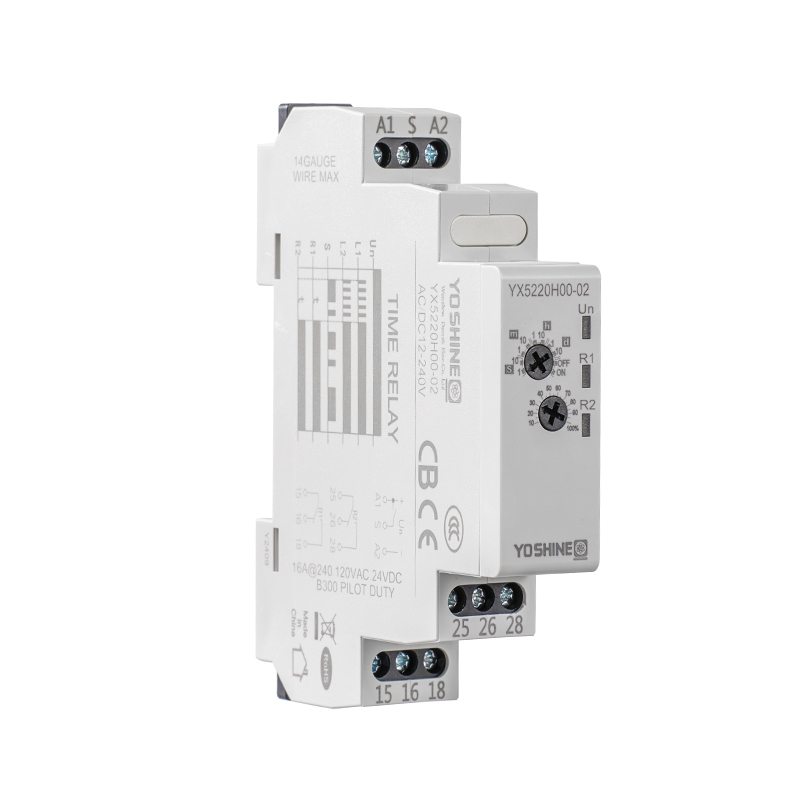
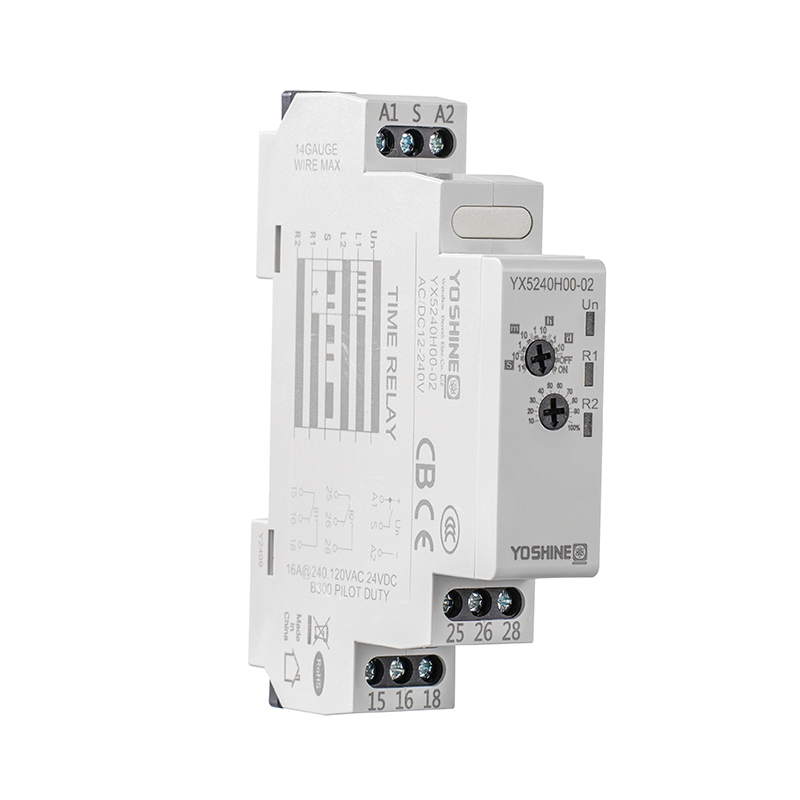
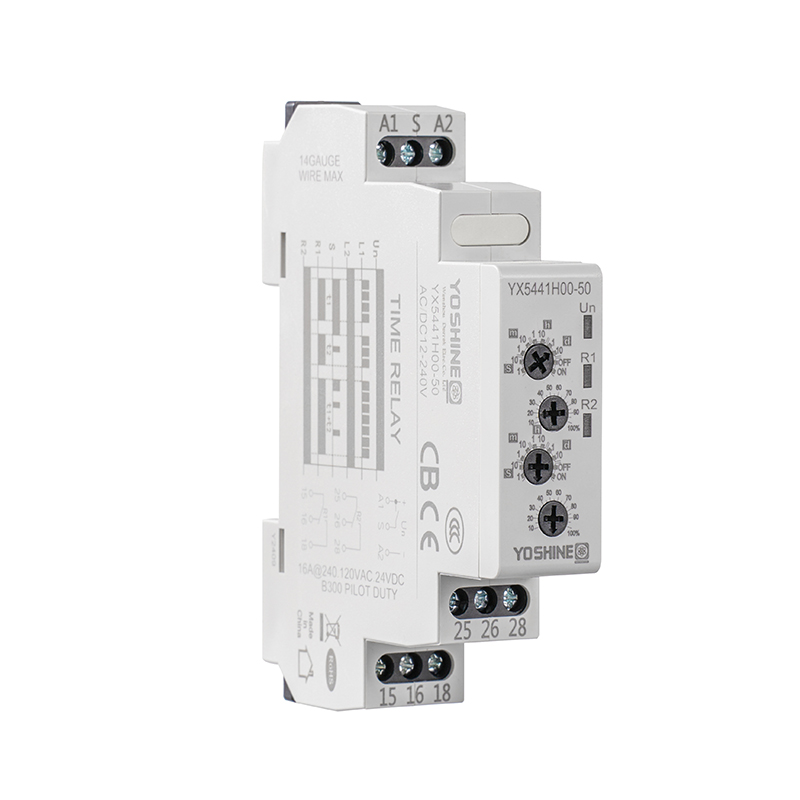
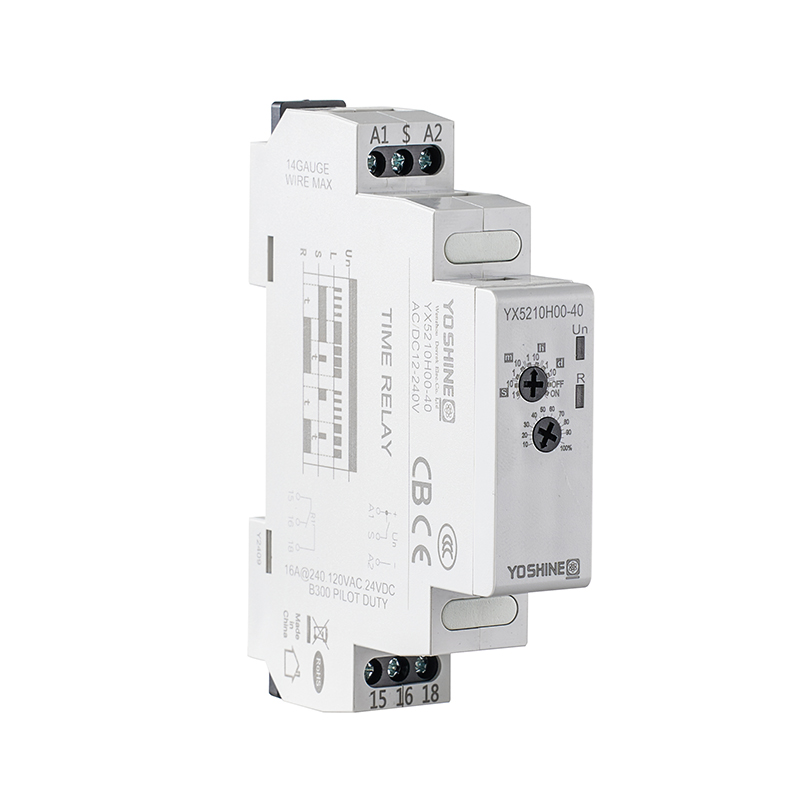
Modern machines and control systems need timing that shifts smoothly between different jobs without stopping the whole line. Single-purpose relays used to handle simple on-off tasks, but today' s setups mix conveyors, pumps, lights, and safety gates that all need their own rhythms. One device now has to switch from a long delay to a repeating cycle and then to a short pulse without rewiring anything. Multifunction Time Relay fill that gap by packing several timing behaviors into one unit. The same small box can handle delay-on in the morning, cyclic runs during the day, and pulse outputs at shift change. Production floors, energy rooms, transport hubs, and building systems all lean on this kind of flexible control to keep everything moving together without extra boxes cluttering the panel.
The biggest draw comes from the ability to flip between operating modes with a simple dial or button press. One setting runs a standard delay after power arrives, another creates repeating on-off cycles, and a third sends short pulses at set intervals. All these behaviors live inside the same housing so installers carry fewer spare parts.
Switching between modes happens without losing the current state, so the system stays on beat even when the recipe changes mid-shift. Contacts hold their timing even when the mode changes, which keeps pumps from running dry or lights from flickering at the wrong moment.
These relays talk easily to sensors, PLCs, and other controllers through standard wiring points. A single unit can watch a door sensor, wait for a tank level, then trigger both a valve and an alarm in sequence. The coordination reduces loose wires and extra timers that used to fill every panel.
Stability stays high across all modes because the internal circuit keeps the same reference clock no matter which function runs. That steady base lets the whole control loop stay tight even when the factory switches from daytime production to nighttime cleaning cycles.
On automated production lines the relay coordinates stations that run at different speeds. One mode delays the start of a filler until the bottle reaches position, another cycles a conveyor in short bursts to avoid jamming, and a third pulses an ejector arm exactly when needed. The single device replaces three separate timers and keeps the line flowing without constant manual tweaks.
Energy rooms use the relays to stagger large motors so they do not all start at once and spike the current draw. Lighting banks turn on in stages during evening hours, then switch to a cyclic mode that dims sections when areas sit empty. The same unit handles both tasks by changing its internal mode at the end of the workday.
Transportation sites rely on the relays for gate timing, signal sequencing, and platform lighting. A gate stays open for a set delay after the train clears, then cycles warning lights until the next arrival. One relay manages the whole sequence without needing separate units for each layer of control.
Inside smart buildings the relays link lighting, ventilation, and access systems. HVAC runs longer after meeting rooms empty, security lights pulse during patrols, and lobby lighting fades on a slow cycle after closing time. The multi-function unit ties all those schedules together so the building responds smoothly without a cabinet full of separate timers.
Each relay carries a set of built-in timing ranges that can be dialed in on site to match the exact need of the moment. Installers set the delay minutes, cycle intervals, or pulse widths right at the panel instead of ordering custom versions weeks ahead.
The same physical relay can move from a production line to a pump station to a parking gate simply by changing its mode setting. No new hardware travels to the job site when the application changes.
Complex sequences that once needed chains of timers now run inside one box. A sensor triggers a delay, the delay starts a cycle, and the cycle ends with a pulse—all handled by different modes inside the single relay. Fewer components mean shorter wiring runs and smaller enclosures.
Resource use drops because one relay replaces several single-function units. Panels stay cleaner, spare-part lists shrink, and maintenance crews check one device instead of hunting through racks of identical-looking timers.
Automated setups gain room to grow when one relay handles multiple timing jobs. Changes in process flow no longer force a full panel redesign.
Across widely different sites the relays provide a common timing foundation. Whether the job sits on a factory floor, inside a transit station, or high in a commercial tower, the control stays steady and adaptable.
| Behavior Type | Typical Use Example | System Benefit |
|---|---|---|
| Delay After Power On | Equipment warm-up period | Prevents dry starts on pumps |
| Repeating Cycle Mode | Intermittent conveyor jogging | Reduces material pile-up |
| Short Pulse Output | Ejector or alarm trigger | Precise one-shot actions |
| Combined Sequences | Sensor delay then cycle then pulse | Fewer separate devices needed |
| Mode Switching On Fly | Day shift to night cleaning schedule | No panel rewiring during changeover |
This factory, known as YOSHINE and reachable at https://www.relayfactory.net/ , keeps production lines focused on building multi-function time relays for automation and control work. Assembly stations turn components into finished units that pass through consistent checks before boxing. Years of running the same core steps have taught the crew how small adjustments in seating and wiring affect long-term stability in the field. Supply moves steadily to partners who need timing control that shifts with the job without swapping hardware.
Dedicated time relay production sites keep feeding control panels with units that adapt on the spot. Their steady output supports the layered schedules that run factories, buildings, and transport systems day after day.

Popular Products
Have Questions?
Get in Touch!
Our aim is to provide the market and the customers with high quality products like Pulse Relays and customized solutions.
Zhiguang Industry Zone, Liushi Town, Yueqing, Wenzhou, Zhejiang, China.
+86-13819765860


 English
 русский
 Español