Energy use is often difficult to understand when people only look at a final bill or a general reading.
Inside a building, factory, workshop, or other working environment, energy may be used by many different devices at the same time. Lighting, production equipment, pumps, heating systems, cooling equipment, and other electrical loads can all contribute to overall consumption.
This creates a need for better visibility.
Energy monitoring systems help collect information from meters and other devices so that users can understand how energy is being used. The information can then support equipment management, maintenance planning, and daily operating decisions.
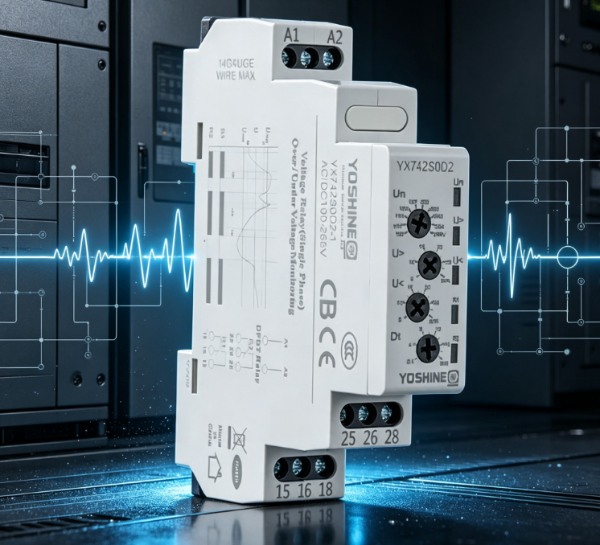
A pulse output relay can play a useful role in this process.
The relay can help pass pulse-based signals from one device to another part of a monitoring system. In simple terms, it creates a connection between the information produced by a meter and the system that needs to receive or process that information.
The relay itself does not replace the meter or monitoring platform. Its role is to help different parts of the system work together.
This makes pulse output relays relevant to energy monitoring systems where clear signal transmission and device compatibility matter.
An energy monitoring system usually contains several connected elements.
A meter observes energy-related activity. A monitoring device receives information. Software or another control system may then organize the information for users.
The challenge is not always collecting the reading itself. The challenge can also involve moving the signal from one part of the system to another in a usable form.
This is where a pulse output relay can become useful.
A pulse signal can represent a change or an accumulated amount recorded by a meter. The relay can help pass that signal to another device.
The basic relationship can be viewed like this:
| System element | Main role |
| Energy meter | Records energy-related activity |
| Pulse output | Provides a signal related to the recorded activity |
| Relay | Helps pass or control the signal |
| Monitoring device | Receives the signal |
| Monitoring platform | Organizes and displays information |
The relay therefore works as a connection point within the monitoring chain.
It is a small component, but its position can matter. If the signal cannot move correctly between devices, the monitoring system may not receive the information it needs.
For this reason, pulse output relay selection is often considered alongside the wider system design.
Energy monitoring becomes more useful when information can be collected over time.
A single reading can show a particular condition at one moment. A series of signals can provide a broader picture of how equipment or a facility is using energy.
Pulse-based output can support this type of information collection.
When a meter produces a pulse signal, the monitoring system can receive that signal and use it as part of its energy information.
The exact way the information is interpreted depends on the meter and monitoring equipment. The relay's role is to help maintain the connection between these devices.
This creates several possible uses.
Equipment monitoring
Users can observe energy-related activity associated with specific equipment or areas.
Usage tracking
Repeated signals can help a monitoring system build a picture of energy use over a period of operation.
System comparison
Information from different meters can be collected and reviewed within a wider monitoring structure.
Operational awareness
Changes in energy-related activity may help users notice that an operating condition has changed.
The relay does not make these decisions. It supports the communication path that allows the monitoring system to receive information.
That distinction is important when evaluating the role of the component.
A monitoring system may contain equipment from different parts of a larger installation.
The meter may come from one production process. The monitoring device may belong to another part of the system. Additional control or communication equipment may also be involved.
For these devices to work together, their signals need to be compatible.
This does not mean that every relay can be used in every energy monitoring system.
The relay needs to match the requirements of the connected equipment. The output method, connection arrangement, and operating conditions all need to be considered.
A simple selection process can include several questions:
These questions help move the selection process away from the relay alone.
The real objective is to create a compatible path between devices.
For manufacturers, this means product development needs to consider the wider application. For buyers, it means checking the complete system before selecting a component.
Energy monitoring is not limited to one type of building or industry.
A small commercial building may need to understand how different areas use electricity. A manufacturing site may want to observe energy-related activity across different sections. A facility management system may collect information from several meters.
The scale and structure can vary, but the basic need is similar.
Users want information that helps them understand what is happening within the system.
Potential application areas include:
| Application area | Monitoring purpose |
| Commercial buildings | Observe energy use across different areas |
| Manufacturing facilities | Track energy activity related to equipment |
| Workshops | Support equipment and operational monitoring |
| Utility systems | Collect information from connected meters |
| Facility management | Bring energy information into a wider monitoring system |
| Automated systems | Connect meter signals with control or monitoring equipment |
The relay's role can change slightly depending on the application.
In one system, it may connect a meter with a local monitoring device. In another, it may help pass information into a larger automated system.
This flexibility makes pulse output relays useful in different energy monitoring environments.
However, the application should always guide the selection.
Modern monitoring systems often contain more than one layer.
There may be meters at the equipment level, communication devices at the system level, and software at the management level.
Information needs to move between these layers.
A pulse output relay can help create a practical connection between the meter and the receiving equipment.
This relationship can be understood through a simple flow:
Meter → Pulse Signal → Relay → Receiving Device → Monitoring System
Each part has a different role.
The meter provides the original information. The pulse output carries that information in signal form. The relay helps manage the connection. The receiving device accepts the signal. The monitoring system then uses the information for display, recording, or further management.
This arrangement can make energy monitoring easier to integrate into existing equipment.
A facility does not always need to replace its entire monitoring structure. In some applications, adding suitable connection components can help existing devices communicate with other parts of the system.
The actual solution depends on the equipment already in place.
This is why system planning remains important.
Manufacturers need to think beyond the physical relay.
The component will eventually become part of another system. Its design therefore needs to consider how it will be installed, connected, operated, and maintained.
Several areas can influence product development.
The relay needs to support the type of pulse signal used by the intended application.
The connection arrangement should suit the equipment that will be linked to the relay.
The surrounding environment can influence material selection and product construction.
The relay should be practical to inspect as part of the larger monitoring system.
The product needs to fit into the communication structure of the intended application.
These considerations can affect manufacturing decisions.
A manufacturer may also need to develop different product configurations for different applications. This requires organized production and clear product information.
The goal is not simply to make a relay that can pass a signal. It is to develop a component that can operate as part of a complete monitoring arrangement.
Energy monitoring is useful because information can influence decisions.
When users can see how equipment or areas are consuming energy, they may have a clearer basis for reviewing operating practices.
A monitoring system can help identify patterns that are difficult to notice from occasional manual checks.
For example, an unexpected change in energy activity may encourage a maintenance team to inspect connected equipment. A difference between areas may lead facility managers to review operating schedules or equipment use.
The relay does not analyze this information.
Its contribution is more basic but still important. It helps the signal move from the meter toward the monitoring system.
This can support several management activities:
The quality of the final decision depends on the wider monitoring system and the information it receives.
A relay should therefore be viewed as one component within a larger information chain.
Its value comes from helping that chain remain connected.
Choosing a pulse output relay is easier when the application is clearly understood.
Buyers can begin by identifying the equipment that will be connected. The meter, receiving device, control equipment, and monitoring platform all matter.
A practical checklist can include:
This approach can also improve communication between buyers and manufacturers.
A buyer who provides clear information about the intended application gives the manufacturer a better basis for discussing product suitability.
The discussion can then focus on the actual system rather than on a general product description.
As energy monitoring becomes more connected with equipment management and facility operation, small signal components can take on a practical role within larger systems. A pulse output relay sits between the source of energy information and the equipment that receives it, helping create the signal path needed for monitoring applications.

Popular Products
Have Questions?
Get in Touch!
Our aim is to provide the market and the customers with high quality products like Pulse Relays and customized solutions.
Zhiguang Industry Zone, Liushi Town, Yueqing, Wenzhou, Zhejiang, China.
+86-13819765860


 English
 русский
 Español