Industrial equipment often performs the same action again and again. A product passes through a machine. A conveyor moves an item from one position to another. A rotating part completes a cycle. A sensor detects each movement.
These repeated actions create signals. When a control system needs to know how many times an action has happened, a Pulse Counter Relay can become a useful part of the setup.
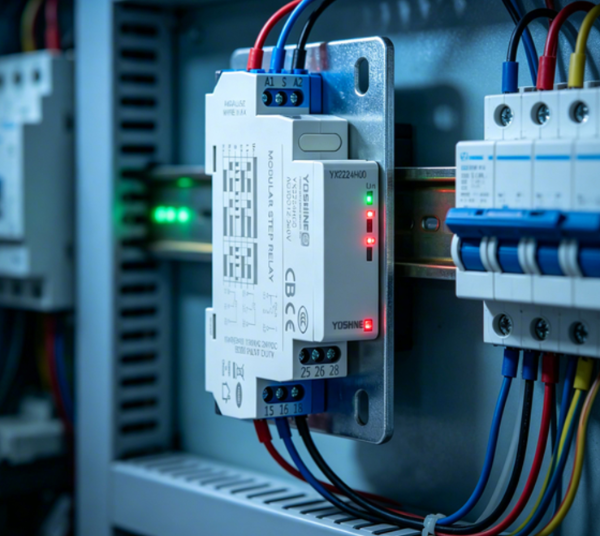
The basic idea is simple. A pulse is treated as an individual event. The relay receives these repeated signals and counts them. Depending on the system design, the counted signal can then be used to control another action.
This makes the device useful in situations where counting is connected with machine operation. It is not only about displaying a number. In many applications, the count can become part of an automatic process.
A Relay works by receiving repeated electrical signals from a suitable input source. The source may be a sensor, switch, meter, or another control device. Each valid signal represents an event that the system wants to recognize.
For example, imagine a conveyor carrying individual products. A sensor can detect each product as it passes a certain point. Every detection creates a pulse. The Relay receives those pulses and keeps track of the number of detected events.
The counted information can then be connected with a control action. When a particular count is reached, the relay may change its output state. This can allow another part of the machine to respond.
The relay therefore creates a link between repeated events and automatic control. Instead of requiring an operator to watch every movement, the system can respond to the signals on its own.
This basic function is also found in broader counting systems used for production counting, machine cycle tracking, batch operations, and other repeated processes.
Production lines are one of the natural application areas for pulse counting. Many production processes involve repeated movements that need to be tracked.
A sensor may detect every finished item that reaches a certain position. The Relay can count those detection signals. This provides the control system with a simple way to recognize production activity.
The same idea can be applied to machine cycles. A machine may complete one operation and then repeat it. Each completed cycle can create a signal. The relay can count these events and provide a basis for further control.
This can be useful when a process needs to work in batches. Instead of relying on an operator to decide when enough items have passed through the process, the counting function can become part of the machine's operation.
Typical production-related uses include:
The value comes from connecting the physical activity of a machine with a clear counting process.
Packaging equipment often depends on repeated steps. Products arrive one after another. Containers move through different positions. Filling, labeling, sealing, or grouping operations may need to occur in a controlled sequence.
A Relay can help count these repeated events.
Consider a packaging process where products need to be grouped before the next operation begins. A sensor can recognize each passing product. The relay counts the signals. When the required group has been recognized, the control system can move the process to another step.
The same principle can support other packaging tasks. Counting can help determine when a group is complete or when a repeated machine movement has occurred enough times for the next operation.
This makes pulse counting useful when the process depends on quantity rather than only on time.
It also gives equipment designers another way to organize automatic actions. A machine does not simply run continuously. It can react to the number of events that have taken place.
Yes. Conveyor systems are another practical area for Pulse Counter Relay applications.
A conveyor may move a large number of products through a production area. Operators may need to know how many products have passed a certain position. A sensor can detect each product, while the counting system records the repeated signals.
The relay can also support process changes. For example, a conveyor system may need to perform an action after a certain number of products have passed. The counted pulses can provide the trigger for that action.
This approach is useful because the counting function follows actual movement rather than an estimated operating period.
Pulse counters are commonly associated with conveyor equipment, production lines, packaging machinery, and other automated processes where repeated events need to be tracked.
The application does not need to be complicated. A simple detection point can create the input. The counting relay then gives the system a way to recognize how many events have occurred.
Machines often work through repeated cycles. One cycle may represent a complete cutting action, forming action, feeding movement, or another recurring operation.
When every cycle produces a recognizable signal, a Relay can count those events.
Cycle counting can help operators understand how much work a machine has performed. It can also be used as part of an automatic sequence. A machine may need to perform a repeated operation several times before another stage begins.
For example, a process may require a component to pass through a machine repeatedly. Instead of using manual observation, the control system can count the completed cycles. Once the required sequence has been reached, another action can take place.
This approach is especially useful when the physical movement itself provides a clear signal.
Cycle counting can also support routine equipment management. A record of repeated machine activity can give operators a clearer view of how often equipment has been operating. In some systems, counters are used to track machine cycles alongside other production information.
The important point is that the relay does not need to understand the entire machine process. It only needs to recognize the relevant repeated events.
Pulse counting is not limited to manufacturing equipment. It can also be connected with meters and flow-related systems.
Some meters provide pulse signals that represent repeated units of movement or consumption. A counting device can receive these signals and keep track of them.
For example, a water or gas meter may provide pulse output to another control or monitoring system. The pulses can then be counted to help track usage. Similar arrangements can be found in systems that monitor flow or other measurable events.
The advantage of this approach is that the meter does not necessarily need to provide a complex communication path for every application. A repeated pulse can act as a simple signal between the measuring device and the control system.
In practical applications, pulse counting can therefore appear in:
| Application | What the Pulse Represents | Possible Use |
| Production line | Product movement | Product counting |
| Conveyor | Passing item | Process control |
| Machine | Completed cycle | Cycle tracking |
| Packaging equipment | Product or group | Batch operation |
| Flow system | Meter event | Usage monitoring |
| Automated equipment | Repeated action | Sequence control |
The exact role depends on what generates the pulse and what the receiving system needs to do with the count.
Batch control is another area where counting becomes useful.
A batch process works around a defined quantity of repeated events. Products may need to be grouped. Materials may need to be processed in repeated portions. A machine may need to complete a certain number of operations before the next stage begins.
A Pulse Counter Relay can provide the counting function behind this process.
Imagine a system that needs to collect products into groups. Each product creates one detection signal. The relay counts the signals as the products move through the system. Once the group is complete, the output can be used to support the next operation.
This can help reduce the need for manual counting. It also allows quantity to become part of the control logic.
Batch applications can take different forms. A relay may help stop a process, start another operation, activate a warning, or change the operating sequence after the required number of events has been detected.
Pulse-input batch controllers are also used in applications where a counted quantity controls equipment such as pumps or mixing systems.
For this reason, the usefulness of a Relay extends beyond simple counting. The count can become a decision point within an automated process.
The usefulness of a Relay depends heavily on how the device fits into the surrounding system.
The input source needs to provide a signal that the relay can recognize. That source may be a sensor, switch, encoder, meter, or another control element. The relationship between the signal source and the relay should be clear before the system is put into operation.
The application also needs to define what each pulse means. One pulse might represent one product. In another system, it may represent one machine cycle or one movement.
This distinction matters because the meaning of the count comes from the application.
Users should also consider how the counted signal will be used. Some systems only need to monitor the number of events. Others need the relay output to trigger another action.
A practical selection process can therefore focus on several questions:
Signal quality is also important. In industrial environments, electrical noise or unstable input signals can affect counting. Some counting devices include signal filtering or other methods to distinguish valid pulses from unwanted signals.
The surrounding equipment should therefore be considered together with the relay itself. A Pulse Counter Relay is one part of a larger control process. Its usefulness comes from how well the counting function matches the event being monitored and the action that follows.

Popular Products
Have Questions?
Get in Touch!
Our aim is to provide the market and the customers with high quality products like Pulse Relays and customized solutions.
Zhiguang Industry Zone, Liushi Town, Yueqing, Wenzhou, Zhejiang, China.
+86-13819765860


 English
 русский
 Español