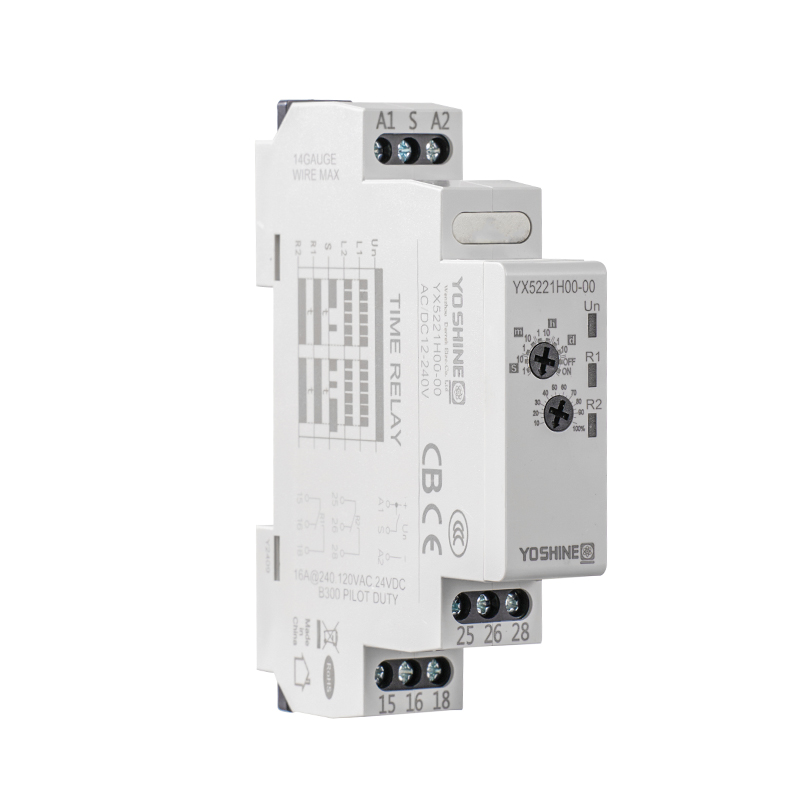
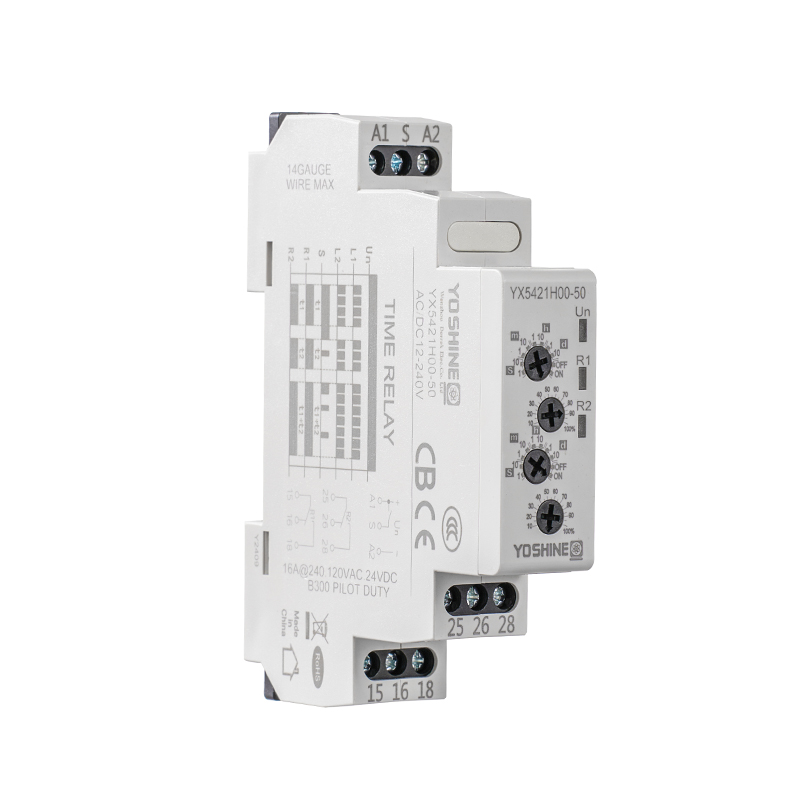
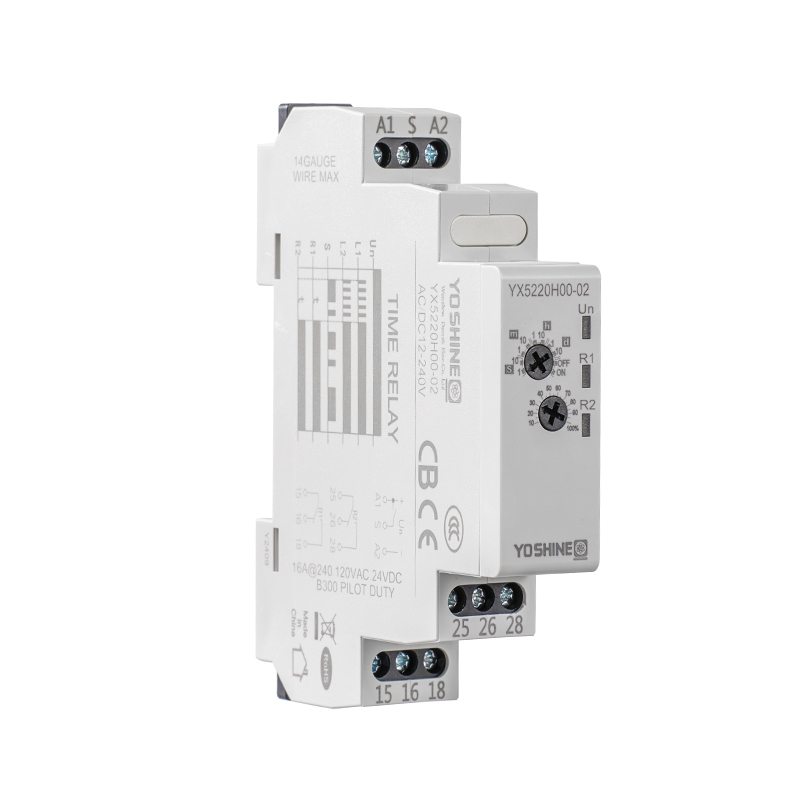
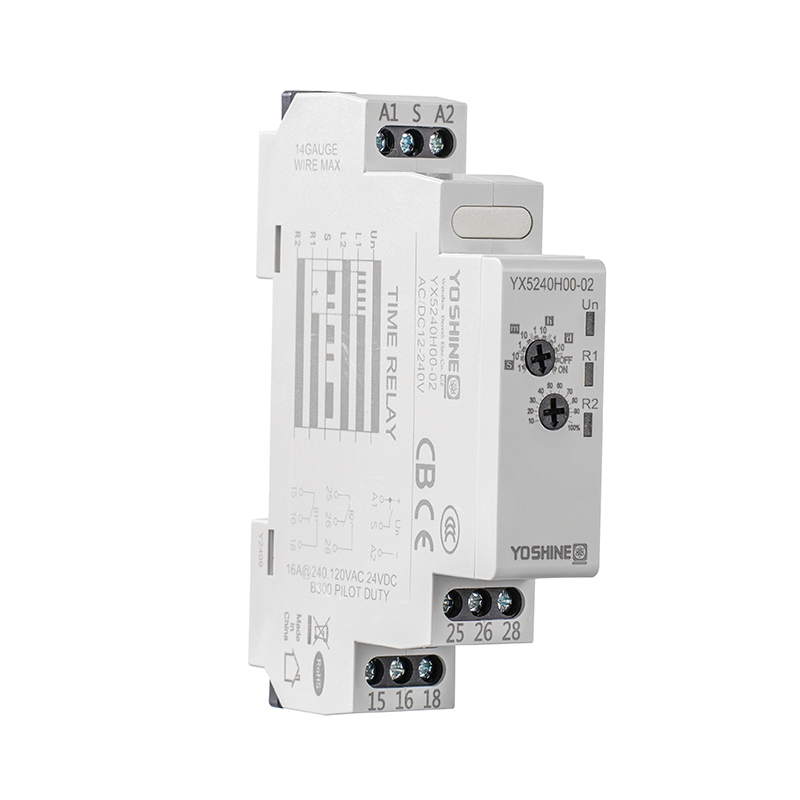
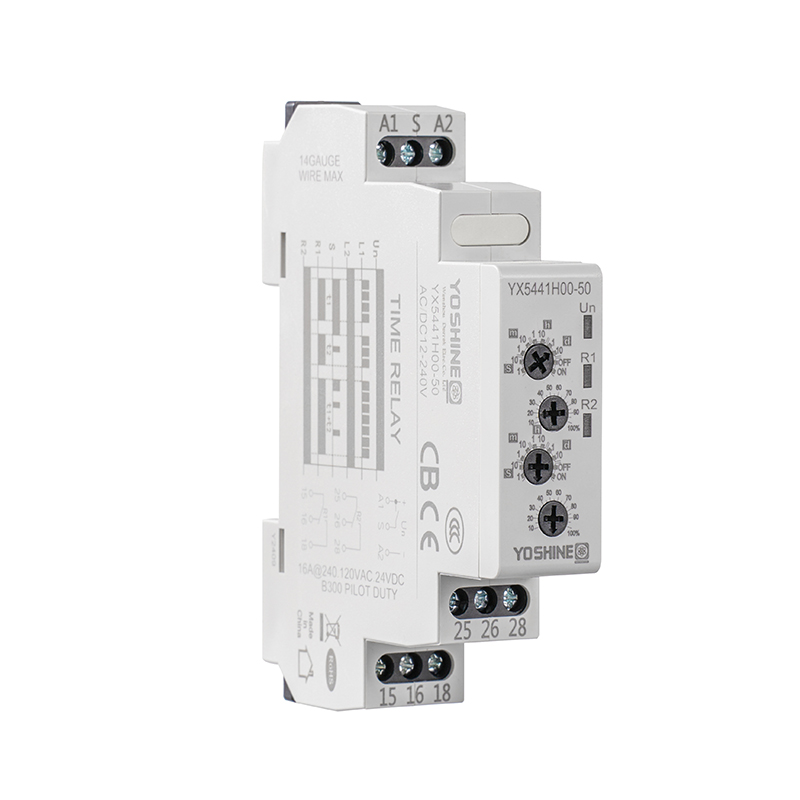
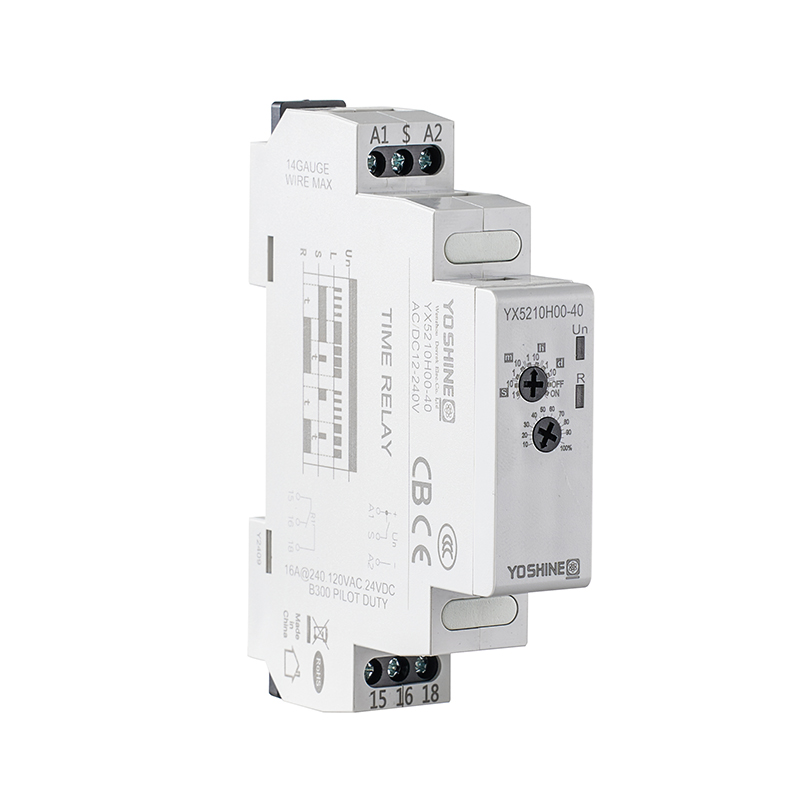
Time relays are those little boxes nobody really notices until the conveyor jams because the motor started too soon or the valve closed before the tank filled. They sit in control panels waiting for a trigger—sensor picks up a part, button gets pushed, PLC sends a pulse—and then they decide when to flip the output on, keep it on, or turn it off after a delay or interval. In factories this timing is everything: delay the downstream conveyor until the upstream clears, hold a pneumatic cylinder extended during welding, or pause a safety gate after an e-stop so the operator has time to clear the zone. Standard relays handle basic on-delay, off-delay, interval, or pulse jobs, but real applications often have weird needs—delay from 0.2 seconds to 120 hours in 0.05-second steps, reset only after two separate signals arrive in order, voltage that doesn't match standard 24V DC, or enclosure that survives constant vibration on a shaker feeder.
Custom time relay get built exactly for those gaps. They don't just tweak the dial; the whole thing gets redesigned—delay scales that fit the machine cycle, reset logic that waits for a counter or second input, input that takes 110VAC or 380VAC without extra transformers, or IP67 sealing for washdown areas. These changes make systems run smoother, cut downtime from mismatched timing, save panel space by eliminating extra timers or relay logic, and make troubleshooting easier because the timing matches the process instead of the other way around.
Time relays take care of the "when" in control circuits. They get a trigger signal and then wait or run for a set time before doing anything. On-delay types sit quiet until the delay is up, then switch the output—delay a conveyor start until the feeder is running full speed. Off-delay types keep the output going even after the input drops—hold a cooling fan on after the motor stops so it doesn't overheat. Interval timers turn the output on for a fixed time after trigger. Pulse timers give a quick burst. These jobs sequence actions: delay motor restart after overload so it doesn't kick back in too soon, hold a valve open during fill, pause interlock after fault so the operator has time to clear the area.
Older relays ran on mechanical clocks or air dashpots—simple stuff, but slow and not very accurate. Modern ones switched to electronic circuits—RC timing for basic delays, microcontrollers or digital counters for more complicated logic. Input energizes the timer, it counts up or down to the preset value, then flips the output (mechanical contacts or solid-state). Reset happens when power drops or a separate signal comes in. Accuracy depends on component quality, temperature stability, and calibration—drift can mess up timing and cause lines to jam or safety to trip for no reason.
Time relays are all over the place. In homes they run lights, appliances, or irrigation timers. In industry they sequence conveyor starts, time pump runs, delay motor restarts after overloads, coordinate robotic movements, or manage safety delays. They hold up in dust, vibration, temperature swings, and electrical noise, which makes them essential for automated lines, process control, and safety systems. When timing goes wrong, production stops or safety gets compromised—making reliable relays a quiet but critical part of the whole operation.
Custom time relays exist because standard models leave gaps in real applications. A line might need a delay from 0.5 seconds to 200 hours in 0.1-second steps, or a relay that resets only after two inputs arrive in sequence. Off-the-shelf products rarely hit those exact needs. Customization fills the gap by designing around the application, specific delay scales, multi-function modes, unusual input/output configurations, or special environmental protection.
The advantages show in adaptability. A custom relay can combine on-delay and interval timing in one unit, add programmable steps, or include extra contacts for signaling. Mounting can match existing panels, DIN rail, plug-in base, or custom hole pattern. Input voltage and output load adjust to the control circuit. This reduces the need for multiple relays or extra logic modules, simplifying wiring and cutting panel size.
Different industries gain directly. Automation lines use custom relays for exact actuator sequencing. Manufacturing equipment needs timing that matches cycle speeds or safety pauses. Control systems in harsh locations require wider temperature ranges or sealed enclosures. Compared to standard relays, custom versions reduce mismatches, lower downtime from timing errors, and improve overall system reliability by eliminating workarounds.
The whole thing starts with collecting all the exact details from the customer. Engineers sit down and go over everything: what delay range they want, how accurate it has to be, what input voltage is used, how much load the output needs to handle, how the reset works, what kind of environment it will run in, the mounting style they prefer, plus any special logic functions or required certifications. Those answers decide the circuit layout, the enclosure type, and which parts get picked.
Regular industry standards set the basic rules for things like timing precision, contact current ratings, insulation strength, and necessary safety approvals. From there, the custom part kicks in with changes like much longer delay ranges, mixing different timing modes together, or reset methods you won't find in standard catalogs. The tough parts are keeping costs reasonable while delivering good performance, making sure it doesn't cause electromagnetic interference with other equipment, and still staying reliable even after all the modifications.
When it comes to actually building them, assembly has to be done carefully. The printed circuit boards get loaded with the timing chips or circuits, the relay itself, and any protection parts like diodes or suppressors. Enclosures are either machined out of metal or molded in plastic so they match whatever mounting the customer already has in their panels. Connections use solid soldering or other secure methods that hold up under vibration. Every single relay gets tested individually: timing checked over the full temperature range, how well it handles repeated switching under load, insulation tested for high voltage, and making sure it responds correctly to input signals.
Quality checks happen from start to finish. Parts coming in the door are inspected first. During assembly there are spot checks to catch mistakes early. At the end, final tests run the relay through conditions that mimic real use to confirm it performs as promised. Every batch has full paperwork so you can trace back everything if there's ever a question. In the end, this step-by-step approach makes sure the custom time relay hits the exact specs the customer asked for and keeps working reliably for years.
In factories, these relays take care of the exact timing needed to stop things from going wrong on the line. Conveyors hold one section back until the part ahead is empty, so nothing stacks up. Robots use them to make sure the gripper opens or closes at just the right moment as the arm moves. Setting the delays to fit the machine's real cycle time cuts out most jams and lets everything produce more without stopping all the time.
Power systems count on them to keep things from getting dangerous. When a backup generator kicks in, there's a short wait before it takes the load so nothing overloads. During load shedding, they cut off unimportant circuits one after another in the correct sequence. After a problem clears, the reset works in a way that brings power back safely. They deal with big changes in voltage and the rough conditions inside substations or plants without failing.
In buildings and security, they control timing for different doors and alarms. Elevators wait a safe amount of time before the doors shut so people can get on or off without rushing. Door locks hold off unlocking right after a card is read, giving time to check if it's okay. Fire alarms can pause before blasting the full evacuation message to double-check it's not a false trigger. With steps in the timing or special ways to trigger them, they match whatever code or wiring the building already has.
For traffic lights and road control, they manage how signals change. Lights at crossings go through their phases with delays that work for people walking across or for emergency vehicles that need to jump the queue. Meters on freeway on-ramps let cars out one group at a time so they don't cause backups. The timing can change based on what the sensors see in real traffic, which keeps cars moving better and helps avoid crashes.
Pretty much everywhere you look, when the timing has to be just right and standard relays don't cut it, these made-to-order ones fix the problem. You end up with equipment that's safer to run, works more smoothly, and doesn't break down as often because of bad delays.
| Industry Sector | Typical Timing Requirement | Common Custom Feature | Practical Shop Benefit |
|---|---|---|---|
| Factory Automation | Exact actuator sequencing | Multi-step programmable delays | Reduces jams, boosts line speed |
| Power Management | Safe startup / load shedding | Dual-input reset logic | Prevents overload, safe re-energize |
| Building / Security | Door timing, alarm verification | Adjustable multi-range + auxiliary contacts | Meets code, fewer false alarms |
| Traffic Management | Signal phase sequencing | Sensor-triggered variable cycles | Smoother flow, less congestion |
| Harsh Environment | Long-term reliability in vibration/dust | Sealed enclosure + wide temp range | Lower failure rate, less downtime |
Time relay factory focus on making both regular off-the-shelf relays and the ones built to special orders. They take care of the full process: coming up with the design, finding the right parts, putting everything together, running tests, and giving support after the sale. These places build up real know-how in things like timing circuits, making enclosures that keep out dust and water, and passing all the required safety and performance checks so the relays hold up in actual use.
What pushes factories forward comes from better technology, what customers really need in their setups, and new rules that keep changing. Things like improved materials make the timing more stable over time, switching to digital circuits lets them add more features and easier adjustments, and tougher safety rules mean they have to beef up electrical isolation and add self-checking functions. To keep up, factories keep adding options like more ways to program the timing, relays that work in hotter or colder conditions, and quicker reaction times when triggered.
Right now the market wants more custom work and smarter relays. As automation keeps spreading, people need relays with exact timing sequences or even ways to talk to other equipment through networks. In energy systems, precise on-off control helps save power and run things more efficiently. Security setups and traffic controls ask for relays that stay dependable even when it's dusty, wet, or vibrating a lot. Factories feel the squeeze to deliver faster without letting quality slip.
When it comes to competing, the ones that win are quick to respond, good at helping customers figure out solutions, and always trying new ideas. There's plenty of room to grow in newer areas like controls for solar and wind power, smart electrical grids, and more advanced robots—places where you can't just grab a standard relay off the shelf. The factories that put money into flexible manufacturing lines and work closely with customers from the start are the ones grabbing these chances and building steady business.
In automation lines, timing mismatches can stop the whole show. A conveyor starts too early and slams into a stopped section, or a gripper releases before the arm is in position. Custom time relays fix those headaches by letting the delay match the actual machine cycle—maybe 1.2 seconds instead of the standard 1 second, or a delay that scales with line speed through an analog input. They also handle multi-step logic: wait for sensor 1, then delay 0.8 seconds, then trigger output only if sensor 2 confirms. Standard relays can't do that without extra timers or PLC code, but a custom one packs it into one box, cutting wiring, panel space, and troubleshooting time.
These relays also deal with harsh conditions better. Vibration on vibrating feeders or shakers shakes standard relays loose or causes contact bounce. Custom versions use heavier contacts, better mounting, or solid-state outputs that don't bounce at all. Temperature swings in foundries or outdoor panels make standard timing drift—custom relays use better crystals or compensation circuits to keep accuracy steady. Electrical noise from VFDs or welders can false-trigger standard relays; custom ones add filtering or shielding. The result is less downtime from timing failures, fewer false stops, and lines that run more consistently shift after shift.
Custom time relay technology will keep moving toward greater flexibility and integration. Digital platforms will allow field programming of multiple functions, reducing the need for different models. Communication interfaces will enable relays to report status, receive updates, or coordinate with PLCs and sensors.
Market demand will grow for intelligent products. Relays with self-diagnostics, predictive failure alerts, or adaptive timing based on load conditions will become more common. Miniaturization will fit them into tighter panels. Wider operating ranges will suit extreme environments.
Time relay factories will need to adapt. Faster prototyping and small-batch production will become essential. Investment in automation will help meet shorter lead times. Close collaboration with customers will drive innovation. Continuous research and development will keep pace with emerging needs—smart factories, renewable controls, advanced safety systems.
The time relay industry will remain vital as long as sequencing and delay functions are needed. Custom solutions and forward-thinking factories will ensure the technology keeps supporting reliable, efficient industrial operations.

Popular Products
Have Questions?
Get in Touch!
Our aim is to provide the market and the customers with high quality products like Pulse Relays and customized solutions.
Zhiguang Industry Zone, Liushi Town, Yueqing, Wenzhou, Zhejiang, China.
+86-13819765860


 English
 русский
 Español