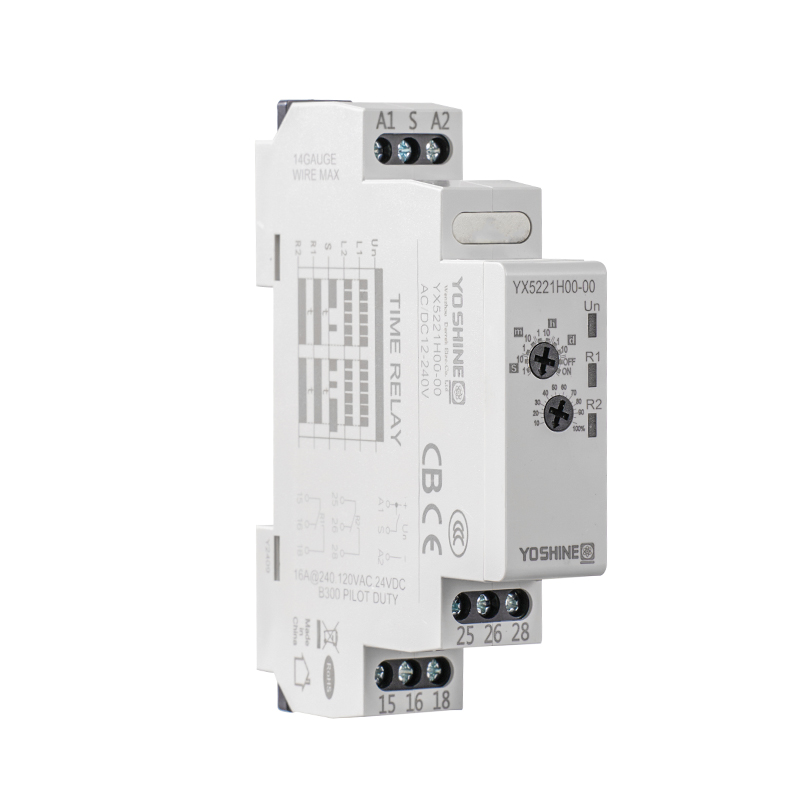
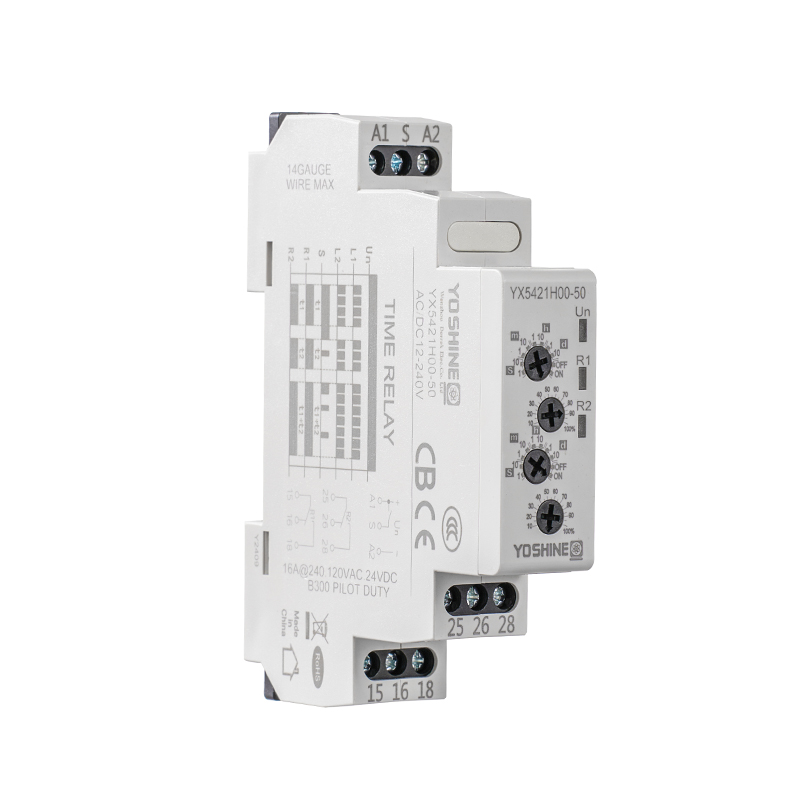
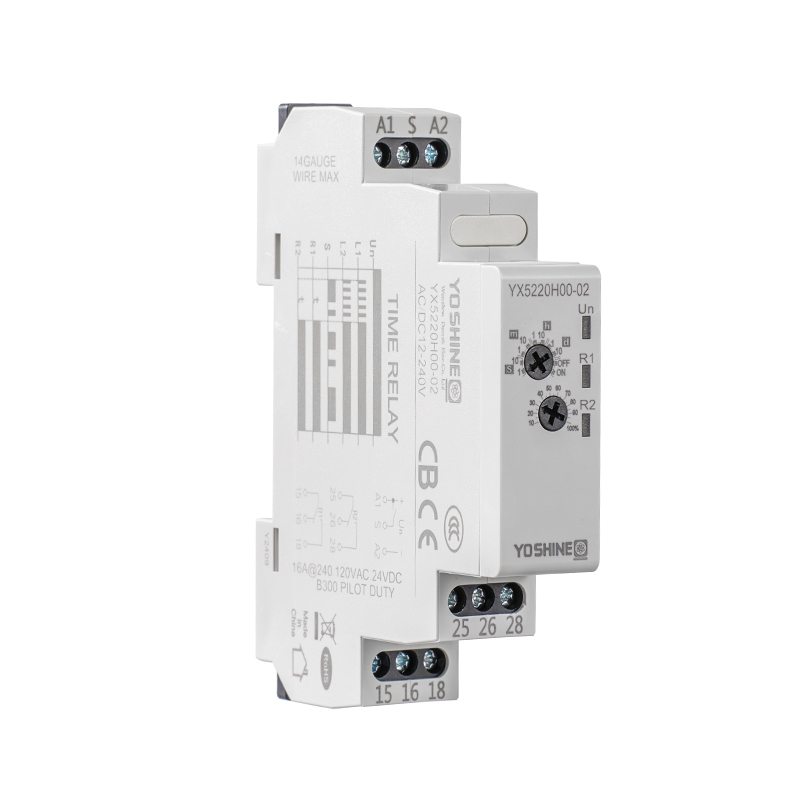
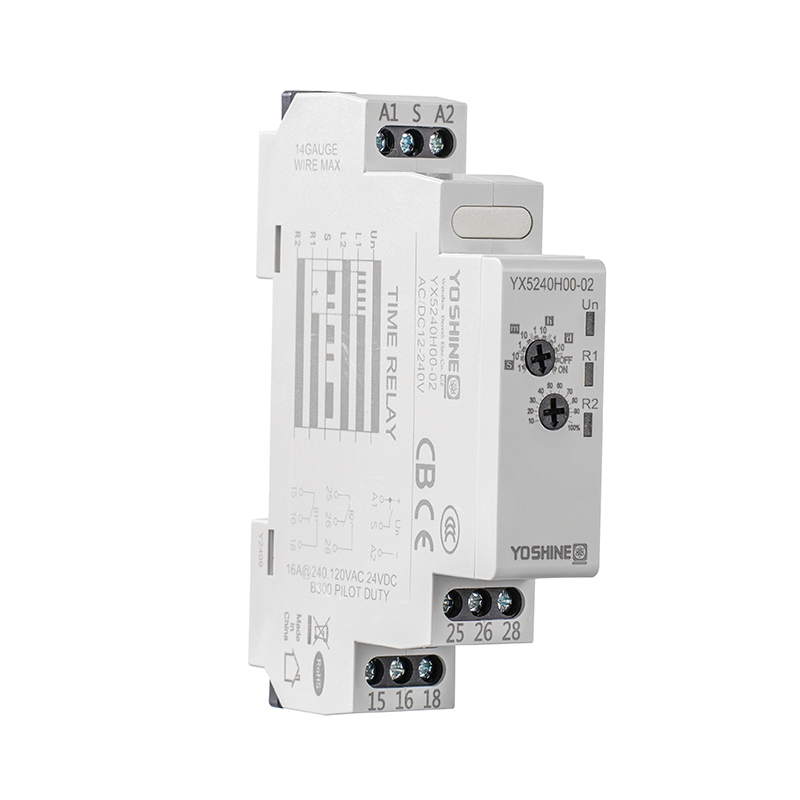
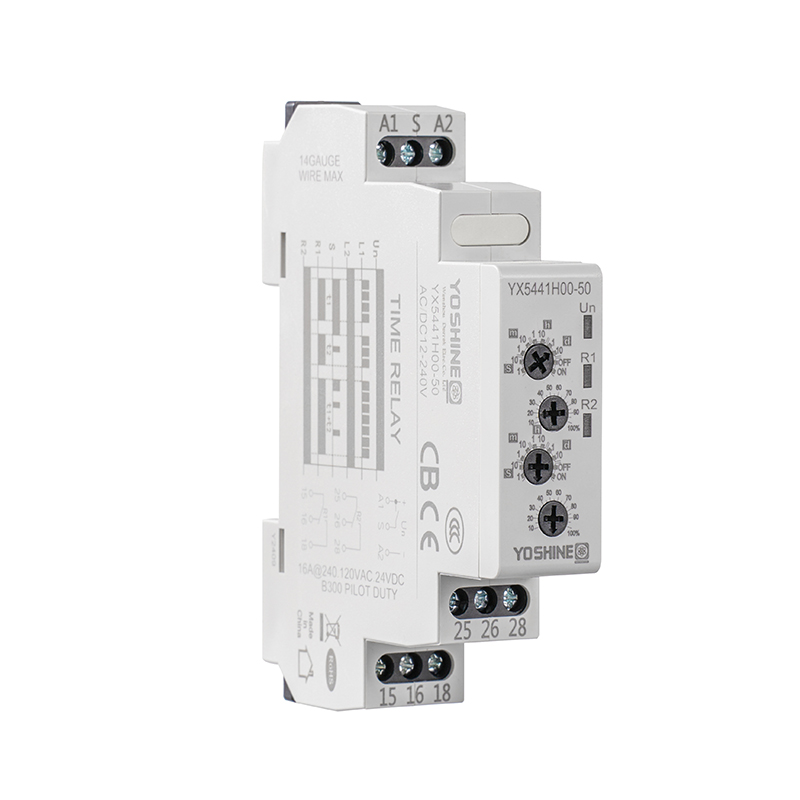
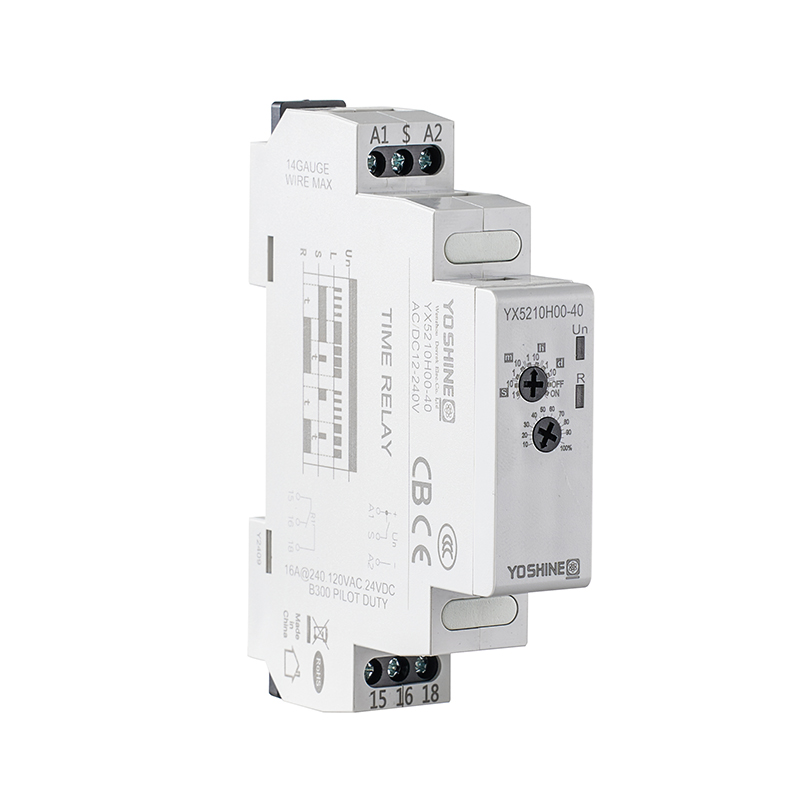
In modern control systems, devices that manage timing and sequence are essential for predictable operation. A multifunction time relay combines several timing functions in a single unit, enabling precise control of on/off sequences, delays, and cycles without the need for multiple discrete timers. These devices are widely used in industrial automation, building systems, and equipment control because they simplify wiring, reduce component count, and increase flexibility when timed action is required.
Multifunction time relays offer a way to coordinate machinery, lighting, pumps, valves, and other equipment where time-dependent behavior is needed. By consolidating timing options into one programmable device, engineers and technicians can adapt systems quickly to changing operational needs.
These relays appear in many sectors because time control is a common requirement. In industrial assembly, they coordinate machine sequences so motors start and stop in the right order, preventing mechanical stress. In HVAC and building automation, they regulate fans, pumps, and lighting schedules. Agriculture and irrigation systems use timed cycles to water crops at optimal periods. In commercial lighting and signage, timers ensure equipment runs only when needed. In household or small commercial appliances, simple timing functions improve convenience and energy use.
Beyond straightforward on/off functions, multifunction time relays are employed in protection schemes: they delay circuit engagement to prevent short cycling, sequence start-up to reduce inrush currents, or provide interlocks that ensure a machine only operates after safety conditions are met. Their versatility means that a single relay can replace several single-function timers, simplifying design and maintenance.
Historically, timing control relied on electromechanical timers and simple analog circuitry. Over time, solid-state electronics and microcontrollers enabled more precise, repeatable, and compact designs. Today’s multifunction devices often include digital displays, programmable modes, and support for a wide range of timing profiles such as delay-on, delay-off, cyclical timing, and impulse timing.
Integration with digital control systems is another major development. Modern relays often provide interfaces for communication with PLCs, building management systems, or IoT gateways. This connectivity enables remote configuration, logging of operating history, and integration into larger supervisory systems. Some units include memory to store multiple timing programs which can be recalled as operating needs change.
Improvements in components and packaging have also enhanced durability and environmental tolerance. Advances in insulation, conformal coatings, and contact materials help relays perform reliably in humid, dusty, or vibration-prone environments. These technical changes extend useful life and reduce maintenance needs compared with older designs.
Several market forces drive demand for flexible timing solutions. Increased automation across manufacturing and utilities raises the need for devices that can be programmed for diverse tasks. The growth of smart buildings and energy-conscious design also pushes facilities to adopt devices that support scheduled control of lighting, ventilation, and other energy-consuming systems.
Supply chains and manufacturing strategies influence product availability and pricing. Buyers look for units that balance cost, features, and reliability. Because deployment spans from simple retrofit jobs to integrated industrial systems, manufacturers offer a spectrum of models: compact, low-cost modules for straightforward tasks and feature-rich relays with digital interfaces for more demanding applications.
Regulatory trends also play a role. Standards for energy efficiency, safety, and electromagnetic compatibility encourage the use of controllable devices that help facilities meet compliance targets. As a result, equipment designers increasingly prefer time relays that can be programmed, monitored, and updated without major hardware changes.
Time-based control directly reduces unnecessary operation of equipment. For lighting, pumps, fans, and heating components, scheduled activation prevents systems from running during idle periods. In larger facilities, staggering motor starts reduces peak demand and avoids costly load spikes. When combined with occupancy sensors and other inputs, timed control becomes adaptive: equipment runs only when needed.
In renewable energy contexts, timing control plays a role in managing charging and dispatch schedules. For example, scheduling battery charging or deferring noncritical loads helps align consumption with supply from variable sources. This strategic timing contributes to smoother grid interaction and efficient use of renewable generation.
Choosing programmable relays that can be updated, rather than fixed hardware timers, supports longer equipment lifecycles and reduces waste. A single programmable unit can be reconfigured for different processes over time, limiting the need for repeated hardware replacement as facility needs evolve.
Safety is central to timing control because incorrect sequencing can produce hazardous conditions. Important features include robust contact design, protection against electrical transients, and fail-safe modes that default to a safe state on power loss or fault. Some relays include diagnostic outputs that indicate contact wear or internal errors, allowing preventative maintenance before failures occur.
Reliability is influenced by component quality and ratings for environmental exposure. Devices designed for extended operation in industrial settings incorporate protection against moisture, dust, and vibration. Where devices control critical processes, redundancy strategies—such as dual relays or supervisory logic—help avoid single-point failures.
Thermal management and derating in high-temperature environments also matter. Relays intended for continuous duty should provide stable timing characteristics over a range of operating conditions to prevent drift that could disrupt coordinated operations.
Selecting the proper device requires matching features to functional needs.
| Question | Why it matters | What to look for |
|---|---|---|
| What timing modes are needed? | Ensures the relay supports required functions | Delay-on, delay-off, cyclic, pulse, repeat modes |
| What communication is required? | Determines integration and monitoring ability | Analog/digital inputs, serial, bus interfaces |
| What environment will it operate in? | Ensures durability and consistent performance | IP rating, temperature range, vibration resistance |
| Is local configuration required? | Affects ease of setup and field changes | Front panel programming, DIP switches, pushbuttons |
| Is preventive maintenance important? | Supports planned servicing | Diagnostic outputs, status indicators, logs |
A clear specification of operational needs simplifies selection and reduces the risk of over- or under-specifying a device.
Good installation practice starts with correct mounting, wiring, and adherence to local electrical codes. Mount relays in locations that avoid direct exposure to mechanical impact and excessive heat. Wiring must provide solid connections and include protective devices such as fuses or circuit breakers sized for the load. When relays are part of a larger automation network, grounding and shielding practices reduce electrical noise that can affect timing precision.
Commissioning should verify timing functions under expected load conditions and across operating temperature ranges. Record actual on/off sequences and confirm that interlocks behave as intended. Testing under fault conditions—such as power interruptions and sensor failures—helps validate fail-safe behavior. Documentation of settings and wiring ensures that future service calls can be handled efficiently.
Diagnostics vary by device capability. Basic relays may offer only LEDs indicating relay state, while advanced units provide status registers, error codes, and remote telemetry. Regularly scheduled checks include inspecting contacts for wear, verifying connections, and checking for signs of overheating or moisture ingress. For installations with many units, central monitoring reduces manual inspection burdens and allows trending of parameters that signal impending maintenance needs.
Maintenance strategies also consider spare parts management. Keeping a small inventory of commonly replaced modules or contact blocks reduces downtime. For critical processes, hot-swap designs or redundant relays can maintain continuity while one device is serviced.
Despite their versatility, multifunction relays have limits. Complex automation tasks often require coordination with higher-level controllers; relying solely on local timers can complicate system logic when many interdependent functions exist. For high-precision timing at a sub-second scale, specialized timing controllers may be preferable. Additionally, compatibility across various control systems may require careful selection of communication protocols.
Another challenge lies in user configuration. Devices with extensive options require clear interfaces to prevent misconfiguration. Poorly documented settings can lead to operational errors. Training and accessible manuals reduce these risks.
Finally, supply chain and lifecycle considerations matter. Choose devices from suppliers that provide long-term support and parts availability to avoid obsolescence issues in extended installations.
Looking ahead, multifunction timing devices are expected to incorporate deeper connectivity and smarter algorithms. Tighter integration with building and process management platforms will allow coordinated scheduling that optimizes across multiple systems. Predictive control, using historical performance data, could adapt timing to reduce wear and improve energy profiles.
Edge computing features may allow relays to run simple analytics locally, reducing communication needs and improving response times. Advances in solid-state switching could also reduce mechanical wear, offering longer life in high-cycle applications.
As standards evolve, seamless interoperability among devices from different manufacturers will make it easier to assemble mixed systems that still achieve coordinated timing functions without complex gateways.
A practical evaluation balances initial cost, installation complexity, and expected operational savings. Consider the total cost of ownership: hardware purchase, installation labor, commissioning, maintenance, and eventual replacement. Factor in benefits such as reduced energy consumption, improved process uptime, simplified wiring, and lower spare parts inventory.
Pilot projects can demonstrate value in a controlled environment before full deployment. Measuring energy reductions, downtime improvements, or labor savings in a pilot area provides tangible data to support broader rollouts.
Consider a small production line where motors must start in sequence to avoid mechanical stress. Implementing programmable relays allows flexible adjustment of delays to match production speed changes without rewiring. In an office building, time relays scheduled with occupancy inputs reduce lighting and ventilation outside business hours, lowering energy use. In greenhouse operations, timed misting and lighting cycles ensure plant health while conserving resources.
In each scenario, the relay’s programmability and integration capability enabled process improvement without extensive changes to existing infrastructure.
Upgrading legacy systems often starts with an audit to identify timing functions currently handled by discrete timers, relays, or manual processes. Replacement with multifunction units can condense wiring and centralize timing logic in programmable devices. Ensure that changes include updated documentation and operator training. Where legacy controllers remain, gateways or interface modules can bridge older protocols to modern relay units.
A phased approach—starting with noncritical subsystems—allows teams to build experience and refine configuration practices before tackling more critical areas.
Ensure devices meet relevant electrical safety and electromagnetic compatibility standards for the region of deployment. For safety-critical applications, look for devices that conform to functional safety guidance and provide appropriate certifications. Compliance with energy efficiency programs may also influence device selection, especially when timing functions contribute to measured reductions in consumption.
Staying current with standards reduces the risk of having to retrofit systems later and supports reliable acceptance by facility auditors or regulatory bodies.
Multifunction time relays occupy a practical niche between fixed-function timers and complex programmable controllers. They deliver flexible timing control in a compact form, and when combined with modern connectivity and diagnostics, they contribute to safer, more efficient systems. While they are not a full substitute for higher-level control systems in complex processes, they are a powerful tool for many timing needs, from simple sequence control to part of a broader automation strategy.
Selecting the right device involves careful consideration of timing modes, environmental tolerance, integration needs, and maintenance strategy. Thoughtful commissioning, clear documentation, and ongoing monitoring ensure these relays provide reliable service and meaningful value over time.

Popular Products
Have Questions?
Get in Touch!
Our aim is to provide the market and the customers with high quality products like Pulse Relays and customized solutions.
Zhiguang Industry Zone, Liushi Town, Yueqing, Wenzhou, Zhejiang, China.
+86-13819765860


 English
 русский
 Español