In many industrial systems, some components work quietly in the background but still influence the overall operation. A pulse output relay is one of these parts. It may not be the largest component inside a control system, yet its role can affect how different devices communicate and respond.
When companies select control components, the decision is often not made only by looking at the product itself. The surrounding system, working environment, and future needs all play a role. A relay that fits one application may not always be suitable for another.
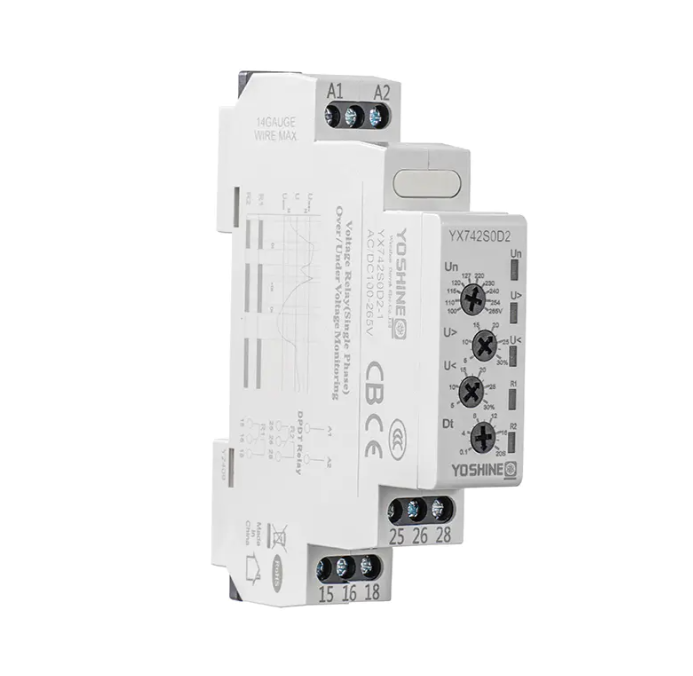
This is why choosing a relay requires more attention than simply comparing product descriptions. Understanding how the relay works within a system can help users make more practical decisions.
As demand for automation solutions continues to grow, pulse output relay manufacturers are also paying more attention to real application needs. The focus is gradually moving toward easier installation, stable operation, and better compatibility with different control environments.
A control system depends on communication between different parts. Each component has its own responsibility, and the relay acts as a connection point that allows signals to move in an organized way.
A relay is designed to handle pulse signals. Its job is not only to switch a connection but also to respond according to the signal it receives.
In practical applications, small delays or unstable responses can influence the operation of connected equipment. A suitable relay helps create a smoother interaction between different parts of the system.
For users, the importance of a relay is often noticed when something goes wrong. When equipment communicates properly, the relay usually remains unnoticed. However, when the connection becomes unreliable, its role becomes much clearer.
This is why many engineers and purchasing teams consider relay selection an important part of system planning.
Choosing a relay starts with understanding where it will be used. Different working environments create different expectations.
A buyer should consider the actual application instead of selecting a product only based on general descriptions.
Several points deserve attention:
| Consideration | Why It Matters |
|---|---|
| Working environment | Different conditions may influence product selection |
| System connection | The relay needs to work smoothly with existing equipment |
| Operation requirements | Usage habits can affect the suitable choice |
| Future changes | A flexible solution may adapt more easily over time |
A common mistake is focusing only on the immediate requirement. In many cases, equipment systems continue to develop after installation. Choosing a relay that matches future possibilities can reduce unnecessary replacement.
Good selection usually comes from understanding the complete picture rather than looking at one individual feature.
Product information can explain basic functions, but real application experience often provides more useful guidance.
A relay used in a factory environment may face different conditions compared with one used in a smaller control system. The way equipment operates every day can influence what type of relay is suitable.
For example, some users may care more about simple installation. Others may pay closer attention to stable operation over long periods.
This difference means there is no single choice that fits every situation.
Pulse output relay manufacturers often work with different industries and receive feedback from actual users. These experiences help manufacturers understand common challenges and improve product design.
The connection between manufacturers and users has become increasingly important. Understanding practical problems often leads to more useful improvements than focusing only on appearance or basic functions.
Relays look like simple parts on the surface, yet every internal design call directly impacts their real-world performance.
Solid, practical designs factor in installation ease, routine inspection and simple upkeep. When a relay integrates smoothly into existing equipment, daily running becomes far less troublesome.
Most users value straightforward operation just as highly as core functional performance.
Hard-to-fit relays or models with messy maintenance steps add extra work for operators. Well-thought-out layouts cut down the time spent troubleshooting and servicing the unit.
Relay manufacturers now focus heavily on user-centric development. They no longer only optimize electrical performance, but also think about how technicians handle and operate the device on site every day.
Reliability is one of the main concerns when selecting industrial components. A relay may be used repeatedly as part of a larger system, so consistent operation is important.
Manufacturers usually examine different parts of the production process to maintain stable product quality. Attention is given to structure, materials, and overall product performance.
However, reliability is not only related to manufacturing. It is also connected to whether the product matches the application.
A suitable relay used in the right environment is more likely to provide stable support. This is why communication between buyers and suppliers remains valuable.
A professional relay manufacturer does not only provide products. It also helps customers understand which type of solution fits their actual situation.
Compatibility is often one of the most important factors during selection.
A relay does not work alone. It needs to communicate with other parts of a system. If the connection is not suitable, installation difficulties or operation issues may appear.
Before purchasing, users usually need to understand how the relay will interact with existing equipment.
This includes considering:
Taking time to review these points can prevent problems later.
Many selection mistakes happen because buyers focus on the relay itself and overlook the system around it.
Demand for industrial parts keeps evolving. Users now want devices simpler to install, and flexible enough to fit their ever-changing project requirements.
Companies making relays are starting to prioritize what clients actually need. Instead of just supplying standard off-the-shelf units, most keep closer contact with buyers and share hands-on advice for different usage scenarios.
This shift aligns with a broader change in industrial procurement. Purchasers no longer only source hardware; they also seek dependable long-term partners and actionable technical support.
Suppliers familiar with the unique demands of various industries can help buyers pick the right relays with much less hassle.
Selecting a relay without enough preparation can create unnecessary difficulties.
Some common mistakes include choosing only by price, ignoring the working environment, or assuming that one type of relay can solve every application.
A more careful approach includes:
The selection process does not need to be complicated. It simply requires attention to the details that affect daily operation.
All kinds of industrial equipment are now more connected with each other, so tiny control parts like relays are growing more important.
Makers of relays will keep upgrading their products for real onsite use. Easier operation, wider compatibility and better matching with different systems will stay core development directions.
Factories will keep designing new models based on customers'actual usage demands. On the buyer side, learning key product features helps them make better purchase choices.
Relays may only be small pieces inside large control systems, yet they play an essential part in signal transmission and equipment control.

Popular Products
Have Questions?
Get in Touch!
Our aim is to provide the market and the customers with high quality products like Pulse Relays and customized solutions.
Zhiguang Industry Zone, Liushi Town, Yueqing, Wenzhou, Zhejiang, China.
+86-13819765860


 English
 русский
 Español