A phase sequence monitor is used in electrical systems that rely on three-phase power. Its main task is simple in idea but important in practice. It checks whether the incoming power lines are in the correct order before equipment is allowed to run.
Three-phase systems depend on sequence. The order of phases decides how electrical energy moves through a motor or machine. When the order is correct, operation stays stable. When it is wrong, behavior changes immediately.
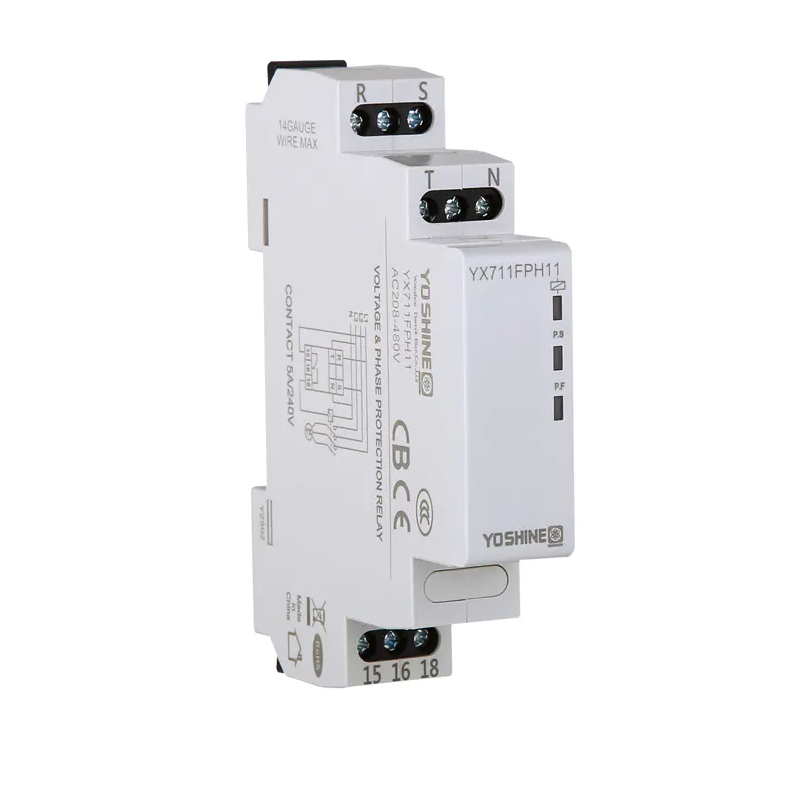
This device does not control power output or adjust voltage. It stays in the background and observes the pattern of incoming supply. When something does not match the expected order, it reacts and sends a signal to stop or warn.
In many industrial environments, this small step prevents larger operational issues. It works quietly, without drawing attention, but it plays a steady role in system behavior.
Electric systems that use three phases are built around timing and order. Each phase arrives slightly shifted from the others. That shift creates rotation in motors and movement in machines.
When the order is correct, machines rotate in the intended direction. When the order changes, rotation direction changes as well. This is not a minor adjustment. It can affect the entire behavior of equipment.
In real environments, power sources may be disconnected, reconnected, or shifted between systems. During these changes, phase order can accidentally switch. Without monitoring, this may go unnoticed until machines start running.
Some systems are sensitive even at startup. A wrong sequence can cause immediate reversal. Others may show irregular motion or fail to start completely.
That is why sequence checking is often placed at the beginning of the operation chain.
The monitor does not "decide" anything on its own. It simply reads the incoming pattern and compares it to a reference order.
Inside the device, sensing elements track how each phase arrives. They check the order continuously once power is applied. The process is fast, but it is based on simple comparison rather than complex processing.
When the sequence matches the expected pattern, the system allows operation to continue. When it does not match, the monitor sends a response signal.
That response can take different forms depending on how the system is designed. It may block startup, trigger an indicator, or send a signal to a control panel.
The key idea is early detection. The monitor acts before machines begin full operation, not after problems appear.
Incorrect phase sequence can affect equipment in several ways. The impact depends on the type of machine and how it is connected.
The most common effect is reversed rotation. A motor that is supposed to turn in one direction may rotate in the opposite direction. This can change how connected systems behave.
In other situations, the machine may refuse to start. The system recognizes the mismatch and stays inactive.
There are also cases where operation begins but behaves unpredictably. This can cause uneven movement or irregular performance.
The table below shows a simple view of possible outcomes:
| Phase Condition | System Response |
|---|---|
| Correct sequence | Normal startup and stable rotation |
| Reversed sequence | Opposite motor direction |
| Mixed or unstable input | Irregular or failed startup |
| Missing phase | No operation response |
Even though the device focuses on one condition, the effect of that condition can influence the entire system.
This type of device is used in places where three-phase systems are common. These environments usually involve machines that rely on rotation or coordinated movement.
In production settings, it is often installed near control equipment. Machines in these environments may run in cycles, and consistency is important.
In pumping systems, correct rotation direction matters because it directly affects flow direction. A wrong sequence may change how fluid moves through the system.
Ventilation systems also rely on direction stability. Airflow patterns depend on consistent motor rotation.
Even in electrical distribution points, sequence monitoring may be used before connecting loads. This helps confirm that incoming supply conditions are stable.
When the monitor detects a mismatch, it reacts quickly. The reaction is not complicated, but it is important for system protection.
In some systems, the monitor prevents the machine from starting. In others, it allows a warning signal to appear while keeping the system inactive.
The response is usually designed to be clear. Operators can quickly understand that the issue is related to power order rather than mechanical failure.
Once the sequence is corrected, the system returns to normal condition. The monitor does not store long-term memory of the event. It simply rechecks conditions each time power is applied.
A phase monitor is usually placed inside a control panel. It is connected to incoming power lines before they reach the main equipment.
This position is important. It allows the device to check conditions early in the process, before machines begin operation.
Inside the panel, it works alongside other control components. It shares space with switches, protection units, and indicators.
The connection is usually straightforward. It does not require complex adjustments once installed. After setup, it continues working automatically whenever power is present.
Its role is passive but continuous. It does not need manual operation during normal use.
Even as electrical systems become more advanced, phase sequence remains a basic condition that cannot be ignored.
Software and digital controls can manage timing, load, and logic. But they do not change the physical order of power lines. That order is still determined by the external supply.
In environments where equipment is frequently moved or reconnected, mistakes in phase order can happen easily. A simple reconnection can change sequence without being noticed.
The monitor acts as a constant check point. It does not depend on user attention or manual inspection.
That is why it continues to appear in both simple installations and more complex systems.
Stable operation depends on predictable behavior. Machines are expected to start, run, and stop in a consistent way.
Phase monitoring helps maintain that consistency at the very beginning of the process.
If the starting condition is correct, the rest of the operation is more likely to remain stable. If the starting condition is wrong, problems may appear immediately or later in the cycle.
When multiple machines operate in the same environment, even small differences in behavior can affect coordination. One system running in the opposite direction can disrupt workflow.
By checking sequence early, the monitor reduces this kind of variation.
Phase sequence monitoring is often included in system design because it focuses on a simple but important condition. It does not require complex configuration or frequent adjustment.
Once installed, it works automatically every time power is applied. It does not depend on operator decisions or software settings.
Its role is narrow but consistent. It checks one condition and responds directly to it.
In many electrical layouts, this type of device is treated as part of standard structure rather than an optional addition.

Popular Products
Have Questions?
Get in Touch!
Our aim is to provide the market and the customers with high quality products like Pulse Relays and customized solutions.
Zhiguang Industry Zone, Liushi Town, Yueqing, Wenzhou, Zhejiang, China.
+86-13819765860


 English
 русский
 Español