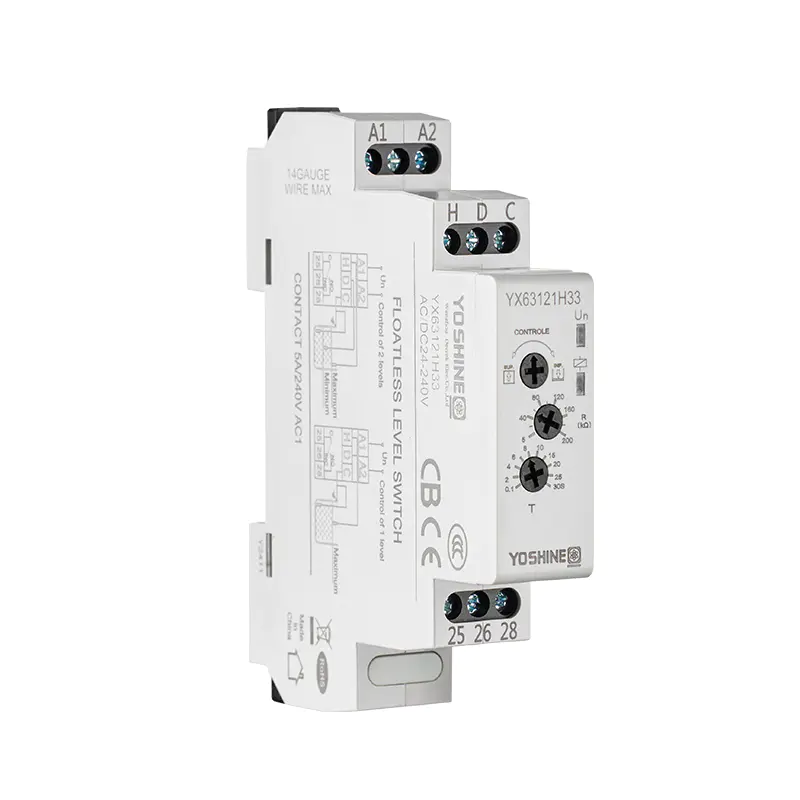
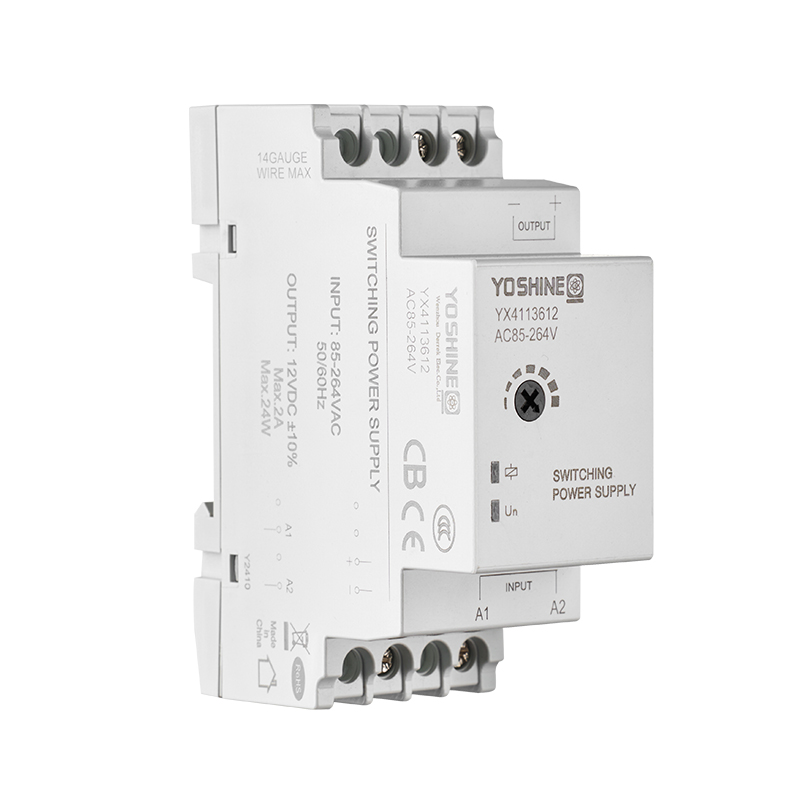
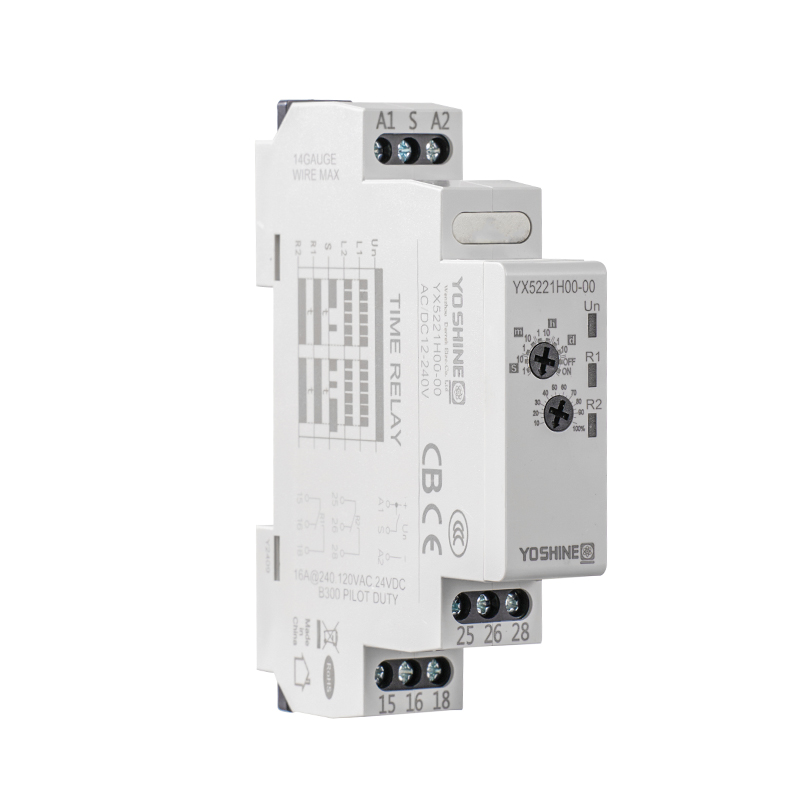
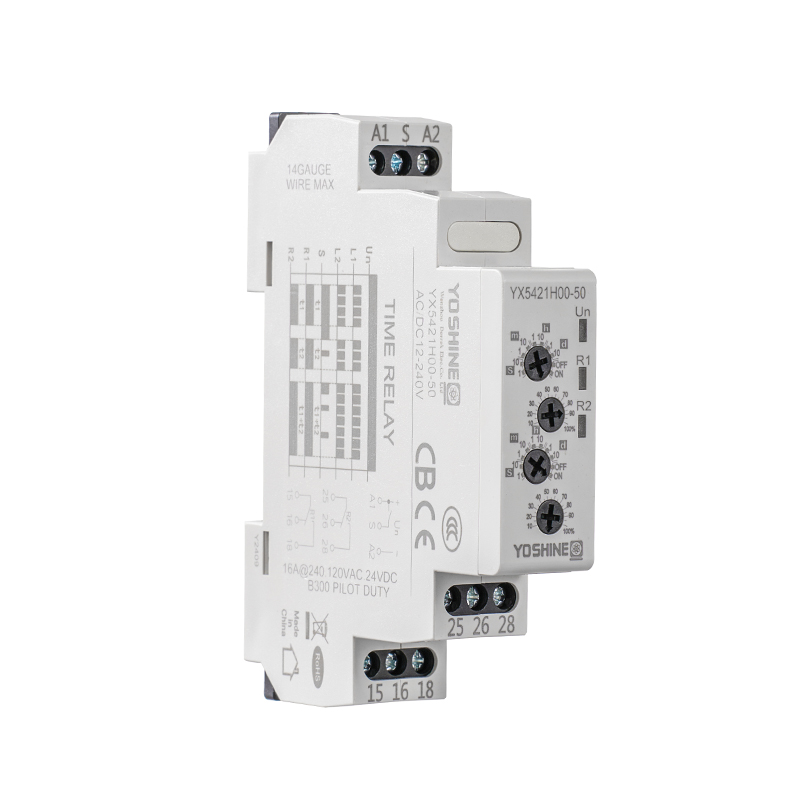
For many engineers under forty, the water level relay might seem like an outdated part from old textbooks. Yet in 2025, this device is experiencing a remarkable resurgence. Rising water stress, stricter environmental rules, faster adoption of automation, and the simple need to keep expensive equipment running have all combined to bring level-sensing relays back into the spotlight.
What changed? Water is no longer cheap or unlimited in most parts of the world. Cities, factories, farms, and building owners now treat every litre as a resource that must be measured, protected, and used efficiently. At the same time, labour costs and safety requirements have pushed manual monitoring out of most new installations. The result is a growing demand for reliable, low-maintenance devices that can watch tanks, sumps, reservoirs, and pipelines 24 hours a day without human help.
Twenty years ago, a typical municipal pumping station employed workers who walked the site every few hours, peered into sight glasses, and manually started or stopped pumps. In industrial plants, operators climbed ladders to check rooftop tanks or dipped rods into chemical vessels. These methods were slow, sometimes dangerous, and almost always wasteful.
Today that picture has changed completely in new and upgraded facilities. Level-sensing relays now sit inside tanks or beside them, continuously watching the liquid surface. When the level drops to a set point, the relay closes a circuit and the pump starts. When the tank fills again, the relay opens and the pump stops. The entire cycle happens in seconds, with no delay and no unnecessary running time.
In water distribution networks, this means booster pumps only run when pressure actually needs a lift. In factories, coolant and cutting-fluid tanks stay within tight bands, preventing both shortages and wasteful overflows. Energy savings alone often justify the switch within the first year.
One of the oldest and still most important jobs for these relays is protecting pumps from dry running. When a pump turns without enough liquid, bearings overheat, seals fail, and impellers can be destroyed in minutes. Repair or replacement costs quickly run into thousands of dollars, and downtime can halt an entire production line.
A properly installed level relay cuts power the instant liquid falls below safe depth. Once the tank refills—whether from incoming supply or a backup source—the relay automatically allows the pump to restart. In many systems, a second higher-level contact provides overflow protection as well, ensuring tanks never spill onto floors or into the environment.
Boilers, cooling towers, and heat exchangers face similar risks. Low water in a boiler can trigger catastrophic pressure buildup. Low coolant in an industrial chiller can ruin compressors. Relays placed at minimum safe levels act as independent safety backups that operate even if the main control system freezes or loses power.
Cities now face rainfall events that arrive faster and heavier than drainage systems were originally designed to handle. Underground tunnels, retention basins, and riverside sumps fill rapidly during storms. Without fast detection, water backs up into streets, basements, and subway stations.
Level-sensing relays have become the first line of defence. Mounted at critical heights, they send immediate signals when water rises. These signals start high-volume emergency pumps, open automated flood gates, or close protective barriers. In many modern cities, the same relays feed data into public early-warning apps, giving residents minutes instead of seconds to move vehicles or secure property.
Because storms often strike at night or during holidays when staffing is low, the reliability of these relays directly affects how much damage a city suffers. False trips waste energy and wear equipment; missed events cause flooding. Finding the balance between sensitivity and stability has driven steady improvements in probe design and signal processing.
Large irrigation districts, remote mining sites, and mountain water-catchment areas share one problem: distance. Sending a worker to check a tank fifty kilometres away is expensive and slow.
Cellular networks and low-power wide-area technologies have solved that. A relay mounted on a remote reservoir now texts or emails the foreman the moment levels move outside normal range. If a stock-watering tank for cattle runs low, the pump starts automatically and a message confirms the fix. If a tailings pond at a mine begins to rise during rain, supervisors see the trend on their phones long before it becomes dangerous.
Solar panels and small batteries keep these installations running for years without grid power. Maintenance visits drop from weekly to once or twice a year, and water delivery becomes far more predictable.
Modern manufacturing processes are less forgiving of variation than they once were. A chemical reactor that runs ten centimetres low on solvent can ruin an entire batch. A plating line that overflows acid creates both environmental hazards and costly cleanup.
Relays integrated into PLC and DCS loops now provide the hard feedback these systems need. They work alongside flow meters and pressure sensors, but unlike software-based calculations, a physical relay will still trip if wiring to the controller is damaged or the processor crashes. Many safety standards actually require such independent hardware interlocks for that reason.
In food and beverage plants, hygienic stainless-steel probes monitor milk storage silos, beverage mixing tanks, and cleaning-in-place reservoirs. In metal-working shops, relays watch cutting-oil sumps and wash tanks. The same technology scales from a small bakery to a large petrochemical complex.
New office towers, hotels, and apartment blocks increasingly collect rainwater and recycle greywater for toilet flushing and irrigation. These systems only save resources if the collected water is stored and distributed efficiently.
Level relays manage rooftop harvesting tanks, underground storage cisterns, and treatment units. They prevent overflows that would send clean rainwater into storm sewers. They also ensure recycled water is always available when needed, avoiding the need to draw fresh potable supply for non-drinking uses. Building management software logs the data for green-certification reports and water-balance audits.
With groundwater tables falling and river allocations tightly regulated, farmers can no longer flood fields and walk away. Drip irrigation, centre pivots, and subsurface delivery all demand accurate reservoir control.
Relays placed in canals, ponds, and fertiliser mixing tanks keep pumps running just long enough to maintain pressure. Some systems now use two or three relays at different heights to create staged pumping—gentle overnight top-ups instead of full blasts during peak electricity hours. The result is lower power bills and less soil erosion.
Municipal and industrial wastewater facilities never shut down. Primary clarifiers, aeration basins, and sludge digesters experience constant level changes as inflow varies through the day.
Relays coordinate transfers between tanks, start mixers when solids settle too low, and protect recirculation pumps from cavitation. Because the environment is corrosive and often laden with rags or grease, probes must resist fouling and still deliver accurate signals year after year.
| Sector | Typical Installation Locations | Core Value Delivered |
|---|---|---|
| Municipal water supply | Storage tanks, booster stations | Energy savings & pressure stability |
| Stormwater management | Drainage tunnels, retention basins | Faster flood response |
| Industrial processing | Reactors, plating lines, coolant sumps | Batch consistency & safety interlocks |
| Remote agriculture & mining | Reservoirs, stock tanks, tailings ponds | Labour reduction & remote visibility |
| Commercial buildings | Rainwater harvesting & greywater systems | Resource reuse & certification data |
| Irrigation districts | Canals, mixing tanks, pivot end guns | Water conservation & lower power cost |
| Wastewater treatment | Clarifiers, aeration basins, sludge tanks | Regulatory compliance & overflow control |
The old wall of clicking mechanical relays and tangled wiring has largely disappeared from new plants. Modern panels use DIN-rail modules that combine sensing probe, logic, and communication in one compact unit. Diagnostic LEDs show normal operation, fault conditions, or communication status at a glance. Replacing a failed unit takes minutes instead of hours of rewiring.
Temperature swings from freezing winters to scorching summers affect buoyancy and conductivity readings. High humidity encourages corrosion on terminals. Aggressive chemicals attack plastic housings. Sediment builds up on probes and gives false high readings. Every one of these issues has to be addressed in real installations, pushing manufacturers toward better sealing, smarter materials, and self-cleaning mechanisms.
A relay is only as good as its mounting height and wiring. Mount it too high and the pump runs dry before protection kicks in. Mount it too low and the pump short-cycles constantly. Incorrect probe length or wrong conductivity settings create nuisance alarms. Training technicians properly remains just as important as choosing the right device.
Over the next few years, more relays will ship with wireless communication built in. Battery and energy-harvesting versions will appear in locations where running cable is impossible. Basic edge intelligence—counting how fast a tank is emptying and raising an early alert—will move from central servers into the relay itself. Power consumption will continue to fall, and housings will use more recycled and recyclable materials.
Security will receive greater attention as relays join IP networks. Encrypted communication and authenticated commands will become normal rather than optional extras, especially in critical infrastructure.
From quiet pump rooms to noisy factories, from remote mountain reservoirs to high-rise green buildings, the water level relay—mentioned here for the fourth and final time—has secured a central place in modern fluid management. It may not be flashy, but its ability to watch, decide, and act without human intervention has made it an essential part of building a more reliable, efficient, and water-conscious world.
For businesses seeking dependable electrical monitoring components, YOSHINE offers a wide selection of protective and control devices suitable for various installation needs. More details are available at: https://www.relayfactory.net/

Popular Products
Have Questions?
Get in Touch!
Our aim is to provide the market and the customers with high quality products like Pulse Relays and customized solutions.
Zhiguang Industry Zone, Liushi Town, Yueqing, Wenzhou, Zhejiang, China.
+86-13819765860


 English
 русский
 Español