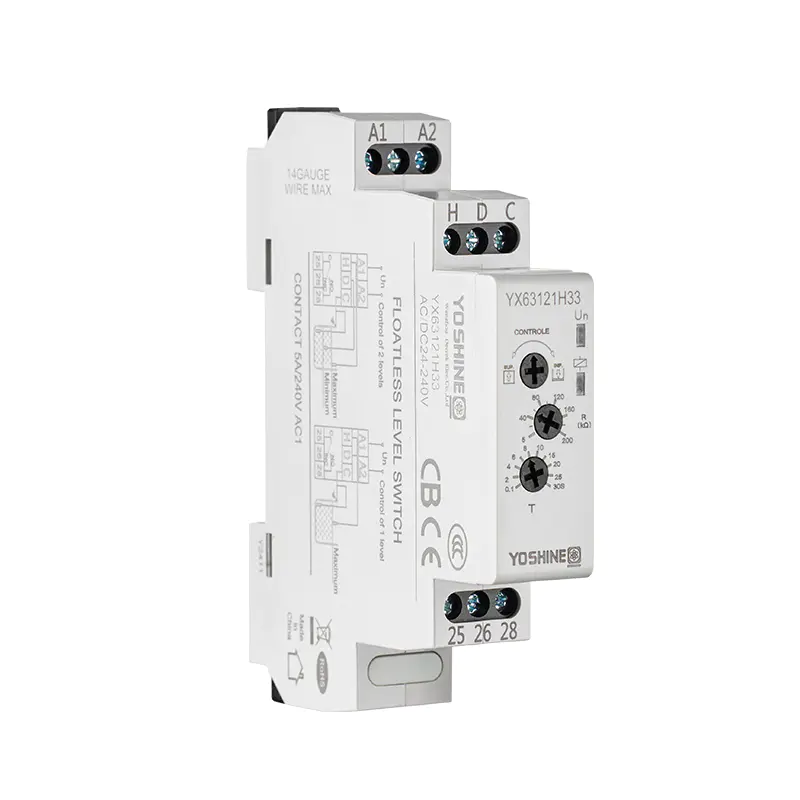
In many industrial and water management systems, liquid level control is something that quietly keeps everything stable. Tanks fill, pumps respond, and systems stay balanced without constant attention. Behind this smooth behavior is often a small component working in the background: the level controller relay.
Installing it may seem straightforward at first glance. In reality, the process carries more detail than expected. Safety, positioning, and connection order all play a role. A small mistake can affect not only performance but also system reliability over time.
Understanding how to install it safely is less about memorizing steps and more about recognizing how each part interacts with the system.
A level relay acts as a decision point. It receives signals from a sensing element and responds by opening or closing a circuit. This action helps control pumps, alarms, or other connected equipment.
The purpose is simple. Keep liquid levels within a desired range without constant manual input.
Because it sits between sensing and action, the relay becomes a link between observation and control. Its placement and installation directly affect how quickly and accurately the system responds.
At first, installation may look like a basic wiring task. But the relay is part of a larger network. If something is connected incorrectly, the effects may spread through the system.
A loose connection may lead to unstable signals. A poorly placed unit may face moisture or vibration. Even slight misalignment can create inconsistent behavior.
Safety during installation is not only about avoiding immediate hazards. It also reduces long-term issues that appear after repeated use. A stable installation tends to support stable operation.
Placement is often overlooked, yet it shapes performance more than expected.
A relay should sit in a location that is easy to reach but not exposed to harsh surroundings. Common considerations include:
In many setups, it is installed inside a protective panel or enclosed box. This helps reduce environmental influence while keeping wiring organized.The goal is balance. Not too exposed, not too hidden.
Before any connection begins, the surrounding system needs attention. Preparation helps reduce mistakes later.
Cables should be checked for condition. Connection points should be clear and accessible. The mounting surface should remain stable and clean.
It is also useful to understand how the relay will interact with other components. Instead of treating it as an isolated unit, it should be seen as part of a flow of signals and responses.
Good preparation reduces uncertainty during installation. It also makes troubleshooting easier later.
Wiring is where most installation issues tend to appear. The relay depends on clean signal paths to function properly.
Cables should follow a clear route. Sharp bends or tight tension can affect long-term stability. Connections should be firm, without unnecessary looseness.
It also helps to separate different types of lines when possible. Signal paths and power paths should not interfere with each other. This reduces the chance of irregular behavior during operation.
The focus is not complexity. It is clarity. Each connection should have a clear purpose and direction.
A level controller relay depends on accurate input from sensing elements. These signals guide its response.
During installation, it is important to ensure that sensing connections are stable and consistent. Any interruption in signal flow can affect how the relay reacts to changing liquid levels.
The connection points should remain secure even during long-term use. Movement, vibration, or environmental exposure can weaken contact over time.
Once the sensing link is stable, the rest of the system becomes easier to manage.
Power isolation is often treated as a background step, but it carries real importance.
Before connecting the relay, power sources should be separated from the working circuit. This reduces the risk of unexpected activation during setup.
It also protects both the installer and the system components. When power is controlled during installation, adjustments can be made with more confidence.
After installation, checking the separation between control and power paths helps confirm that the system is structured correctly.
The environment around the relay often determines how it should be installed.
In humid or dusty areas, additional protection becomes necessary. In environments with constant movement, stronger mounting is needed.
Temperature changes may also influence how materials behave over time. Even if the relay is functioning correctly at the start, external conditions can slowly affect its stability.
Because of this, installation is not only about connecting parts. It also involves understanding where the system will operate.
Even with careful planning, a few challenges tend to appear:
These issues are not unusual. They often come from real-world constraints rather than design flaws.
Handling them usually requires adjustment rather than replacement. Small corrections during installation can prevent larger issues later.
The relay does not work alone. Its behavior depends on how the entire system is arranged.
If the layout is organized, signals move smoothly and responses remain steady. If the layout is crowded or unclear, small delays or irregularities may appear.
Spacing between components also matters. When parts are too close, interference becomes more likely. When they are too far, signal paths may lose clarity.A balanced layout supports a more stable installation.
A safe installation is not defined by a single feature. It is a combination of small decisions working together.
The relay is mounted securely. Wiring follows a clear route. Connections remain stable under normal movement. The environment is controlled enough to reduce unnecessary stress.
Nothing appears overly complex. Everything feels organized and predictable.
That sense of order often reflects how carefully the installation was carried out.
Once the system begins operating, installation choices gradually reveal their impact.
Stable connections reduce unexpected interruptions. Proper placement helps the relay respond consistently. Clear wiring reduces confusion during maintenance.
Over time, these small advantages build into smoother operation. The system requires fewer adjustments and remains easier to manage.
Installation is not just a starting point. It becomes part of the system's long-term behavior, shaping how it performs day after day.

Popular Products
Have Questions?
Get in Touch!
Our aim is to provide the market and the customers with high quality products like Pulse Relays and customized solutions.
Zhiguang Industry Zone, Liushi Town, Yueqing, Wenzhou, Zhejiang, China.
+86-13819765860


 English
 русский
 Español