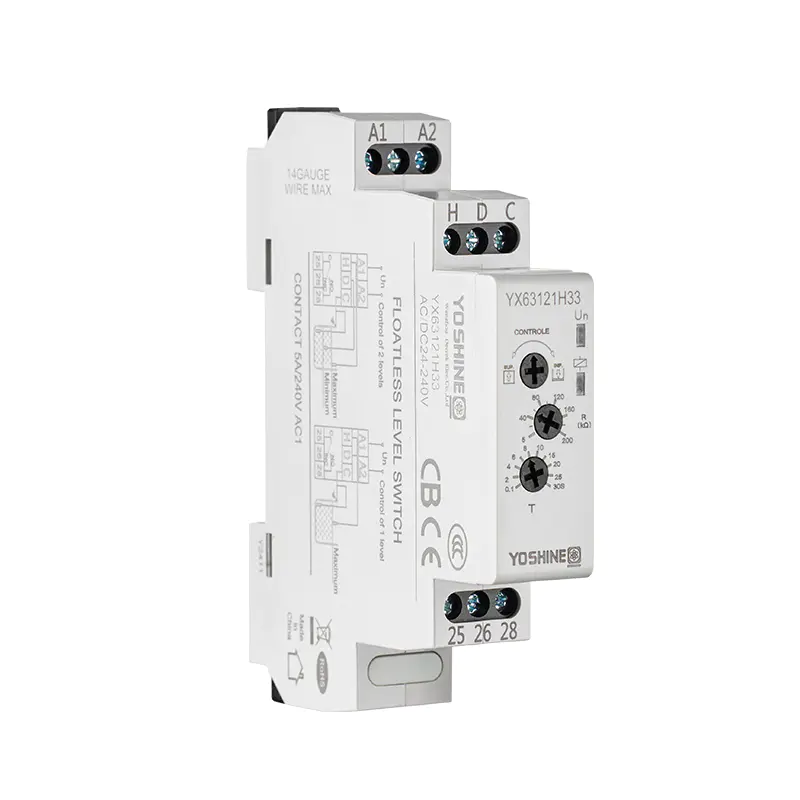
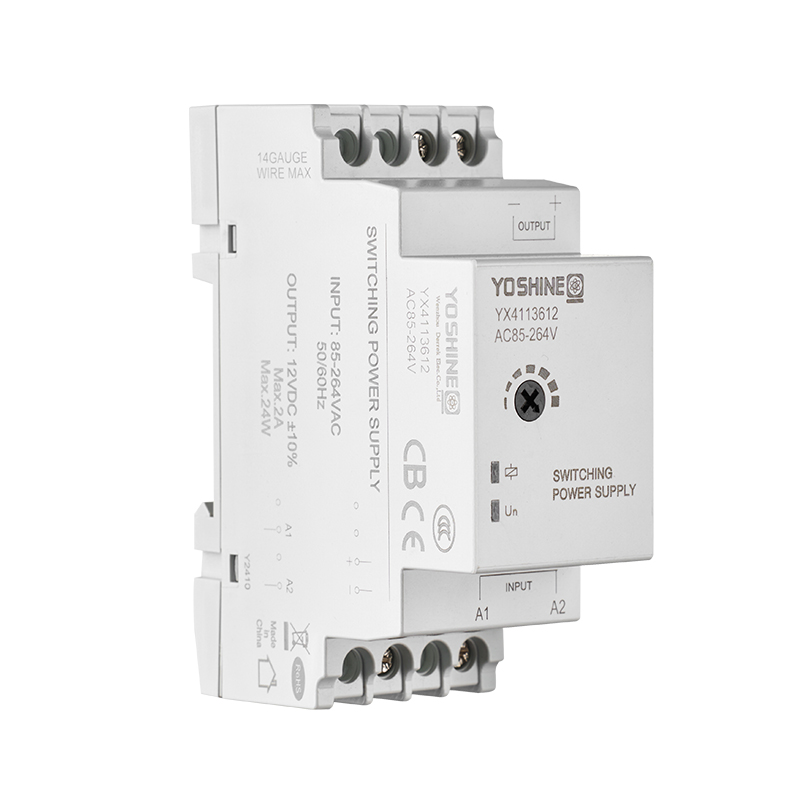
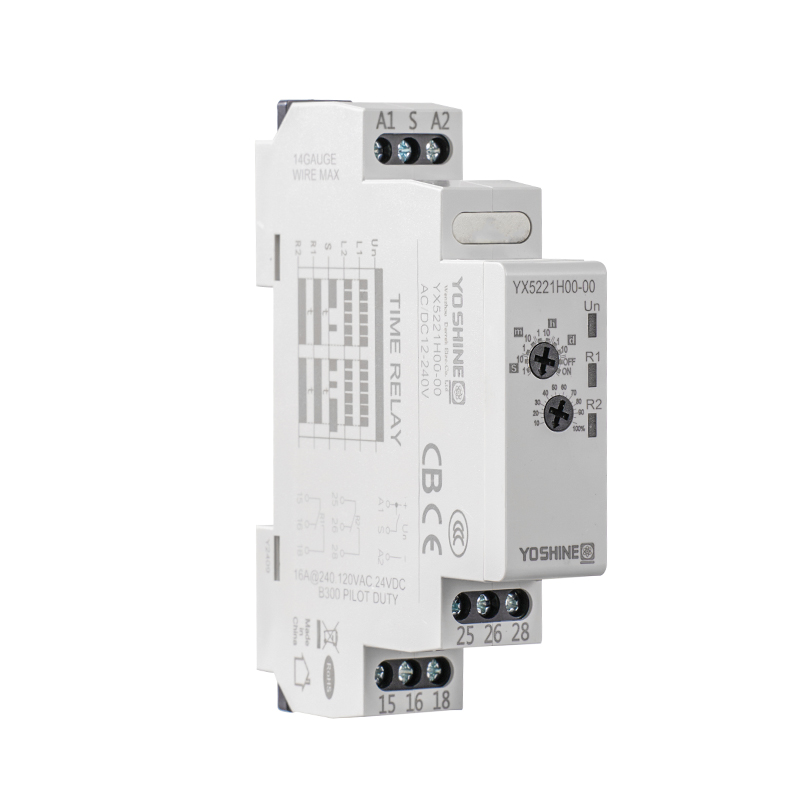
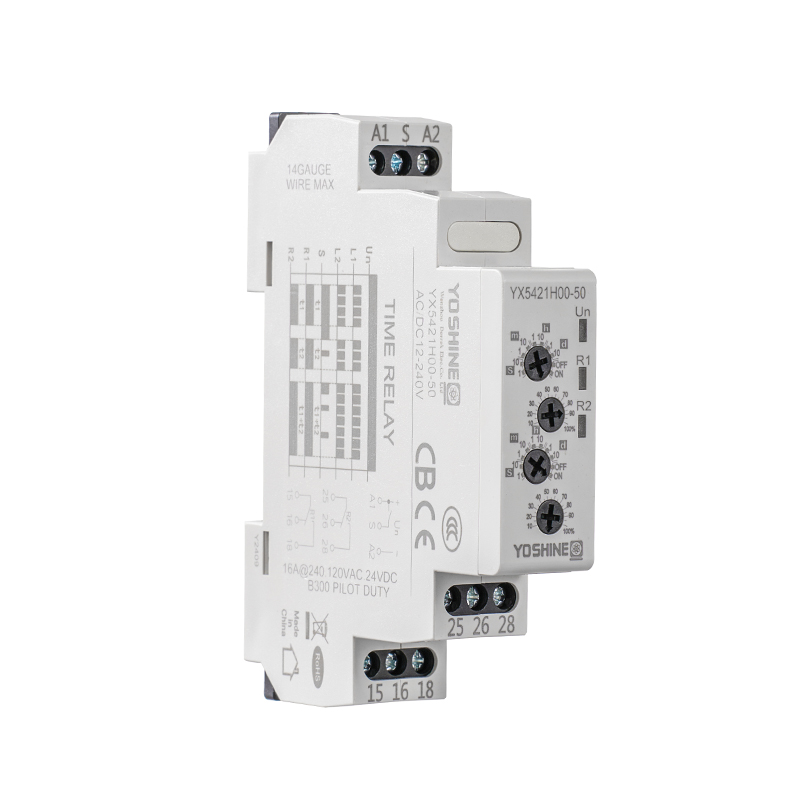
In electrical systems running through factories, warehouses, processing plants and power setups, keeping the phases lined up in the right order is one of those basic things that has to work right. Get the sequence wrong and motors start turning backwards, pumps lose their flow, compressors strain, control relays chatter or burn out. Pretty soon you have unexpected breakdowns, production lines stop, safety risks climb. That' s why having something reliable watching the phase order becomes essential. A factory that specializes in making these monitoring devices knows exactly what kinds of problems show up in real installations. They build gear meant to catch a reversed phase quickly and clearly so action can happen before bigger damage starts. The whole point is steady power delivery and fewer surprises. When the design pays attention to quality from the start, the equipment holds up in tough places—dusty machine halls, hot transformer rooms, areas with constant vibration. Good phase protection quietly keeps things running the way they should, cuts sudden stoppages, and helps avoid expensive repairs or lost output. Choosing a place that focuses on this kind of product usually turns out to be a practical move for anyone responsible for keeping electrical networks stable.
Facilities that only make monitoring and protection equipment for electrical systems tend to develop a sharp understanding of what actually matters in the field. They concentrate on building phase sequence checkers that can handle the usual rough conditions—air full of fine dust, sudden temperature swings, heavy vibration from nearby equipment, brief voltage spikes, things like that. The aim is to produce devices that are straightforward to mount, connect nicely into existing panels or control circuits, and give straightforward, trustworthy signals about the state of the supply. When the indication is clear and the unit keeps working reliably, electricians and shift crews can depend on the information instead of second-guessing whether the phases are still correct. That kind of confidence matters a lot in places where a wrong sequence can quietly build up heat, wear parts unevenly, or trip safety systems at the worst moment. Manufacturers who stay focused on this narrow area usually put effort into making sure the product behaves consistently over years, not just during the first few weeks after installation.
The orPhase Sequence Monitor facty will properly arrange its production processes to handle both regular orders and occasional urgent, large-volume orders without causing the production system to break down. The layout makes sense: raw parts and components come in one side of the building, move step by step through different zones, and come out the other side as boxed, ready-to-ship units. The people doing design don' t just sit in an office—they pay attention to what customers say after installation, what fails in the field, what' s annoying to wire up. When something keeps coming up, they figure out a fix and work it into the next version so the device holds up better or goes in easier.
Quality checking never really stops. Parts get looked at when they arrive so bad ones don' t even make it to the line. During assembly, sub-assemblies get tested as they come together. Once a unit is finished it still goes through a whole list of checks—electrical behavior, full function run, exposure to heat/cold/dust/vibration—before anyone signs off. Doing it this way means most units coming off the line act pretty much the same, batch after batch.
What the device really does is watch the timing between the three phase voltages all the time. In a normal system each phase hits its peak and crosses zero exactly 120 degrees apart from the others. As long as that order stays correct, the relay or output stays in the "okay" position and power flows normally to motors, pumps, everything downstream.
The moment the sequence flips or one phase disappears or the order breaks, the circuit catches it fast—usually in milliseconds—and changes the output state. Most often that means opening a relay contact, flipping a solid-state switch, or sending a fault signal so nothing gets energized the wrong way. That quick reaction stops motors from running backwards, compressors from grinding, or control circuits from frying.
A lot of units also watch for complete phase loss or big voltage imbalance between phases. Those conditions can stall motors, pull way too much current, or slowly cook windings over time. Depending on the model, you get dry relay contacts for basic interlocking, isolated outputs that talk nicely to PLCs, or sometimes direct wiring to alarm horns, lights, or emergency stop circuits. That variety lets the device fit into whatever control setup is already there.
Newer models usually come with a few useful things beyond just detecting sequence. There' s almost always a set of LEDs or a small display that shows what' s happening even if the voltage sags or spikes for a second. Some keep a short log of the last few events—when a fault happened, how long it lasted—so you can tell whether you' re dealing with a one-time glitch or something that keeps coming back.
Many have ports or terminals that let you hook them into a network so a control room or SCADA system can see the status from far away and collect data over time.
When a job has odd requirements—needs a higher IP-rated enclosure, has to mount in a strange spot, wants the relay to delay before dropping, or needs special logic for the fault output—the factory can usually modify the standard design. They keep the core detection solid but adjust the housing, terminals, timing, or signaling to match what the site actually needs.
Assembly happens on lines that are set up logically. Machines do the repetitive jobs—placing tiny components, soldering, driving screws, sticking labels—because they don' t get tired and they stay consistent. People handle the steps that need judgment: checking solder joints, adjusting calibration if needed, doing the final go/no-go tests.
Anything coming into the plant gets inspected before it touches the line. If a batch of relays, capacitors, or enclosure parts doesn' t look right, it gets sent back or quarantined early.
Every finished unit still goes through several rounds of checking: basic power-up and voltage tests, a simulated run with all three phases connected, visual inspection for poor soldering or loose wires, and usually some time in a test chamber that heats, cools, shakes, or blows dust to mimic what it' ll see outside. Only after it passes all that does it get packed.
They run the place lean—keep material moving, don' t let piles build up between stations, avoid having months of stock sitting around. A tracking system shows where every order is at any moment, so even when demand jumps or slows, they can still promise realistic ship dates and actually hit them.
| Manufacturing Step | Key Tasks Carried Out | Core Objective Fulfilled |
|---|---|---|
| Incoming Material Verification | Inspection of parts, certificates, and visual condition | Block substandard components from entering production |
| Circuit Board and Sub-Assembly | Component mounting, soldering, initial functional check | Create reliable electrical modules |
| Unit Assembly and Wiring | Enclosure fitting, terminal connections, labeling | Build complete, service-ready devices |
| Comprehensive Performance Testing | Electrical operation, load simulation, fault response | Confirm correct detection and output behavior |
| Environmental Exposure Testing | Temperature cycling, humidity, vibration exposure | Verify performance under realistic operating conditions |
| Final Review and Packing | Final visual check, protective packaging, labeling | Prepare for safe transport and immediate use |
Detection circuits respond to small timing shifts in the voltage waveforms, allowing reliable identification of sequence errors even when supply conditions include normal levels of distortion or noise. Response happens quickly enough to prevent most motors from developing significant reverse rotation. Enclosures are constructed to handle common industrial contaminants—settled dust, occasional water spray, mechanical vibration—without compromising internal components. Material choices support long-term operation through temperature changes and moderate chemical exposure. Power consumption stays modest so the device does not add meaningful load to the circuit it watches. Output flexibility—ranging from conventional relays to solid-state interfaces—supports integration with diverse control architectures.
Dedicated development groups monitor shifts in application needs and test potential enhancements under realistic conditions. Support resources cover advice on product selection, correct wiring methods, system integration approaches, and resolution of field issues when they arise. Production tools and processes receive regular updates to adopt improved techniques, higher-accuracy equipment, and better materials, ensuring output stays relevant to current and emerging requirements.
The plant runs things in a way that tries to keep resource use and waste down without making production harder. Lighting gets swapped for efficient types that don' t burn power for no reason. Motors and air compressors are picked or tuned so they don' t waste electricity. Whenever scrap comes off the line—bits of metal, plastic pieces, cardboard packaging—it gets sorted right away and sent to whatever recycling channel can take it. Soldering fumes and any vapors from coating or cleaning steps go through filters or scrubbers before they hit the outside air. Water gets used carefully; whatever goes down the drain gets treated first so it meets whatever rules apply locally. People walk the floor and check environmental stuff regularly—not just to stay legal, but to spot places where small changes can cut waste or energy even more.
More factories, water plants, power distribution setups, and big commercial buildings keep adding automation. That means a lot more motors, pumps, fans, and control systems that all depend on getting the phases in the right order. Nobody wants a motor to spin backwards and wreck itself, or a pump to cavitate and fail early, or a compressor to overheat because one phase dropped out. So there' s steady demand for something that watches phase sequence reliably and stops those problems before they turn into big repair bills or lost production time.
On top of that, everyone' s paying more attention to how much energy equipment uses just to protect itself. A phase checker that does its job without drawing extra power fits right into that thinking. At the same time, plants and buildings are getting more connected—people want to look at status from a control room, see a log of what happened last week, get a text or email if something' s off. That lines up with the push toward systems that talk to each other, collect data, and let you catch issues early instead of waiting for something to break.
The ones that get known for this kind of work usually do it the hard way—by having products that simply keep working year after year in real installations. It' s not about slick ads; it' s about showing up on site and the device is still doing its job after dust, heat, vibration, and power blips. When the wiring diagram makes sense, when the manual actually helps instead of confusing people, when someone answers the phone and talks through a weird application problem, that' s what builds trust.
Over time, panel shops that build control cabinets, system integrators who put whole lines together, OEMs who package equipment, and local distributors start specifying or recommending the same make because it doesn' t come back with complaints. Word spreads quietly through those networks—someone says "we used these on the last three jobs and never had a phase issue," and the next guy tries it. That kind of slow, steady reputation is what keeps a factory in the game long-term.
Visibility builds through a combination of channels. Online platforms host product information, installation examples, technical notes, and application discussions. Participation in trade shows and technical conferences provides opportunities for live demonstrations and direct conversations about specific site needs. Cooperation with distributors and agents in different regions ensures local availability and faster service response.
Support following delivery includes detailed wiring guidance, common application examples, and accessible channels for technical questions. Coverage terms reflect confidence in product construction, with defined procedures for addressing repairs or replacements that aim to minimize operational interruptions. Ongoing resources—usage summaries, maintenance suggestions, application updates—help sustain effective performance throughout the equipment' s service life.
Future efforts concentrate on deepening diagnostic capabilities, improving data handling for better insight into supply behavior, and increasing compatibility with complex or distributed power environments. Geographic expansion follows rising demand in industrializing areas. Continued focus on resource-efficient manufacturing and design supports alignment with broader sustainability goals.
Continuous phase rotation verification stands as one of the most straightforward and effective ways to eliminate a frequent, costly, and largely preventable class of electrical failures. YOSHINE operates as a factory specializing in relay-based electrical protection devices, including solutions for monitoring phase-related conditions, with consistent emphasis on quality construction and practical suitability for industrial applications. Additional details are available at https://www.relayfactory.net/.

Popular Products
Have Questions?
Get in Touch!
Our aim is to provide the market and the customers with high quality products like Pulse Relays and customized solutions.
Zhiguang Industry Zone, Liushi Town, Yueqing, Wenzhou, Zhejiang, China.
+86-13819765860


 English
 русский
 Español