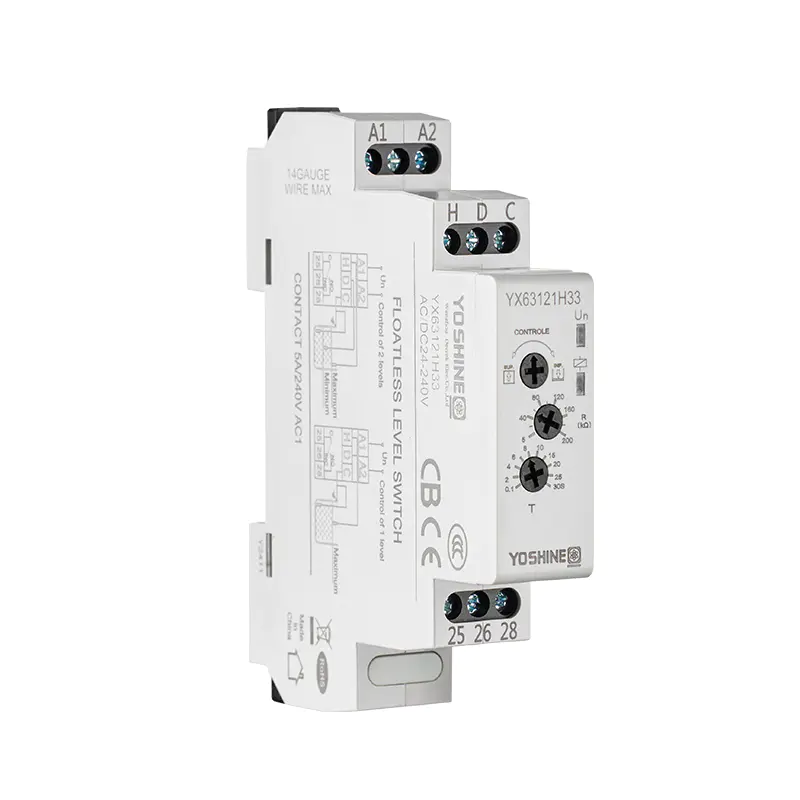
In modern industrial settings, maintaining precise fluid levels is critical for efficient operations, whether in water treatment, chemical processing, or HVAC systems. Liquid level relays serve as an essential component in managing these systems, ensuring safe, reliable, and energy-efficient fluid control. This article delves into the functionalities, applications, and technological advancements of liquid level relays, shedding light on their importance across various industries.
A liquid level relay is a device designed to monitor and regulate the fluid levels in various systems. It typically operates by detecting the level of liquid within a tank or reservoir and triggering an electrical signal to control the operation of pumps, valves, or alarms based on predefined liquid thresholds. These relays play a vital role in preventing issues such as overflows, dry-running of pumps, or underfilling of tanks, all of which could lead to inefficiency, system failure, or safety hazards.
In its simplest form, a liquid level relay consists of a sensor that detects the liquid level and a relay mechanism that activates when a specific level is reached. Depending on the configuration, the relay can either open or close circuits to control other components like pumps or alarms. These devices are found in industries ranging from water treatment plants to chemical manufacturing, where maintaining precise liquid levels is crucial for operational success.
Liquid level relays are pivotal in ensuring that fluid levels are properly maintained, which can significantly impact the efficiency, safety, and longevity of industrial systems. In this section, we’ll delve deeper into how liquid level relays work to prevent two critical issues: overflow and dry-running.
Overflow Prevention
Overflow is a major concern in many industrial systems where liquids are stored or processed. When tanks or reservoirs exceed their maximum capacity, the results can be disastrous. Overflowing liquid can cause damage to equipment, contamination of surrounding environments, and loss of valuable resources. For example, in a chemical processing facility, an overflow could lead to dangerous chemical spills, resulting in costly cleanups and environmental hazards.
Liquid level relays are specifically designed to monitor and regulate fluid levels, ensuring that tanks or storage containers never exceed their capacity. The relay functions by using sensors that detect the rising liquid levels and signal a shutdown once the desired threshold is reached. This automatic control eliminates the need for constant manual checks, making the system more reliable and reducing the risk of human error.
There are several ways in which liquid level relays achieve overflow prevention. For example, in a water treatment plant, when the water level reaches a predefined point, the relay will send a signal to stop the pump, preventing overfilling. This ensures that the system can run efficiently without overloading the storage tanks or causing waste. Additionally, some advanced liquid level relays are equipped with multiple sensors, allowing for real-time monitoring of fluid levels at various points in the tank or system, thus offering greater control and precision.
Furthermore, in industries that deal with hazardous liquids or chemicals, preventing overflow is a matter of safety. Chemical plants often store volatile liquids, and a spill can lead to catastrophic consequences. With liquid level relays, businesses can significantly reduce the risk of spills, ensuring a safer working environment.
Dry-Running Prevention
Dry-running is another issue that liquid level relays are designed to mitigate. Dry-running occurs when pumps or other equipment operate without sufficient liquid, which can lead to mechanical damage, overheating, or even complete failure. In industries such as HVAC, water treatment, and chemical processing, pumps are often used to circulate fluids or cool systems. If these pumps run dry, they may overheat, causing damage to components such as seals, impellers, or motors.
Liquid level relays help prevent this by constantly monitoring the liquid level within the system. When the liquid level drops below a safe threshold, the relay automatically activates to turn off the pump. This feature ensures that pumps do not continue to operate in a dry condition, thereby avoiding damage and prolonging the lifespan of the equipment.
For example, in a cooling tower used for industrial machinery, the liquid level relay can prevent the pump from running dry, ensuring that the system continues to operate efficiently. Similarly, in a water circulation system, the relay prevents the pump from operating when there is insufficient water, preventing overheating and potential damage.
The ability to detect low levels and respond immediately provides operators with peace of mind, knowing that their systems are protected from the most common form of damage: running dry. Moreover, this automated control minimizes the need for manual intervention, which can often be slow and prone to error.
Float-Type Relays
One of the oldest and most commonly used types of liquid level relays is the float-type relay. As the name suggests, these relays use a floating device that rises and falls with the liquid level in the tank. When the float reaches a certain height, it triggers the relay to open or close a circuit, which can activate or deactivate pumps, alarms, or valves.
Float-type relays are easy to install and are cost-effective for many applications. They are especially useful for monitoring liquids in large tanks, cisterns, or reservoirs. However, they have limitations, such as potential mechanical wear over time and limited suitability for corrosive or high-temperature liquids.
Capacitive Relays
Capacitive liquid level relays, on the other hand, use changes in capacitance to detect liquid levels. These sensors work by measuring the change in the dielectric constant of the material when the liquid level rises or falls. Since they don’t rely on moving parts, capacitive relays tend to be more durable and require less maintenance than float-type relays.
Capacitive relays are ideal for applications where the liquid may be corrosive, highly viscous, or exposed to extreme temperatures. They also offer more precise level control, making them suitable for industries that demand high levels of accuracy, such as pharmaceuticals and food processing.
Float vs. Capacitive Relays
| Feature | Float-Type Relays | Capacitive Relays |
|---|---|---|
| Detection Method | Mechanical (float movement) | Electrical (change in capacitance) |
| Durability | Moderate | High |
| Maintenance | Higher (due to moving parts) | Lower (no moving parts) |
| Suitability for Corrosive Liquids | Limited | High |
| Accuracy | Moderate | High |
| Ideal Applications | Large tanks, water treatment | Chemical, food, and pharmaceutical industries |
The advent of digital technology has revolutionized the field of liquid level control. Digital liquid level relays offer several advantages over their traditional counterparts, such as mechanical float-based relays.
Precision and Accuracy
Digital liquid level relays provide superior accuracy in liquid level monitoring. Unlike mechanical relays, which may have slight inaccuracies due to wear or float position, digital models use electronic sensors that deliver precise measurements. This results in better control of fluid levels and reduces the likelihood of errors such as under- or over-filling of tanks.
Integration with Automated Control Systems
Another significant benefit of digital liquid level relays is their ability to integrate with modern automated control systems. These relays can communicate with other equipment in the system, allowing for seamless control of pumps, valves, and alarms based on real-time data. This integration improves operational efficiency by enabling remote monitoring and automated adjustments to fluid levels without manual intervention.
Long-Term Reliability
Digital models tend to be more reliable over time because they have fewer moving parts and are less prone to mechanical failure. They also typically feature self-diagnostic capabilities, allowing for early detection of issues such as sensor malfunction or wiring problems. This reduces the need for expensive repairs and downtime, ensuring continuous system performance.
In the chemical processing industry, precise liquid level management is crucial for both safety and efficiency. Chemical reactions often involve highly volatile, corrosive, or hazardous substances that require careful handling. Liquid level relays play an essential role in maintaining the correct fluid levels within reactors, storage tanks, and transfer lines.
Safety Applications
Liquid level relays help prevent dangerous situations like overflows, leaks, or spills, which could result in environmental damage or personal injury. By ensuring that tanks and reactors are filled to the correct levels, these relays help avoid scenarios where chemicals could escape into the environment or cause reactions that lead to fires or explosions.
Hazardous Fluid Management
In industries where hazardous fluids are processed, liquid level relays are often used in combination with explosion-proof enclosures or intrinsically safe components. These features ensure that the relays can operate safely in explosive atmospheres, preventing sparks or electrical failures that could trigger accidents.
Regulatory Compliance
Most countries have strict regulations governing the handling and storage of chemicals. Liquid level relays help businesses comply with safety standards by ensuring accurate fluid level measurements and preventing accidents that could lead to regulatory violations or fines.
As industries evolve and demands for efficiency and precision increase, liquid level relay sensors have undergone significant advancements. These advancements have made modern relays more reliable, versatile, and suitable for a wide range of applications, from simple fluid monitoring to complex industrial systems. In this section, we will explore how these advancements are shaping the future of liquid level sensing technology.
Smart Sensors and IoT Integration
Modern liquid level relays are increasingly incorporating smart technologies, such as Internet of Things (IoT) capabilities. These sensors allow real-time data transmission to centralized monitoring systems, providing operators with up-to-the-minute information on fluid levels, system health, and potential issues.
IoT-enabled relays also offer predictive maintenance capabilities, sending alerts when sensors detect anomalies or when maintenance is due. This helps reduce downtime and extends the lifespan of the system.
Advances in Sensing Materials
Another notable advancement in liquid level relays is the development of new sensing materials. The accuracy, durability, and versatility of sensors have improved significantly, allowing liquid level relays to work in even more challenging environments. For instance, capacitive sensors, which measure the change in dielectric properties of materials, are becoming more common. These sensors offer improved accuracy and can detect liquid levels in tanks that hold aggressive, viscous, or corrosive liquids.
In addition, advancements in high-temperature-resistant materials have allowed liquid level relays to be used in industries that deal with extreme temperatures, such as metal manufacturing, petrochemical processing, and industrial heating systems. Sensors made from materials like ceramics, stainless steel, and high-performance plastics are now capable of withstanding these harsh conditions, ensuring that liquid level relays remain functional even under extreme heat or corrosive exposure.
Wireless Technology
Wireless technology is also making a big impact in the field of liquid level relays. Traditionally, liquid level sensors required physical wiring to communicate with the relay, making installation more complex and time-consuming. However, with wireless liquid level sensors, installation becomes much simpler, as there is no need for extensive wiring. These sensors transmit data via wireless networks, often using Bluetooth or Wi-Fi protocols, making them ideal for remote or hard-to-reach locations.
This wireless capability also enhances flexibility in system design, allowing for more scalable and customizable fluid management systems. Whether in large-scale industrial plants or smaller commercial applications, wireless liquid level relays make it easier to monitor and control liquid levels across multiple tanks, reservoirs, or machines.
When selecting a liquid level relay for high-temperature applications, it’s crucial to consider the temperature tolerance of the sensor and relay components. Certain relays are designed to operate in extreme conditions, with materials and coatings that can withstand high temperatures without degradation. Additionally, sensors with wide operating ranges ensure accurate readings in high-heat environments.
For industries like petrochemical or metal manufacturing, where temperatures can soar, choosing a liquid level relay with an appropriately rated sensing technology can prevent equipment failure and improve safety.
Liquid level relays play a crucial role in water and wastewater treatment plants, helping optimize the use of resources and minimizing environmental impact.
Sustainability Benefits
Liquid level relays enable water treatment facilities to optimize fluid flow, reducing waste and enhancing operational efficiency. By ensuring that pumps only operate when necessary, these relays help save energy and reduce overall power consumption.
Reducing Environmental Risks
These relays also prevent overflows and spills, which are particularly critical in wastewater systems where contamination could lead to significant environmental hazards. By maintaining optimal liquid levels, relays help minimize the risk of harmful substances entering the environment.
Compliance with Environmental Regulations
In many regions, wastewater management must adhere to strict environmental regulations. Liquid level relays support compliance by ensuring that treatment processes run smoothly, preventing potential violations that could result in fines or penalties.
Liquid level relays are indispensable components in fluid management systems, offering a reliable, efficient, and cost-effective solution for maintaining precise liquid levels. With their applications spanning a wide range of industries, including water treatment, chemical processing, and HVAC, these relays contribute to operational efficiency, safety, and environmental sustainability.
As technology continues to evolve, digital liquid level relays, with their enhanced precision, durability, and smart capabilities, will become even more integral to modern industrial systems. For businesses looking to optimize their fluid control systems, investing in advanced liquid level relay technology is a crucial step towards achieving greater operational excellence and ensuring regulatory compliance.
If you're interested in exploring reliable, high-performance liquid level relays, visit YOSHINE at www.relayfactory.net. We offer a wide range of solutions tailored to your specific needs.

Popular Products
Have Questions?
Get in Touch!
Our aim is to provide the market and the customers with high quality products like Pulse Relays and customized solutions.
Zhiguang Industry Zone, Liushi Town, Yueqing, Wenzhou, Zhejiang, China.
+86-13819765860


 English
 русский
 Español